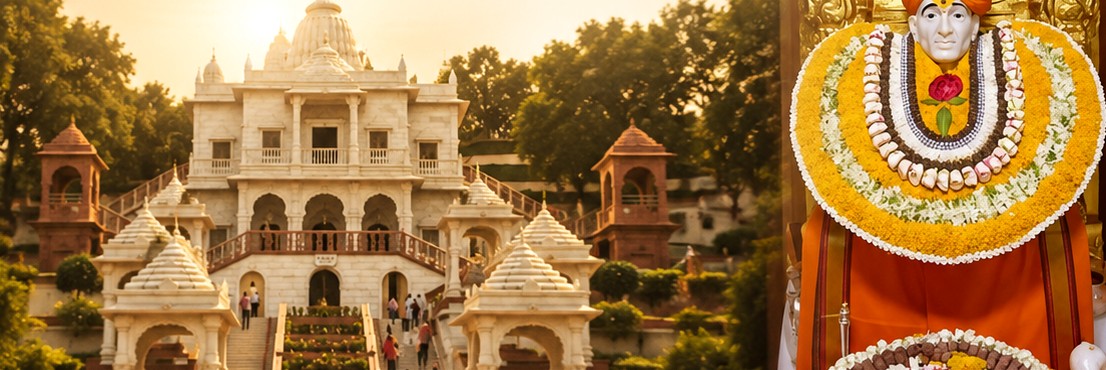
The sacred island of Omkareshwar, home to one of the twelve Jyotirlingas, celebrates a rich cycle of festivals through the year, and the Gajanan Maharaj Sansthan celebrations add a warm, devotional layer of anna-daan, bhajan and seva to each one. This full-year calendar helps you plan your pilgrimage around the Omkareshwar festivals that matter most to you.
A Year of Festivals at a Glance
Dates below follow the Hindu lunar calendar and shift each year against the Gregorian calendar; treat the months as a guide and confirm exact tithis before booking travel.
| Month (approx.) | Festival | Highlights at the Sansthan |
|---|---|---|
| Jan–Feb | Makar Sankranti / Pongal | Kite-flying, sesame sweets, holy dip in the Narmada |
| Feb–Mar | Maha Shivratri | Night-long worship, four-prahar aarti, biggest crowd of the year |
| Mar–Apr | Ram Navami | Satsang, bhajan, special abhishek |
| Apr–May | Hanuman Jayanti | Sunderkand path, prasad distribution |
| Jul–Aug | Gurupoornima | Guru worship, teachings of Gajanan Maharaj, anna-daan |
| Jul–Aug | Shravan Mondays | Rudrabhishek every Monday, large pilgrim inflow |
| Aug | Janmashtami | Krishna birth celebrations, bhajan night, bhandara |
| Aug–Sep | Ganesh Chaturthi | Ganesha puja, eco-friendly celebrations |
| Sep–Oct | Navratri / Dussehra | Nine nights of Devi worship, Ravan Dahan |
| Oct–Nov | Diwali / Kartik Purnima | Lamps on the ghats, Narmada deep-daan, Kartik snan |
| Nov–Dec | Kartik Ekadashi / Tulsi Vivah | Temple decorations, special kirtan |
| Dec | Datta Jayanti | Dattatreya worship, parayan |
Maha Shivratri — The Crown Festival
Maha Shivratri, falling in February or March, is the single most important festival at Omkareshwar. The temple typically remains open through the night, with the Jyotirlinga worshipped at each of the four prahars (watches) of the night. Tens of thousands of devotees arrive from across India — many walking long distances — to offer bel-patra, milk and water to Lord Shiva. Bhandara tents line the approach roads, and the Sansthan organises large-scale anna-daan to feed the pilgrim surge. Our detailed Maha Shivratri at Omkareshwar guide covers timings, queues and what to expect.
Shravan Mondays
The entire month of Shravan (July–August) is sacred to Shiva, and every Shravan Monday sees a swell of pilgrims performing Rudrabhishek at the Jyotirlinga. The Sansthan extends its kitchen hours, adds extra bhandara slots, and welcomes volunteer sevaks. It is also a popular time for the Narmada parikrama, thanks to the cooler monsoon weather — see our parikrama guide if you plan to combine the two.
Janmashtami
Janmashtami at Omkareshwar, in August, marks the birth of Lord Krishna with an evening of bhajans, devotional songs and a midnight aarti. The Sansthan’s community kitchen prepares a special prasad of milk-based sweets, and children often perform short scenes from Krishna’s childhood. The atmosphere is joyful and family-oriented.
Ganesh Chaturthi and Navratri
In August–September, Ganesh Chaturthi brings eco-friendly Ganesha worship, while Navratri (September–October) lights up nine nights of Devi worship, with garba and kirtan in the evenings. Both festivals see steady crowds of families, and the Sansthan organises cultural programmes alongside the daily aarti.
Diwali and Kartik Purnima
Diwali at Omkareshwar, in October or November, transforms the ghats into a sea of flickering lamps. Devotees perform deep-daan — floating lamps on the Narmada — an unforgettable sight. The following Kartik Purnima is considered especially auspicious for a holy dip in the Narmada, and the Sansthan hosts a large bhandara. This is one of the most photogenic times to visit — read more in the best time to visit Omkareshwar guide.
Gurupoornima and the Spirit of the Guru
Gurupoornima at Omkareshwar, in July, honours the guru-shishya tradition. At the Sansthan, this day holds special meaning because of its dedication to Gajanan Maharaj, the revered saint of Shegaon known for his simplicity and compassion. The day typically includes a parayan (reading) of the saint’s teachings, a special aarti, and large-scale anna-daan in his honour.
Datta Jayanti and Year-End Devotion
In December, Datta Jayanti celebrates Lord Dattatreya. The Sansthan hosts a Datta parayan and an all-day bhandara. With winter at its peak, this is also a comfortable season for elderly pilgrims, who can combine darshan with a relaxed stay at the Bhakt Niwas.
Planning Around the Festival Calendar
A few practical tips:
- Book early for the big three: Maha Shivratri, Shravan Mondays and Diwali. Rooms vanish weeks in advance.
- Adjust darshan timings on festival days — the temple may open earlier and close later. Our darshan timings and aarti schedule guide helps you plan.
- Volunteer. Festivals need extra hands in the kitchen, at the prasad counter and for crowd management — see seva opportunities.
- Travel light and carry cash. ATMs and digital networks can be strained during peak crowds.
Summary
The festival calendar at Gajanan Maharaj Sansthan flows through the year like the Narmada itself — from the night-long worship of Maha Shivratri to the lamps of Diwali, from the joyful Janmashtami bhajans to the reflective Gurupoornima. Choose the festival that resonates with your devotion, book ahead, and you will experience Omkareshwar at its most alive.
Frequently Asked Questions
Which is the biggest festival at Omkareshwar?
Maha Shivratri, usually in February or March, is by far the largest festival, drawing devotees from across India for night-long worship of the Jyotirlinga. The temple often remains open through all four prahars of the night.
Is the temple open all night on Maha Shivratri?
Yes, on Maha Shivratri the Omkareshwar temple generally stays open through the night with aarti at every prahar. Expect large crowds, extended queues and a vibrant, devotional atmosphere.
Should I book rooms in advance during festivals?
Absolutely. Rooms at the Bhakt Niwas and nearby dharamshalas fill weeks ahead of major festivals like Maha Shivratri, Janmashtami and Diwali. Reserve as early as possible.