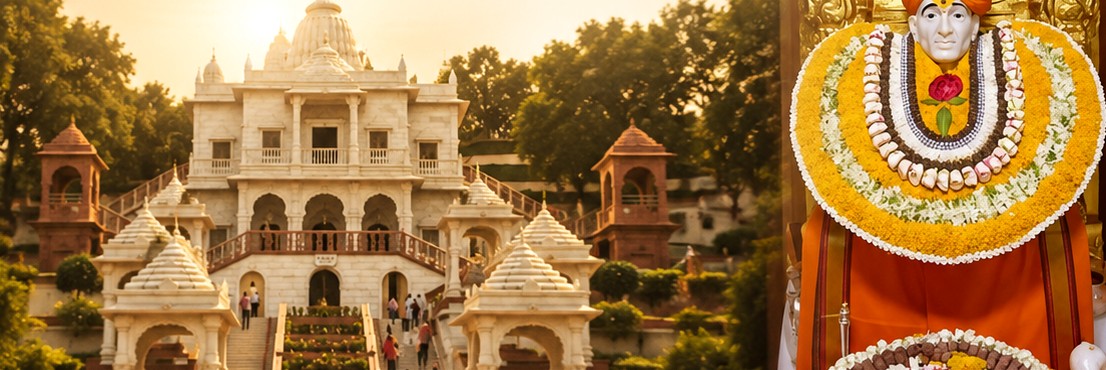
Knowing the Omkareshwar darshan timing and the full aarti schedule at Gajanan Maharaj Sansthan helps you plan a calm, unhurried pilgrimage to one of the twelve Jyotirlingas of Lord Shiva. This guide walks through the daily temple opening hours, the morning and evening aarti, special puja windows, and how timings shift on festival days.
Daily Darshan & Aarti Schedule
The temple generally opens well before sunrise and remains available to devotees through the day, with a short afternoon break. The table below reflects the typical daily rhythm; exact minutes can vary slightly by season and lunar date, so confirm at the temple office.
| Ritual / Window | Approx. Timing | What to Expect |
|---|---|---|
| Temple opens (Kakad Aarti) | ~5:00–5:30 AM | Early-morning Mangal Aarti; cool, quiet darshan |
| Morning Abhishek | ~6:00–8:30 AM | Rudrabhishek and Jalabhishek slots |
| General morning darshan | ~8:30–11:30 AM | Steady flow, family-friendly window |
| Afternoon break | ~12:00–4:00 PM | Sanctum closes for bhog and rest |
| Evening darshan reopens | ~4:30–5:00 PM | Cooler, popular with same-day travellers |
| Evening Aarti (Sandhya) | ~7:00–7:30 PM | Lamps, bells, conch — the highlight of the day |
| Shringar / Shayan darshan | ~8:00–9:00 PM | Decorated Shivalinga; temple closes by ~9:30 PM |
The evening aarti Omkareshwar experience, with floating lamps on the Narmada, is widely considered the most moving part of the day and pairs beautifully with the riverside Narmada aarti.
Early Morning: Mangal Aarti and Abhishek
For serious pilgrims, the pre-dawn Kakad (Mangal) Aarti is the most rewarding slot. The air is cool, the island is hushed, and you can often stand close to the sanctum. Devotees who book a Rudrabhishek or Jalabhishek in advance are typically accommodated in the 6:00–8:30 AM window — these are the most sought-after pujas and are best reserved a day or two ahead, especially on weekends. Learn more about puja and abhishek at the Omkareshwar Jyotirlinga.
Midday Darshan and the Quiet Afternoon Window
Between roughly 8:30 and 11:30 AM the temple sees its steadiest footfall, as pilgrims arrive from Indore, Khandwa and beyond. The sanctum then closes around midday so the priests can offer bhog and rest. This is a sensible time for you to retreat to your room, take prasad, or rest — the Sansthan’s Bhakt Niwas rooms are a short walk away.
Evening Aarti and Shringar Darshan
The temple reopens around 4:30 PM, and the atmosphere transforms as the sun sets over the Narmada. The evening Sandhya Aarti, usually held around 7:00–7:30 PM, is the spiritual centrepiece of the day — lamps circling the Jyotirlinga, the chanting of mantras, and the gentle chime of bells carrying across the water. After aarti, devotees can take Shringar Darshan, where the deity is beautifully adorned, before the temple closes for the night around 9:00–9:30 PM.
Special Pujas and Abhishek Slots
Beyond the daily schedule, the Sansthan facilitates several special observances that devotees can sponsor:
- Rudrabhishek — recitation of Sri Rudram with holy offerings, believed to be especially auspicious.
- Laghu Rudra / Maha Rudra — performed on request, often on Shravan Mondays or Shivratri.
- Milk and Panchamrit Abhishek — popular for family vows and thanksgiving.
- Naivedya Bhog — food offering made in your name, with the prasad afterwards distributed to devotees.
Book these at the temple office or reception; donations vary by ritual and are best confirmed in person.
Festival-Day Changes
Timings shift noticeably on major festival days. On Maha Shivratri — the biggest festival at Omkareshwar — the temple often remains open through the night, with aartis at every prahar (watch) of the night and a surge of pilgrims arriving after midnight. Similar extended hours occur on Shravan Mondays and Kartik Purnima. Expect longer queues, additional security, and a lively, devotional atmosphere. Our Maha Shivratri at Omkareshwar guide covers what to expect in detail.
A Note on Mamleshwar Temple Timings
The Mamleshwar (Amareshwar) Jyotirlinga on the south bank — the twin of the island temple — follows broadly similar hours, typically opening around 5:30 AM and closing by 9:00 PM with a midday break. Many pilgrims prefer the quieter Mamleshwar sanctum for a slower, more meditative darshan. For a fuller comparison, read our Mamleshwar vs Omkareshwar guide.
Tips for a Peaceful Darshan
- Arrive early. The first hour after opening is the calmest, especially for senior citizens.
- Plan around the evening aarti. Reach the sanctum at least 30 minutes early to find a good spot.
- Respect photography rules. Filming is usually restricted inside the sanctum and during aarti — see our photography guide for Omkareshwar for where you can shoot freely.
- Dress modestly. Traditional or fully covered attire is appreciated; remove footwear before entering.
- Travel light on festival days. Lockers are limited and queues move slowly.
Summary
The Omkareshwar aarti schedule is the heartbeat of any pilgrimage to Gajanan Maharaj Sansthan — from the hushed pre-dawn Mangal Aarti to the lamps of the evening Sandhya Aarti. Plan around the morning abhishek window if you want a deeper ritual, time your visit to catch the evening aarti, and arrive early on festival days. With the daily rhythm in mind, your darshan can be both serene and deeply fulfilling.
Frequently Asked Questions
Is VIP or special darshan available at Gajanan Maharaj Sansthan?
Special darshan and paid abhishek slots are generally available for a nominal offering, allowing devotees to sit closer during aarti or perform a brief puja. Confirm current arrangements and charges at the temple office when you arrive.
What is the best time for peaceful darshan?
Weekday mornings, just after the temple opens, and the hour before the evening aarti tend to be the quietest windows. Weekends, Sundays and festival days are noticeably more crowded.
Are photography and mobile phones allowed during aarti?
Photography is usually restricted inside the inner sanctum and during aarti to preserve the sanctity of the ritual. It is courteous to keep phones on silent and ask a priest before filming anywhere inside the temple.