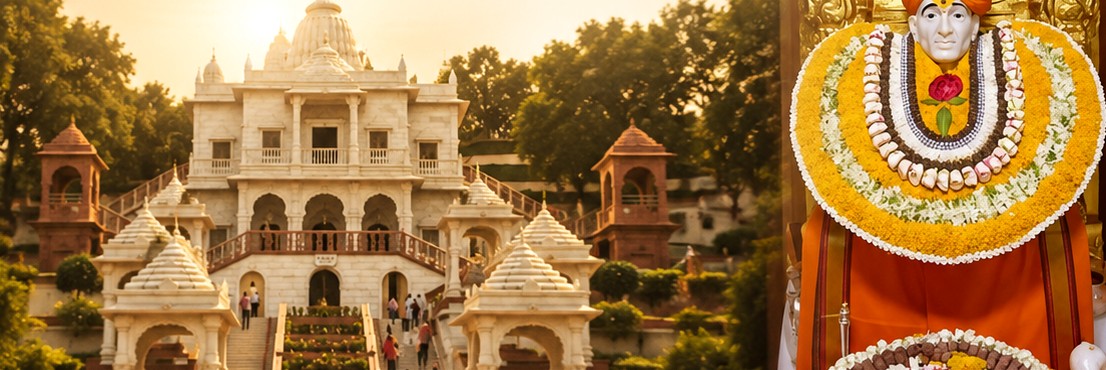
Choosing the best time to visit Omkareshwar shapes everything — the comfort of your Omkareshwar weather experience, the ease of your parikrama, and the depth of your darshan at the Jyotirlinga. This season-by-season guide helps you decide when to visit Gajanan Maharaj Sansthan, with a monthly weather table, festival considerations and practical packing tips.
Omkareshwar at a Glance
Omkareshwar sits in Khandwa district, Madhya Pradesh, on an island in the Narmada river. Its climate is typical of central India — hot dry summers, a lush monsoon, and cool pleasant winters. The temple is open year-round, but the experience varies dramatically with the season.
Monthly Weather Guide
The table below gives a rough sense of temperatures and conditions across the year; actual figures vary year to year.
| Month | Daytime Range (°C) | Conditions | Travel Verdict |
|---|---|---|---|
| January | 12–25 | Cool, dry, misty mornings | Excellent |
| February | 14–28 | Pleasant, festival season begins | Excellent |
| March | 18–34 | Warming up; Maha Shivratri | Very good |
| April | 24–39 | Hot, dry | Acceptable |
| May | 28–42 | Peak summer heat | Avoid midday |
| June | 28–40 | Hot, then early monsoon | Mixed |
| July | 25–33 | Monsoon, lush and wet | Beautiful but slippery |
| August | 24–31 | Heavy monsoon; Shravan Mondays | Spiritually rich |
| September | 24–33 | Monsoon receding, green | Good with care |
| October | 20–33 | Post-monsoon, clearing | Very good |
| November | 15–30 | Cool, festive (Diwali) | Excellent |
| December | 11–26 | Cold mornings, crisp days | Excellent |
Winter (October to March) — The Best Season
For almost every traveller, winter is the best time to visit Omkareshwar. Days are warm but not hot, mornings and evenings are refreshingly cool, and the river sparkles under clear skies. This is the ideal window for:
- A comfortable island parikrama without exhausting heat.
- Long, unhurried evenings at the ghats for the aarti.
- Family trips with children and elderly members.
- Festival experiences — Diwali, Kartik Purnima, and Maha Shivratri all fall in this window.
The trade-off is crowds. Winter weekends and the Maha Shivratri week draw large numbers, so book your Bhakt Niwas room early. See our two-day Omkareshwar itinerary to make the most of a winter visit.
Summer (April to June) — Hot but Manageable
Summer in central India is intense, with daytime temperatures regularly crossing 40°C in May. If you must travel in this window:
- Plan all outdoor activity — parikrama, ghats, temple visits — for the early morning or near sunset.
- Stay hydrated and prefer an AC room for the afternoon.
- Take advantage of thinner crowds and easier room availability.
Summer is also when many Sadhus and parikramavasis rest before resuming their journeys, lending the ghats a contemplative quiet.
Monsoon (July to September) — Lush and Devotional
The monsoon at Omkareshwar transforms the island. The Narmada swells and rushes around the Om-shaped shoreline, the hills turn brilliant green, and waterfalls come alive nearby. It is one of the most beautiful seasons — and one of the most spiritually charged, thanks to the Shravan Mondays, when Shiva devotees throng the temple in droves.
A few cautions:
- Parikrama paths become slippery, especially the stone steps near the Siddhanath Temple.
- River currents are strong — do not venture into deep or swollen sections.
- Carry an umbrella and quick-dry footwear.
Monsoon is best for seasoned pilgrims and devotees specifically drawn to Shravan. Read more in our festival celebrations guide.
Festival and Crowd Considerations
The biggest crowds arrive during:
- Maha Shivratri (February–March) — the single largest gathering.
- Shravan Mondays (July–August) — Rudrabhishek pilgrims.
- Janmashtami, Ganesh Chaturthi, Diwali — family-festival surges.
- Weekends in winter — popular with city travellers from Indore and beyond.
If you prefer quiet darshan, choose a weekday in late November, early December, or early February — outside the festival peaks but within the best weather window.
What to Pack
A concise packing list by season:
- Winter: light jacket or shawl, layers, comfortable walking shoes, modest traditional clothing.
- Summer: light cottons, sunscreen, hat or cap, sunglasses, refillable water bottle.
- Monsoon: umbrella, raincoat, quick-dry footwear, mosquito repellent.
- Year-round: ID proofs, modest temple attire, small bag for offerings (bel-patra, flowers), basic medicines, and cash for small expenses.
Getting There and Around
Travel routes are straightforward from any major hub. Our guide to reaching Omkareshwar covers the nearest airport (Indore, ~77 km), railway stations (Omkareshwar Road ~12 km, Khandwa Junction ~60 km), and bus options. Taxis and autos are easily available for the last leg.
Summary
The best time to visit Omkareshwar is broadly October to March, when the weather is pleasant and the experience of darshan, parikrama and aarti is at its finest. Summer is hot but quieter, while the monsoon offers lush beauty and deep Shiva devotion during Shravan. Match the season to your priorities — festival fervour, peaceful solitude, or family comfort — and your pilgrimage to Gajanan Maharaj Sansthan will be everything you hoped for.
Frequently Asked Questions
What is the best month to visit Omkareshwar?
November to February is generally the best window — days are pleasant, mornings are cool, and the weather is ideal for darshan, parikrama and a riverside walk.
Is it safe to visit Omkareshwar during the monsoon?
Yes, but with care. The island turns lush and the Narmada swells beautifully, yet parikrama paths and ghats can be slippery. Avoid venturing close to swollen sections of the river.
When are the peak crowd times at Omkareshwar?
The biggest crowds arrive for Maha Shivratri (Feb–Mar), Shravan Mondays (Jul–Aug) and weekends in the winter season. Book rooms well ahead during these windows.
What should I pack for a visit to Omkareshwar?
Modest traditional clothing, comfortable walking shoes, a light jacket in winter, sunscreen and a hat in summer, an umbrella in monsoon, and a small bag for offerings and prasad.