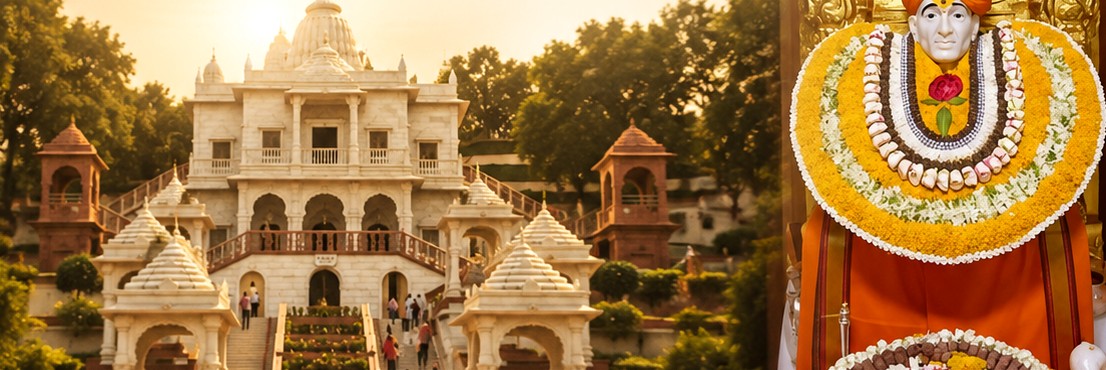
The festival calendar of Shegaon turns on two great poles — Prakat Din and Punyatithi — but the devotional rhythm of the town never really stops. Festivals at Shegaon, administered by the Sri Gajanan Maharaj Sansthan, blend the reverence of a samadhi shrine with the energy of a Maharashtra fair: special aartis, unbroken bhajans, mountains of prasad, and crowds that swell from thousands into lakhs. Because all dates follow the Hindu almanac, this guide speaks in terms of typical months rather than fixed dates — always confirm the current year’s schedule with the Sansthan before booking travel.
A Calendar Anchored in the Hindu Almanac
Before the individual observances, one practical point governs everything: Shegaon’s festival dates shift each year on the Gregorian calendar because they follow tithis — lunar days — rather than fixed dates. The two anchor festivals, Prakat Din and Punyatithi, commemorate the appearance and departure of Sant Gajanan Maharaj in 1878 and 1910 respectively, according to tradition. Between these poles, the Sansthan and local devotees observe the broader Maharashtra festival cycle with characteristic devotion.
| Festival | Typical Month (Indicative) | Notes |
|---|---|---|
| Prakat Din (appearance day) | Around February | The largest festival; lakhs of pilgrims |
| Maha Shivratri | February–March | Special Shiva worship and temple observances |
| Ram Navami | March–April | Processions and bhajan programmes |
| Guru Purnima | Around July | Devotees honour Maharaj as their guru |
| Ganeshotsav | August–September | Community Ganesh celebrations across Shegaon |
| Punyatithi (departure anniversary) | Around September | Second great festival; massive bhandara |
| Ekadashi observances | Eleven-day cycle, through the year | Steady regular gatherings of devotees |
Prakat Din — The Appearance Celebration
Prakat Din celebrates the moment, according to tradition, when Gajanan Maharaj was first seen at Shegaon in February 1878 — the mysterious ascetic whose origins no one could name. It is usually observed around February, and it is the single largest event in Shegaon’s year. The town fills days in advance with pilgrim groups from across Maharashtra and beyond; darshan runs at festival pace through sheltered queue lanes; and the Annakshetra scales up to feed a multitude many times its daily average. Special pujas, abhishek, continuous singing of bhajans and kirtans, and illuminations around the temple complex mark the occasion. For many village devotee groups, attending Prakat Din is an annual vow in itself, travelled overnight by bus and train.
Punyatithi — The Annual Remembrance
Punyatithi, usually falling around September in the Bhadrapada period, commemorates Maharaj’s conscious departure from his body in 1910, according to tradition. Where Prakat Din has the flavour of a birthday fair, Punyatithi carries a more inward tone — remembrance, gratitude and prayer — though the scale is comparable, with enormous crowds and a correspondingly vast bhandara. Special rituals are performed at the samadhi through the day and night, and devotees consider this an especially powerful time to offer seva, anna daan or simply quiet hours at the temple. The date shifts each year with the Hindu calendar, so check the Sansthan’s announcements before planning.
Other Celebrations Through the Year
Between the two great festivals, Shegaon keeps the classic Maharashtra cycle. Ganeshotsav brings community pandals and processions to the town in the Bhadrapada months. Maha Shivratri is observed with special worship — a natural bridge for pilgrims who also love Shiva, and if your devotion leans that way, our account of Maha Shivratri at Omkareshwar describes how the island Jyotirlinga celebrates the same night. Ram Navami and Guru Purnima draw steady gatherings, the latter especially meaningful for those who regard Maharaj as their guru. Regular Ekadashis through the year bring smaller but devoted influxes, keeping the Annakshetra and temple staff in continuous rhythm. For villagers across Vidarbha and Marathwada, these mid-sized observances are often the more practical choice: trains and buses remain bookable, darshan queues stay humane, and the devotional substance of the day — special puja, singing, a shared meal — is unchanged. Some families also mark personal milestones at the temple, offering anna daan or abhishek on weddings, births and death anniversaries, so the festival calendar is embroidered with countless private celebrations alongside the public ones.
Visiting During Festivals — Practical Notes
Festival-time Shegaon is unforgettable but demanding, and a little preparation transforms the experience. Expect darshan queues measured in hours rather than minutes; travel light, wear comfortable footwear, and keep elderly family members hydrated and shaded. Book any accommodation months ahead — indicatively, Sansthan Bhakt Niwas rooms are the most economical, while private hotel rates climb steeply near the big dates; confirm everything at booking. Trains toward Shegaon on the Bhusaval–Nagpur line run extra crowds around Prakat Din and Punyatithi, so reserve seats early. Once there, let the free Annakshetra meals carry your food needs, and build in an evening at Anand Sagar if energy permits. For quieter worship, ordinary weekdays outside the festival calendar — planned with our Shegaon Gajanan Maharaj darshan guide — offer unhurried darshan.
Festival observances at our Omkareshwar home base follow a similar spirit of bhandara and bhakti, which we describe in our article on festival celebrations at Gajanan Maharaj Sansthan; devotees attending one often find themselves planning the other.
Summary
Shegaon’s festival year is anchored by Prakat Din around February and Punyatithi around September — the appearance and departure of Gajanan Maharaj in 1878 and 1910, according to tradition — and rounded out by Ganeshotsav, Maha Shivratri, Ram Navami, Guru Purnima and the steady pulse of Ekadashis. All dates vary by the Hindu calendar, so confirm the current year’s schedule with the Sansthan, book travel and stay early for the two great festivals, and go prepared for crowds that are, after all, the point: an ocean of devotees gathered where a saint once fed the hungry with whatever came to hand.
Frequently Asked Questions
When is Prakat Din celebrated at Shegaon?
Prakat Din marks the appearance of Gajanan Maharaj at Shegaon in 1878, according to tradition, and is usually celebrated around February. The exact date depends on the Hindu lunar calendar and changes each year. The festival draws huge crowds, so book accommodation well in advance.
What happens on Gajanan Maharaj Punyatithi at Shegaon?
Punyatithi, usually falling around September, commemorates Maharaj's departure from his mortal body in 1910 according to tradition. The observance includes special pujas, continuous darshan, devotional singing and massively scaled-up free meals at the Annakshetra. Lakhs of pilgrims commonly attend over the festival period.
Which other festivals are celebrated at Shegaon?
Ganeshotsav, Maha Shivratri, Ram Navami and Guru Purnima are among the major observances, alongside Ekadashi gatherings that draw steady devotee traffic. Each follows the Hindu calendar, so Gregorian dates shift year to year. Confirm the current year's schedule with the Sansthan before planning travel.