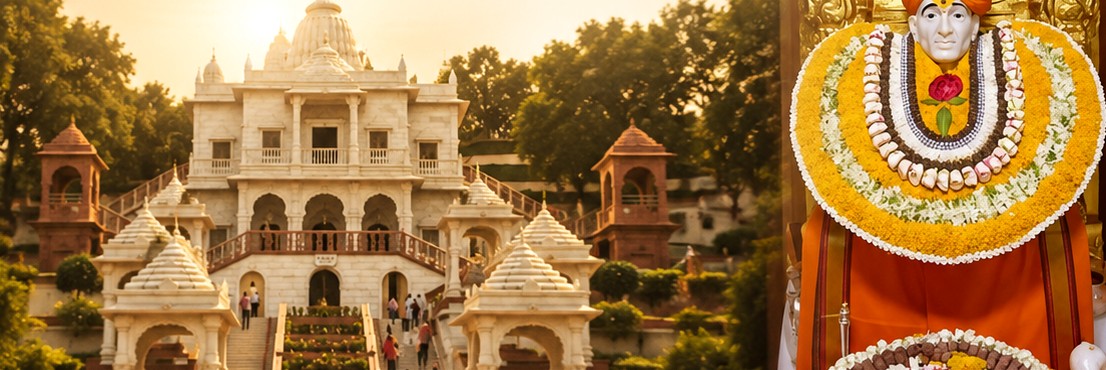
If Pandharpur has a single, overwhelming day, it is Ashadhi Ekadashi. On this day the temple town on the Chandrabhaga receives what is, by most accounts, one of the largest annual gatherings of pilgrims anywhere in India — a tide of lakhs of warkaris in white and saffron who have walked for days to stand before Vitthal. For devotees it is the fulfilment of a year’s vow; for a first-time visitor it is an unforgettable window into living bhakti. This Ashadhi Ekadashi Pandharpur guide explains the significance of the day, how the celebrations unfold, and how to plan darshan, food and stay so that the crowds become part of the blessing rather than a burden.
What Is Ashadhi Ekadashi?
Ashadhi Ekadashi is the eleventh day of the bright fortnight of the Hindu month of Ashadha, falling roughly between June and July. Devotees of Vitthal observe ekadashi every fortnight with fasting and prayer, but this one is called the greatest of them all. According to tradition, it is the day on which the Lord is especially eager to receive his warkaris, and countless families keep it as an annual vow — fasting on Dashami and Ekadashi, and breaking the fast after darshan on Dwadashi.
The day also marks the culmination of the wari pilgrimage, when the palkhis of Sant Dnyaneshwar from Alandi and Sant Tukaram from Dehu — which have covered approximately 230 to 250 kilometres on foot over roughly 18 to 21 days — reach their destination. Understanding this connection is the key to understanding the day itself: Ashadhi Ekadashi is not an event staged for spectators; it is the arrival home of Maharashtra’s walking devotees.
The Arrival of the Palkhis
In the days before Ekadashi, the roads into Pandharpur fill with dindis arriving from every direction, and the town’s fields and school grounds transform into vast encampments. According to the customary schedule, the principal palkhis make a final halt at a village near Pandharpur — Wakhari being the traditional last major halt for the Alandi palkhi — where the night passes in continuous kirtan. The palkhi then enters Pandharpur in procession, with the padukas of the saints ceremonially carried toward the Vitthal-Rukmini Mandir, and the streets become an unbroken current of song, cymbals and mrudang.
For warkaris, receiving the palkhi and walking the last stretch with it is itself a sacred act. Visitors should give the processions right of way, avoid blocking the route, and remember that the most appreciated help is quiet help — water, a cleared path, patience.
Pandharpur During the Yatra
The whole town runs on yatra rhythm. The table below gives an indicative picture of how the days around Ekadashi unfold; timings and arrangements change each year, so confirm with local authorities and the temple trust for the current schedule.
| Period | What generally happens | Notes for visitors |
|---|---|---|
| Days before Ekadashi | Dindis arrive and camp; kirtans through the night | Streets around the temple become pedestrian-dense |
| Dashami (eve) | Final palkhi halts nearby; processions begin converging | Expect road diversions and long vehicle queues |
| Ekadashi morning | Palkhis ceremonially enter Pandharpur; darshan rush builds | The heaviest crowds of the year |
| Ekadashi day | Continuous darshan, abhang recitals, bhajan mandalis everywhere | Darshan queues may take many hours |
| Dwadashi | Many warkaris take final darshan and begin the journey home | Crowds thin gradually; some rituals conclude |
Free anna daan on a massive scale is a defining feature of these days — trusts, mathas and village seva groups feed pilgrims around the clock, and no visitor goes hungry if they are willing to stand in a short line with everyone else.
Darshan Strategy on the Big Day
On Ashadhi Ekadashi, ordinary queue mathematics suspends itself. A few practices that seasoned pilgrims swear by:
- Arrive at least a day early. Travelling into Pandharpur on Ekadashi morning by road is usually the slowest option of the year; vehicle restrictions are extensive.
- Choose the shoulder hours. The pre-dawn and late-night windows are relatively lighter than mid-morning and evening.
- Keep the group small and connected. Agree on a meeting point in advance; mobile networks are heavily loaded and separated families are common.
- Carry minimal belongings. Water, a little dry food, identification and any required medicines; use the official deposit counters for footwear and phones.
- Look after the vulnerable. Walk with elderly relatives rather than sending them ahead, and make use of volunteer-run assistance points where available.
- Stay flexible. Treat every time estimate as indicative only, and let the abhangs around you do the waiting.
Staying, Eating and Booking Early
Accommodation is the single most competitive element of an Ashadhi Ekadashi trip. Our Pandharpur accommodation guide details bhakt niwas options, hotels and dharamshalas; the short version is that anything near the temple should be booked weeks ahead, and yatra-time tariffs rise accordingly — confirm at booking. Many warkaris plan to sleep in the encampments with their dindi, which is itself a profound experience for those with simple needs.
If the June crowds feel daunting, consider Kartiki Ekadashi instead: the second great yatra, in the pleasant months around October to December, follows a similar pattern with somewhat more breathing room.
Summary
Ashadhi Ekadashi at Pandharpur is the yearly high point of the warkari tradition — lakhs of walking devotees, the arrival of the saints’ palkhis, night-long abhangs and darshan queues that test and deepen patience in equal measure. Book travel and stay well in advance, arrive before Ekadashi, travel light and let the town’s rhythm set your schedule rather than the clock. Witnessed with respect and a little preparation, the day leaves most pilgrims with the same conviction the saints sang about: that Vitthal waits for everyone who comes to him on foot, fasting and full of song.
Frequently Asked Questions
When is Ashadhi Ekadashi celebrated at Pandharpur?
It falls on the eleventh day of the bright half of the Hindu month of Ashadha, which usually corresponds to June or July in the Gregorian calendar. The exact date shifts every year, so check a reliable panchang before booking travel.
How crowded is Pandharpur on Ashadhi Ekadashi?
Extremely. Lakhs of warkaris gather in and around the town, making it one of India's largest annual religious gatherings. Expect darshan queues running into several hours, heavy traffic diversions and tightly packed streets.
When do the palkhis reach Pandharpur?
According to the customary schedule, the main palkhis from Alandi and Dehu make a final halt at a village near Pandharpur and enter the town around Ekadashi after a night of kirtan. The precise route timings are finalised by the palkhi managements each year.
When should I book my stay for Ashadhi Ekadashi?
As early as possible — ideally four to eight weeks in advance. Rooms near the temple are taken long before the yatra, and many devotees rely on dharamshalas, trust accommodations or halts arranged by seva organisations.