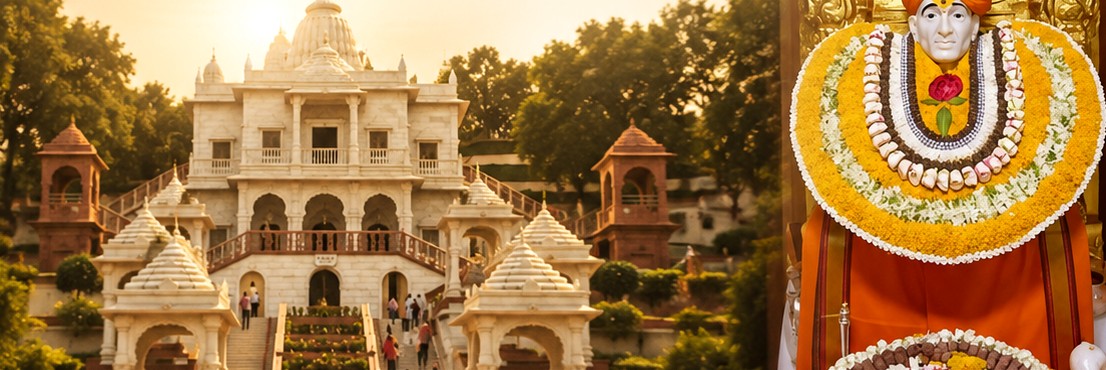
The Narmada parikrama at Omkareshwar is one of the most soul-stirring walks in Hindu pilgrimage, circling the island that holds one of the twelve Jyotirlingas. But pilgrims often confuse two very different journeys — the short island parikrama of around 5–8 km, which most visitors can complete in a few hours, and the epic full Narmada parikrama of roughly 2,600 km that takes several months. This guide explains both, with the route, key stops, what to carry, difficulty levels and the best time to walk.
Two Parikramas — Knowing the Difference
This distinction matters more than any other detail in planning your visit.
| Feature | Omkareshwar Island Parikrama | Full Narmada Parikrama |
|---|---|---|
| Distance | ~5–8 km | ~2,600 km |
| Duration | 2–4 hours | 2–3 months or more |
| Difficulty | Easy–moderate | Demanding, multi-state yatra |
| Typical pilgrim | Most visitors | Dedicated Narmada parikramavasis |
| Best for | A single day at Omkareshwar | A lifelong spiritual vow |
Most readers of this guide are planning the short island parikrama, which is what we describe in detail below. For the full river circumambulation, see our dedicated full Narmada parikrama route guide.
The Omkareshwar Island Parikrama Route
The island of Omkareshwar — known as Mandhata or Shivpuri — is shaped like the sacred syllable “Om”, and walking around it is considered a circumambulation of Shiva himself. A detailed breakdown is in our Omkareshwar parikrama route guide; the typical sequence is:
- Begin at the Omkareshwar Jyotirlinga temple on the island, after taking darshan.
- Walk along the riverside path that loops around the island’s perimeter, with the Narmada on one side throughout.
- Stop at the smaller shrines along the way — including ancient temples and samadhis of saints.
- Cross the Siddhanath Temple area on the eastern side of the island, an architectural gem perched on a cliff. Read more in our Siddhanath Temple guide.
- Pass the sacred ghats where pilgrims take a holy dip — see our guide to the sacred ghats of Omkareshwar.
- Return to the main temple to complete the circuit, ideally in time for the evening aarti.
The entire path is generally well-marked, with stone paving in most sections and shaded stretches in between.
Key Stops and Their Significance
The Omkareshwar and Mamleshwar Temples
The two Jyotirlinga temples — Omkareshwar on the island and Mamleshwar (Amareshwar) on the south bank — frame the parikrama. Many pilgrims begin with darshan at one and end at the other. Understanding their pairing adds depth to the walk; our Mamleshwar vs Omkareshwar guide explains the relationship.
The Ghats of the Narmada
Along the route are several sacred ghats where pilgrims perform tarpana (ancestral offerings) and take a ritual dip. The most auspicious spot is generally near the confluence where the rivers meet around the island. The significance of the Narmada (Reva) river is profound — she is the only river considered divine enough to be parikrama-worthy in living tradition.
Smaller Shrines and Saint Samadhis
Dotting the path are small temples and the samadhis of saints and sadhus who lived and meditated on the island. These quiet spots invite reflection and are often where the deepest moments of the walk happen.
What to Carry
- Water bottle — at least one litre, more in summer.
- Light snack or fruit — there are stalls, but carrying your own helps.
- Sun hat and sunscreen — much of the route is exposed.
- Walking stick — useful for the steps, especially for elderly pilgrims.
- Small bag for prasad and offerings — flowers, bel-patra, incense.
- Easily removable footwear — you will take shoes off at each shrine.
- Cash in small denominations — for offerings, tea and water.
Difficulty and Accessibility
The island parikrama is easy to moderate. The path is mostly paved, but it includes steps, slopes and uneven stone sections, particularly near the Siddhanath Temple. For most healthy adults it is a pleasant few hours. For elderly pilgrims, those with knee trouble, or families with small children, a slower pace and rest stops make it entirely manageable. Wheelchair access is limited on the more rugged sections.
Best Time for the Parikrama
- October to March — the ideal window. Cool, dry weather makes the walk comfortable, especially early mornings.
- Monsoon (July–September) — the island turns lush and the Narmada swells beautifully, but stones become slippery, so caution is essential.
- Summer (April–June) — avoid midday; walk only in the very early morning or near sunset.
- Maha Shivratri and Shravan Mondays — spiritually charged, but crowded.
Read our best time to visit Omkareshwar guide for a fuller seasonal breakdown.
The Full Narmada Parikrama — A Brief Overview
For the rare pilgrim called to the full 2,600 km circumambulation, the journey begins at Amarkantak, the source of the Narmada, traverses both banks through Madhya Pradesh and Gujarat, and returns to the origin. It is a multi-month sādhanā, undertaken on foot with minimal belongings, sleeping at ashrams and temples, sustained by anna-daan from devotees along the way. It is one of the most austere pilgrim traditions in Hinduism. The shorter Panchkosi Narmada parikrama is a more accessible alternative — read our Panchkosi parikrama guide to learn more.
A Note on Reverence and Discipline
Traditional parikrama is performed with certain observances — walking barefoot or in simple footwear, maintaining silence or chanting, eating only satvik food, and treating the entire route as sacred. You do not have to follow every custom, but a respectful, unhurried pace enriches the experience immeasurably.
Summary
The Omkareshwar parikrama is a walk into the heart of Hindu devotion — a few hours of riverside prayer that most pilgrims can manage, or, for the called, a months-long journey around the entire Narmada. Walk the island circuit in the cool months, carry water and a steady pace, pause at the shrines and ghats, and let the rhythm of the river carry you back to the Jyotirlinga.
Frequently Asked Questions
How long does the short Omkareshwar island parikrama take?
The island parikrama is roughly 5–8 km and typically takes about two to four hours at a relaxed pace, including stops at the smaller shrines along the way.
Can elderly pilgrims complete the parikrama?
Yes, with preparation. The route includes steps and uneven riverside sections, so elderly pilgrims should walk slowly, use a walking stick, and consider breaking the journey with rest stops or hiring local assistance.
Is a guide needed for the parikrama?
A guide is not strictly necessary for the well-marked island route, but first-time visitors often find one helpful for identifying the smaller shrines and understanding their significance.
What footwear should I wear for the parikrama?
Sturdy, comfortable walking shoes or sandals with good grip are best. Many pilgrims carry a separate pair of easily removable footwear, since shoes must be taken off before entering each temple along the route.