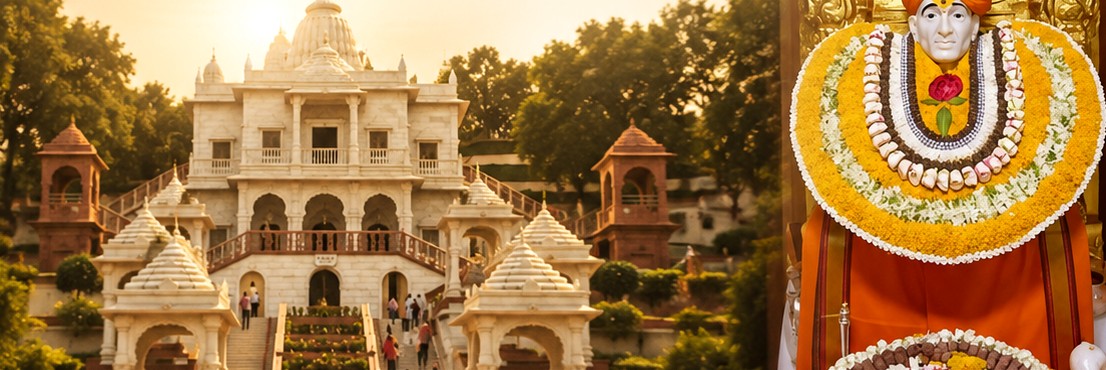
For devotees across Maharashtra and beyond, Shegaon Gajanan Maharaj darshan at the Samadhi Mandir is the heart of any pilgrimage to this corner of Vidarbha. Shegaon, a modest town in Buldhana district, rose to prominence because Sant Gajanan Maharaj — according to tradition — appeared here in 1878 and spent more than three decades living simply among the people. Today the temple raised over his samadhi receives a steady stream of visitors, from village groups arriving by bus to families stepping off overnight trains from Mumbai and Nagpur. With a little planning around timings, aartis and crowd patterns, your darshan can be calm, unhurried and deeply peaceful — and this guide walks you through exactly how to arrange it.
The Samadhi Mandir at a Glance
The Sri Gajanan Maharaj Sansthan administers the Samadhi Mandir at the centre of Shegaon. According to tradition, Maharaj left his mortal body in 1910, and the site where he was entombed became the sanctum around which devotees later raised a beautiful marble temple. The sanctum itself remains remarkably simple — a canopied samadhi draped with flowers and silver adornments — and it is this simplicity, devotees say, that keeps the atmosphere close to Maharaj’s own way of living. To understand how this structure grew from a modest shrine into the grand mandir of today, read our detailed article on the history of the Gajanan Maharaj Samadhi Mandir.
The surrounding complex supports pilgrims at every step: spaces for prasad distribution, a vast Annakshetra serving free meals, and the administrative offices of the Sansthan, which today also runs schools, hostels and other charitable institutions in and around Shegaon.
Indicative Darshan Timings
The temple keeps long hours, roughly from before dawn to late evening. Treat the table below as a planning guide rather than a fixed timetable — hours shift with seasons and festivals, so confirm with temple authorities as schedules change.
| Time of Day (Approx.) | What Usually Happens | Notes for Pilgrims |
|---|---|---|
| 4:00–4:30 AM | Temple opens; Kakad Aarti | Quietest hour; ideal for elders and a long, peaceful darshan |
| 5:00–8:00 AM | Morning darshan and abhishek | Moderate queues; pleasant weather |
| Around 12:00 PM | Noon (madhyan) aarti | Brief restriction of movement possible during the ritual |
| 4:00–6:30 PM | Evening darshan | Busiest with same-day travellers |
| Around 7:00 PM | Sandhya aarti at dusk | Deeply atmospheric, with singing devotees |
| 9:00–9:30 PM | Shej aarti and closing | Last darshan of the day |
During major festivals such as Prakat Din and Punyatithi, the temple often remains effectively open through the day and night, with darshan continuing in continuous flow. On such days, do not plan around precise closing hours; plan around patience instead.
The Aarti Schedule Through the Day
Five aartis traditionally punctuate the day at Shegaon. The Kakad Aarti before sunrise is the waking ritual, sung in the hushed half-light, and many devoted pilgrims consider it the most intimate darshan of the day. The noon aarti offers a mid-day pause, while the Sandhya aarti at dusk fills the hall with lamps, cymbals and collective singing — the moment most families aim for. The day concludes with the Shej Aarti, the ritual “putting to rest” of the saint, after which the temple closes.
If you can attend only one aarti, choose between the Kakad and the Sandhya, depending on whether you are an early riser or arriving in Shegaon by afternoon. Much of the devotional singing draws on Maharaj’s own emphasis on naam smaran — constant remembrance of the divine name — a theme we explore in our article on Gajanan Maharaj’s teachings and legacy.
Inside the Temple: What to Expect
The sanctum is small relative to the crowds it draws, so the Sansthan manages darshan through orderly queues that move through the main hall. Expect to pass the samadhi at a measured pace rather than to stand before it for long periods; the collective movement itself becomes a form of parikrama for many devotees. A few practical points, all subject to current rules:
- Mobile phones and cameras are generally not permitted inside the temple; plan to leave them at your accommodation or use the designated facility.
- Modest clothing is expected, in keeping with the reverence of the site.
- Footwear is left outside at the stands near the entrance.
- Prasad and puja items are available at counters in the complex; offerings of flowers and garlands are customary.
Volunteers and Sansthan staff are usually present to guide visitors, and information counters can help with questions about seva or donations.
Managing Crowds and Choosing Your Day
Crowd levels at Shegaon follow a predictable rhythm. Ordinary weekdays outside festival season see manageable queues, often under an hour even at busy times. Weekends and Thursdays — a day many devotees consider especially apt for guru worship — are noticeably fuller. The great surges come twice a year: Prakat Din, celebrating Maharaj’s appearance, usually falls around February, and Punyatithi, the anniversary of his departure, usually falls around September, though dates vary by the Hindu calendar. On these days, lakhs of pilgrims can converge on the town, and darshan may involve several hours in sheltered queue lanes.
If a festival experience is what you seek, go prepared: book any accommodation well ahead (indicative tariffs and options are covered in our travel articles), travel light, and keep elderly family members comfortable with water and shade. If instead you prefer quiet, choose a weekday in the monsoon or winter months and reach the temple for the opening aarti. Reaching the town is straightforward at any time of year, as explained in our guide on how to reach Shegaon.
Tips for Families and Elderly Devotees
A few small preparations make a family visit far smoother. Arrive early morning if seniors are with you — the air is cool, queues are short, and the Kakad Aarti is within easy reach. Meals need no planning at all: the Annakshetra serves free food through the day, so you can eat whenever hunger arrives. Keep belongings minimal, use the free facilities for storing phones and shoes, and agree on a meeting point in case anyone is separated in the crowd. For children, combine the temple visit with an afternoon at the Anand Sagar garden complex, which gives the family a balanced day of devotion and rest.
Summary
Darshan at the Shegaon Samadhi Mandir rewards early arrival, sensible timing and light luggage. Aim for the Kakad Aarti or the Sandhya Aarti, keep the indicative timetable above as a rough frame, and always confirm current schedules with temple authorities as they change with seasons and festivals. Whether you come for a quiet weekday darshan or the ocean of devotion at Prakat Din, the simplicity of the sanctum keeps the experience intimate at any hour. And if your yatra continues from Maharaj’s Shegaon to our home base on the Narmada, you can plan the equivalent schedule there with our Omkareshwar darshan timings and aarti guide.
Frequently Asked Questions
What are the darshan timings at the Shegaon Samadhi Mandir?
The temple typically opens around 4:00–4:30 AM with the Kakad Aarti and closes after the night Shej Aarti at approximately 9:30–10:00 PM. Darshan generally continues through the day except for short pauses during rituals and cleaning. Always confirm current timings with temple authorities, as schedules change on festival days.
Which aarti should first-time visitors attend at Shegaon?
Most pilgrims remember the early-morning Kakad Aarti and the evening Sandhya Aarti as the most moving experiences. The Kakad Aarti means reaching the temple well before dawn, while the evening aarti around dusk is easier to plan around travel. Both draw large crowds, so arrive early.
Is there any fee for Gajanan Maharaj darshan at Shegaon?
Darshan at the Samadhi Mandir is free for all pilgrims, and the queue is managed by the Sansthan with shaded waiting areas. Meals at the Annakshetra are also served free of charge. Optional expenses such as prasad or seva offerings are separate and entirely voluntary.