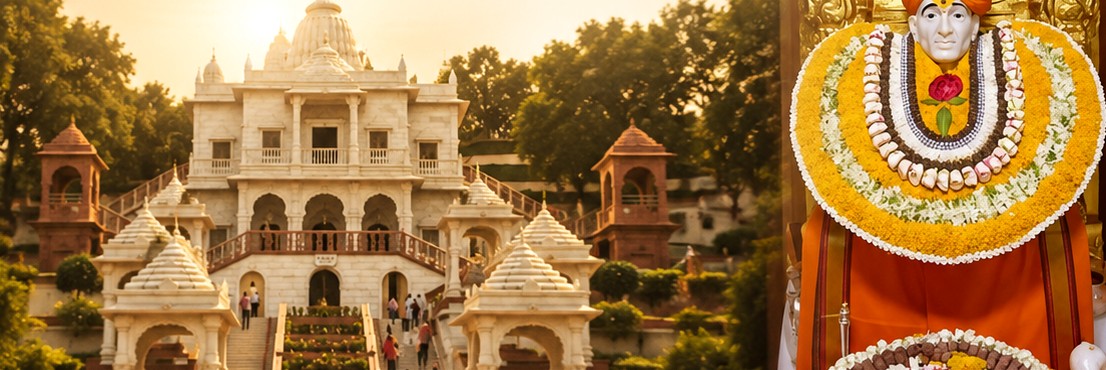
Capturing photography at Omkareshwar is a deeply rewarding experience — the Om-shaped island, the Narmada curling around it, ancient spires and the glow of evening aarti all invite the lens. But this is, above all, a living place of worship, and the best images are made with respect as much as technique. This guide covers the best spots, golden-hour timing, aarti photography tips, where cameras are restricted, drone rules and temple etiquette.
The Best Photo Spots at Omkareshwar
A handful of locations consistently deliver memorable frames.
| Spot | What to Capture | Best Time |
|---|---|---|
| The hanging bridge (footbridge) | Wide river view, island silhouette | Sunrise / sunset |
| Narmada ghats | Boats, pilgrims, lamps at aarti | Early morning / evening |
| Omkareshwar temple exterior | Stone shikharas, carvings | Mid-morning |
| Mamleshwar temple (south bank) | Quieter architecture, river foreground | Morning |
| Siddhanath Temple cliff | Panoramic island view | Late afternoon |
| River bend east of the island | Reflections, parikrama path | Golden hour |
Our guide to the sacred ghats of Omkareshwar describes each ghat in detail — useful for picking the exact vantage you want.
Working with the Light — Golden Hour Tips
The Central Indian sun is harsh for most of the day, so the golden hours are when your best images will happen. The hour after sunrise brings soft, misty light over the Narmada, with boats and bathers beginning their day. The hour before sunset paints the temple spires warm gold and turns the river into a sheet of fire. Plan your heaviest shooting in these two windows and use the middle of the day for rest, darshan or interior detail shots in shaded courtyards.
Capturing the Evening Aarti
The evening aarti is the photographic highlight of Omkareshwar. A few aarti photography tips help you do it justice without intruding:
- Arrive early to claim a respectful position. Check the darshan timings and aarti schedule so you don’t miss the start.
- Use a fast prime lens (a 35mm or 50mm f/1.8 is ideal) for the low light of lamps and candles.
- Bump your ISO rather than firing a flash — flash disturbs devotees and ruins the ambience.
- Focus on hands, lamps and faces in close-up; the story is in the gestures and the devotion.
- Shoot in burst mode for the moment the lamps are raised.
- Stay still and silent — your movement should never draw attention away from the ritual.
Where Photography Is Restricted
Temple photography in India follows a clear etiquette, and Omkareshwar is no exception. As a rule:
- No photography inside the inner sanctum, especially of the Jyotirlinga itself.
- No flash anywhere inside the temple buildings.
- No filming during aarti unless you have explicit permission; some priests may allow quiet handheld video — always ask first.
- Restrictions tighten on festival days, when crowds and security are at their peak.
If a sign forbids cameras, or a priest gestures for you to stop, comply immediately and with a smile. The image you did not take is often the one that earns you the most respect.
Drone Rules and Aerial Photography
Drones have become popular for capturing the spectacular Om-shaped island from above, but Omkareshwar drone rules are strict. Drone use is generally restricted without prior permission from the local administration and the temple trust. India’s national drone regulations also apply, including no-fly zones near crowds, sensitive installations and within temple premises. If you wish to fly:
- Seek written permission well in advance from the relevant authorities.
- Never fly during aarti, festivals or over dense crowds.
- Respect the privacy of pilgrims and sadhus who may not wish to be filmed.
When in doubt, leave the drone packed — a respectful ground-level image almost always tells a deeper story.
Lens and Gear Suggestions
- Wide-angle (16–35mm) for the bridge, ghats and temple exteriors.
- Standard prime (35mm or 50mm f/1.8) for aarti and candid devotional moments.
- Telephoto (70–200mm) for compressing spires against the river, or for discreet portraits from a distance.
- Travel tripod — useful at the ghats at dawn, but keep it packed inside temple buildings.
- Extra batteries and memory cards — the cold mornings and long days drain power quickly.
- A small shoulder bag that you can hold in front of you in crowds.
Temple Photography Etiquette
A few simple principles will keep your photography both fruitful and respectful:
- Ask before photographing individuals, especially sadhus, pilgrims in prayer and children.
- Dress modestly — traditional or fully covered clothing is expected.
- Remove footwear where required, and carry a cloth to wipe your feet.
- Keep your voice low; instruct any companions and family the same way.
- Never block another devotee’s darshan for the sake of a photograph.
- Avoid photographing private rituals — pujas for ancestors, in particular, should be left undisturbed.
A Note on the Parikrama Path
The Omkareshwar parikrama route is one of the richest photographic walks in India — every bend offers a new angle of river, stone and devotion. Walk it slowly, ideally at golden hour, and you will return with images that no single vantage point can give.
Summary
Temple photography in India, and at Omkareshwar in particular, rewards patience, humility and a love of light. Choose your spots — the bridge, the ghats, the temple spires — shoot in the golden hours, master the low light of the evening aarti, respect the restrictions inside the sanctum, and leave the drone grounded unless you have formal permission. Done this way, your camera becomes an act of devotion rather than an intrusion.
Frequently Asked Questions
Is photography allowed inside the Omkareshwar sanctum?
Photography is generally restricted inside the inner sanctum and around the Jyotirlinga to preserve the sanctity of the deity. You can usually photograph the temple exterior, ghats and courtyards freely.
Are tripods allowed inside the temple?
Tripods and large stands are usually not permitted inside the sanctum or during aarti, as they obstruct movement and can be a safety hazard. Handheld shooting is the practical default.
Can I fly a drone over Omkareshwar?
Drone use is generally restricted without prior permission from the local authorities and temple management. Always obtain official approval before flying, and respect no-fly zones near crowds and the sanctum.
What is the best time of day for photographs at Omkareshwar?
The hour after sunrise and the hour before sunset offer the softest, most atmospheric light. The evening aarti, when lamps float on the Narmada, is the single most photogenic moment of the day.