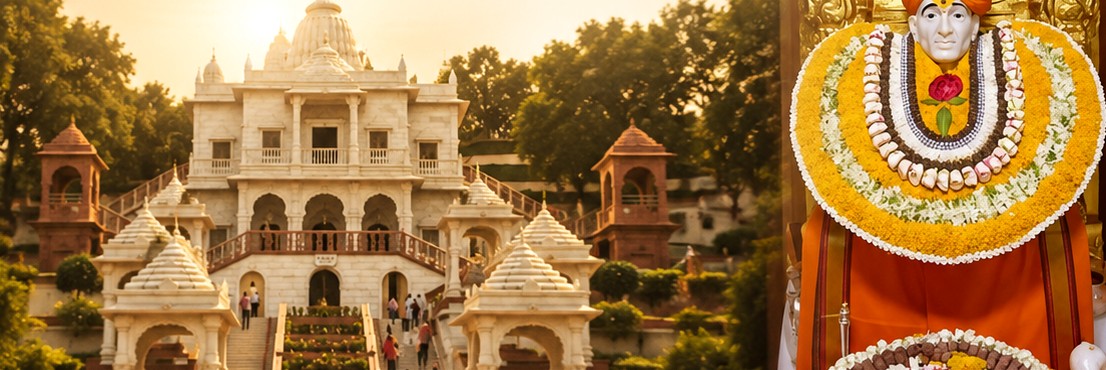
In the Santhal Parganas of Jharkhand, in a town whose very name means “the abode of the gods,” stands one of the most beloved shrines of eastern India — Baba Baidyanath Dham at Deoghar, worshipped by millions as the Vaidyanath Jyotirlinga. Here the deity is revered above all as the healer: Vaidyanath, the Lord of Physicians, to whom the ailing and the anguished have turned for generations. This guide covers the temple’s significance, its darshan, the extraordinary Shravani Mela, the nearby shrine of Basukinath, and how to reach Deoghar.
The Healer Among the Jyotirlingas
Among the twelve Jyotirlingas, each carries a distinct grace — and at Deoghar, the grace sought is healing. The name Vaidyanath means the Lord of Physicians, and according to tradition, Shiva here is the divine doctor who cures the ills of body and fate alike. The temple’s founding legend belongs to Ravana, the learned king of Lanka and one of Shiva’s greatest devotees: per tradition, Ravana performed intense penance at Kailasa, and Shiva, pleased, granted him a linga to carry to Lanka — with the condition that it not be placed on the earth mid-journey. At Deoghar, tradition says, the linga was tricked to the ground and became fixed, and it has been worshipped here ever since as Baidyanath. Whatever one makes of the legend, the lived reality is unmistakable: the air around the sanctum hums with the prayers of those seeking relief, and the offering of water upon the linga remains the heart of devotion here.
Darshan at Baba Baidyanath Dham
The main temple of Baidyanath rises from a courtyard crowded with shrines — commonly counted as around twenty-one to twenty-two — so that the whole enclosure feels like a gathering of the gods around their healer. The linga itself is an object of deep affection: devotees offer jalabhishek, pouring water — and in Shravan, Ganga water carried hundreds of kilometres — over the deity, in the same spirit as the abhishek seva performed daily at Omkareshwar, which we describe in our guide to puja and abhishek at the Omkareshwar Jyotirlinga.
The temple generally opens in the early morning and receives darshan queues until mid-afternoon, reopening in the evening until night — but exact hours shift with the lunar calendar, so confirm the current timings with temple authorities. A practical rhythm for pilgrims: arrive early, offer jalabhishek, take darshan of the courtyard shrines, and rest in the afternoon before the quieter evening darshan. On Mondays and through the month of Shravan, expect very heavy crowds.
Shravani Mela — A River of Kanwariyas
For one month of the year — Shravan, approximately July to August — Deoghar becomes the centre of one of the largest religious gatherings in India. During the Shravani Mela, lakhs of kanwariyas walk from Sultanganj in Bihar, where the Ganga is collected in pots, roughly 100 km on foot to Deoghar, carrying the sacred water balanced on shoulder-poles. In recent years the total flow of pilgrims across the month has run into enormous numbers, with estimates on peak days — especially Shravan Mondays — often reaching many lakhs. The roads become a moving river of saffron; rest camps, medical posts and water stations line the route. If you travel during Shravan, book every bed and ticket far in advance, travel light, and prepare for crowds of a scale few other tirthas see.
Basukinath and Other Nearby Places
Roughly 42–45 km from Deoghar, on the road toward Dumka, stands Basukinath — a serene temple of Shiva and Parvati, where, according to local tradition, the divine couple are said to reside together, and evening aarti here draws large, gentle crowds. Most pilgrims combine Baba Baidyanath’s morning darshan with Basukinath’s evening darshan in a single day, and the drive through the Jharkhand countryside is part of the pleasure. Closer to town, pilgrims also visit the hill park of Nandan Pahar and the ashrams and sacred groves around Tapovan, making two comfortable days at Deoghar easy to fill.
Deoghar or Parli — A Respectful Note
An honest guide must mention that the identity of the Vaidyanath Jyotirlinga has a second, honoured claimant. Most widely circulated recitations of the twelve — including the list in our article on the 12 Jyotirlingas and their locations — name Deoghar as Vaidyanath, and Baba Baidyanath Dham is the shrine most commonly meant when devotees speak of Vaidyanath. Yet Parli Vaijnath in Maharashtra is worshipped by many as the true Vaidyanath seat, a tradition explored in our guide to Aundha Nagnath and Parli Vaijnath. Devotees handle this the way Indian tradition usually handles sacred geography — with respect on all sides. Some pilgrims, indeed, make it a point to visit both Deoghar and Parli, letting the debate belong to the scholars while the darshan belongs to everyone.
How to Reach Deoghar
| Mode | Route | Approximate Distance |
|---|---|---|
| Rail | Jasidih Junction on the Delhi–Howrah main line | ~6–8 km from Deoghar town |
| Air | Deoghar airport (limited services) or Ranchi | Ranchi ~300–330 km |
| Road | From Kolkata | ~370–400 km |
| Road | From Patna | ~320–350 km |
Jasidih, a short drive from the temple town, remains the classic gateway, with frequent trains from Kolkata, Patna and Delhi. Accommodation ranges from temple dharamshalas to mid-range hotels; during Shravani Mela, everything should be booked well ahead, and rates should be confirmed at booking.
Summary
Baba Baidyanath Dham at Deoghar is eastern India’s great Jyotirlinga — the healer-lord to whom pilgrims bring both illness and gratitude, enshrined in a temple courtyard dense with shrines. Time your visit around the jalabhishek tradition, pair it with the evening aarti at Basukinath some 42–45 km away, arrive by Jasidih junction, and if you seek the month of Shravan, prepare for a sea of kanwariyas. And whichever position one takes on the ancient question of Deoghar versus Parli, one thing is certain: the grace of Vaidyanath — like the grace of Omkareshwar on the Narmada — belongs to every devotee who arrives with faith.
Frequently Asked Questions
Which is the real Vaidyanath Jyotirlinga — Deoghar or Parli Vaijnath?
Deoghar's Baba Baidyanath Dham is the shrine most widely worshipped as the Vaidyanath Jyotirlinga in the common recitation across most of India. Parli Vaijnath in Maharashtra is also honoured by many as the Vaidyanath seat, and both traditions are treated with equal respect by devotees.
What is the Shravani Mela at Deoghar?
Shravani Mela is the month-long festival in the Hindu month of Shravan (approximately July–August), when lakhs of kanwariyas carry Ganga water from Sultanganj on foot, roughly 100 km, to offer it on the Baba Baidyanath linga. Peak days see many lakhs of pilgrims arriving in Deoghar.
How far is Basukinath from Deoghar?
Basukinath is approximately 42–45 km from Deoghar, on the road toward Dumka. Most pilgrims combine morning darshan at Baba Baidyanath with an evening visit to the Basukinath Shiva temple on the same day.