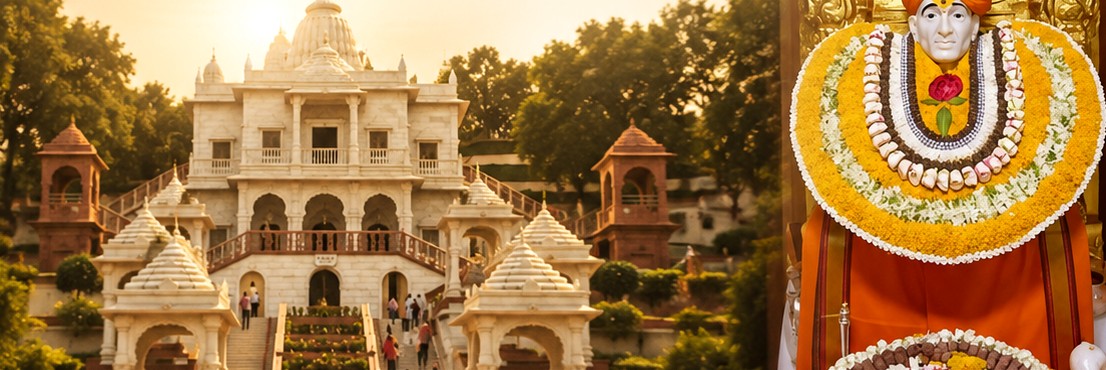
Marathwada hides two of the most intriguing temples in India’s Jyotirlinga tradition: Aundha Nagnath in Hingoli district and Parli Vaijnath in Beed district. Each is revered by its local tradition as one of the twelve Jyotirlingas — Aundha as the Nagesh shrine and Parli as Vaidyanath, the divine physician — even as the most widely recited lists place those two Jyotirlingas near Dwarka in Gujarat and at Deoghar in Jharkhand. Devotees rarely see this as a dispute; they simply visit all of them. This guide covers both temples respectfully — their legends, architecture, indicative timings, how to reach them, and a two-day itinerary that links them.
Aundha Nagnath: Hingoli’s Ancient Nagesh Shrine
Aundha Nagnath is a small temple town in Hingoli district, and its temple is one of the older stone shrines of Maharashtra, built in the Hemadpanti style — the distinctive mortarless stone construction associated with the 13th-century minister Hemadri Pant. The sanctum is notable for being set below the level of the surrounding floor, so devotees look down toward the swayambhu linga — an arrangement that gives darshan here a quiet, subterranean gravity.
Local tradition identifies this shrine with the Nagesh Jyotirlinga and describes it with great pride as first among the twelve. A charming legend also connects the temple with Sant Namdev of the Pandharpur tradition — priests will happily narrate how the Lord is said to have turned toward his devotee — and the temple remains a living centre of the warkari faith in this region.
| Practical Detail | Indicative Information |
|---|---|
| Darshan timings | Approximately 4:00–5:00 AM to about 9:00 PM, with a midday break; confirm with temple authorities as schedules change |
| Nearest rail heads | Aundha Nagnath’s small station locally; Parbhani (about 50–60 km) and Hingoli (about 25–30 km) for better connections |
| Road access | State buses and autos from Parbhani, Hingoli and Basmath; roads are generally manageable |
| Stay options | Simple lodges and dharamshala rooms; indicative tariffs roughly INR 400–1,500 per night — confirm at booking |
Parli Vaijnath: Beed’s Hilltop Vaidyanath
Parli Vaijnath, in the southern part of Beed district, is a temple that announces itself from afar: its walls and gateway rise on a hill slope at the edge of town, and the spire glows warmly at dusk. Vaidyanath means the Lord as Physician — Shiva in his aspect as the healer of the gods themselves — and according to tradition, this is where the Lord chose to abide as a swayambhu linga associated with Ravana’s great devotion. Many pilgrims come here specifically to pray for health and recovery.
The present structure is credited, in most accounts, to renovations under Queen Ahilyabai Holkar in the 18th century, and the temple’s courtyard, deepa-malas and flight of steps carry her era’s unmistakable imprint. The shrine is traditionally paired with the Yogeshwari temple at Ambajogai — about 20–25 km away — whom local tradition reveres as Vaijnath’s consort; a complete Parli pilgrimage usually includes both.
| Practical Detail | Indicative Information |
|---|---|
| Darshan timings | Approximately 4:00–5:00 AM to about 9:00 PM with a midday break; Mahashivratri and Shravan are exceptionally crowded; confirm locally |
| Nearest rail head | Parli Vaijnath station, with connections toward Parbhani, Latur and beyond; many pilgrims also drive from Aurangabad (roughly 200 km) |
| Road access | State buses from Beed (about 90–100 km), Ambajogai and Parbhani; autos available at the station |
| Stay options | Lodges near the temple; indicative tariffs roughly INR 500–2,000 per night — confirm at booking |
Two Traditions, One Devotion: The Competing Claims
Honesty serves pilgrims best here. The Jyotirlinga recitation most commonly used across India names Nageshwar near Dwarka as the tenth shrine — with its giant Shiva statue on the Okha road, covered in our Nageshwar Jyotirlinga guide — and Vaidyanath at Deoghar in Jharkhand as the ninth, which we cover in our Vaidyanath Deoghar guide. Yet the traditions of Aundha Nagnath and Parli Vaijnath are ancient, deeply loved, and upheld by millions of devotees in Maharashtra, and many scholars note that the Puranic verses leave room for these readings.
The pilgrim’s answer, generations old, is generosity: visit all four. Those completing the full circuit — Dwarka, Deoghar, Aundha, Parli — often say the two Marathwada temples, far from the crowds of the more famous claimants, offer the most unhurried darshan of all. The standard ordering of the twelve, for reference, is in our complete list of the 12 Jyotirlingas.
Comparing the Two Temples
| Feature | Aundha Nagnath | Parli Vaijnath |
|---|---|---|
| District | Hingoli | Beed |
| Claimed Jyotirlinga | Nagesh (Nageshwar) | Vaidyanath |
| Architecture | Hemadpanti stone, sanctum below floor level | Hillside temple, 18th-century Holkar-era renovation |
| Best rail approach | Parbhani / Hingoli Road | Parli Vaijnath station |
| Nearby pilgrimage add-on | Basmath, Hingoli | Yogeshwari temple, Ambajogai (about 20–25 km) |
A Two-Day Pilgrimage Itinerary
| Day | Plan |
|---|---|
| Day 1 | Arrive at Parbhani or Hingoli by overnight train or road; drive to Aundha Nagnath (about an hour) for darshan; either overnight at Aundha or return to Parbhani for a wider choice of hotels. |
| Day 2 | Drive from Aundha/Parbhani to Parli Vaijnath (approximately 120–140 km, about 3 hours) for darshan; add the Yogeshwari temple at Ambajogai in the evening; continue to Latur or Aurangabad for onward travel. |
Travel in Marathwada is easiest by hired car (indicatively INR 3,000–5,500 per day — confirm at booking); state buses cover all legs but add time. Carry cash, as network coverage and digital payments can be unreliable in the smaller towns. The best season is October to February; monsoon travel is possible but slower, and both temples swell with devotees during Shravan and Mahashivratri.
Summary
Aundha Nagnath and Parli Vaijnath offer something the more celebrated Jyotirlingas rarely can: unhurried darshan, ancient stone, and living local traditions — one identifying itself with Nagesh, the other with Vaidyanath the divine physician. Hold the competing claims respectfully, visit the sister shrines at Dwarka and Deoghar when you can, and link these two temples in an easy two-day Marathwada circuit via Parbhani, Hingoli and Ambajogai. Keep all timings and distances approximate, confirm locally, and let these quiet temples of Maharashtra complete your picture of the twelve Jyotirlingas in all their beautiful plurality.
Frequently Asked Questions
Why do Aundha Nagnath and Parli Vaijnath claim Jyotirlinga status?
Local tradition in Maharashtra identifies Aundha Nagnath in Hingoli district with the Nagesh Jyotirlinga and Parli Vaijnath in Beed district with the Vaidyanath Jyotirlinga. The most widely recited lists place Nageshwar near Dwarka and Vaidyanath at Deoghar, so devotees honour both traditions respectfully.
How do I reach Aundha Nagnath?
Aundha Nagnath has a small railway station and is approximately 25–30 km from Hingoli and about 50–60 km from Parbhani, both of which have better rail and road connections. Autos and state transport buses cover the final stretches.
What is Parli Vaijnath famous for?
Parli Vaijnath in Beed district is revered as the Vaidyanath — the divine physician — Jyotirlinga by its local tradition. The hillside temple is associated with legends of Ravana's devotion and is closely linked with the Yogeshwari temple at Ambajogai.