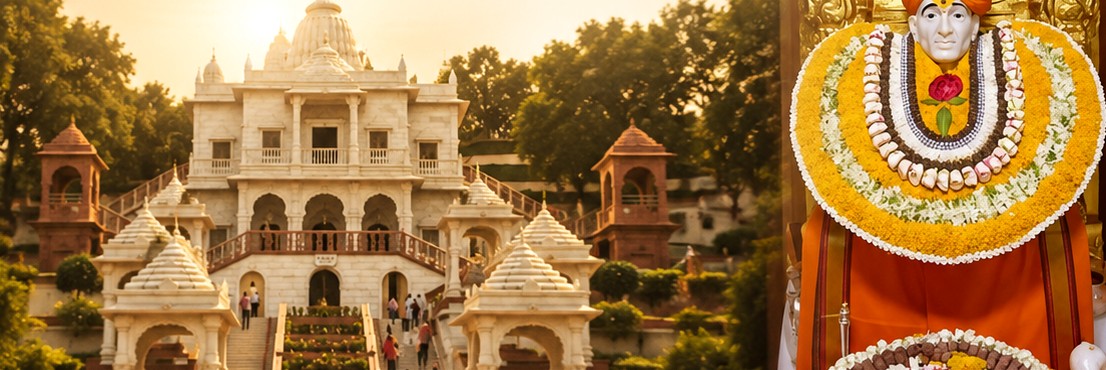
The 12 Jyotirlingas of India — known in devotional recitation as the Dwadash Jyotirlinga — are the most revered shrines of Lord Shiva, scattered across the length and breadth of the country. Each is believed to be a self-manifested (swayambhu) symbol of the infinite divine light of Shiva. This article offers the complete list with locations, brief significance of each, and where Omkareshwar fits within this sacred geography.
What Is a Jyotirlinga?
The word Jyotirlinga comes from jyoti (light) and linga (symbol) — together meaning “the luminous symbol of Shiva.” According to tradition, these are not man-made shrines but manifestations of divine light, each appearing at a place chosen by the Lord himself. The Shiva Purana and the well-known Jyotirlinga Stotram traditionally list twelve such sacred sites, and reciting their names is itself considered an act of devotion.
For the deeper background of one of these shrines, see our article on Omkareshwar’s history & spiritual significance.
The 12 Jyotirlingas — Complete List
The order below follows the common recitation used in many homes and temples across India.
| # | Name | Location | State |
|---|---|---|---|
| 1 | Somnath | Near Veraval, Gir Somnath | Gujarat |
| 2 | Mallikarjuna | Srisailam | Andhra Pradesh |
| 3 | Mahakaleshwar | Ujjain | Madhya Pradesh |
| 4 | Omkareshwar | Mandhata island, Narmada river, Khandwa district | Madhya Pradesh |
| 5 | Kedarnath | Himalayas, Rudraprayag district | Uttarakhand |
| 6 | Bhimashankar | Pune district (near Khed) | Maharashtra |
| 7 | Kashi Vishwanath | Varanasi | Uttar Pradesh |
| 8 | Trimbakeshwar | Near Nashik | Maharashtra |
| 9 | Vaidyanath | Deoghar | Jharkhand |
| 10 | Nageshwar | Near Dwarka | Gujarat |
| 11 | Rameshwaram | Rameswaram island | Tamil Nadu |
| 12 | Grishneshwar | Near Ellora, Aurangabad | Maharashtra |
While local traditions sometimes identify alternative locations for one or two of these shrines, the list above reflects the most widely accepted recitation across India.
Significance of Each Jyotirlinga
Somnath
The first of the twelve, Somnath stands on the Arabian Sea coast in Gujarat. According to tradition, it was originally built by the Moon God (Soma) in gratitude to Lord Shiva, who relieved him of a curse. It is revered as an eternal shrine.
Mallikarjuna
Located at Srisailam in Andhra Pradesh, on the banks of the Krishna river, this shrine combines the grace of Shiva and Shakti. Tradition holds that Shiva and Parvati came here to comfort their grieving son Kartikeya.
Mahakaleshwar
Mahakaleshwar in Ujjain, Madhya Pradesh, is revered as the “Lord of Time” (Mahakala). It is among the most prominent Shaiva shrines of central India, famous for its Bhasma Aarti at dawn.
Omkareshwar
Omkareshwar sits on an island in the Narmada river, in Khandwa district of Madhya Pradesh. The island is traditionally described as shaped like the sacred syllable “Om”. A twin shrine, Mamleshwar (Amareshwar), stands on the south bank, and together they complete the Omkareshwar tirtha.
Kedarnath
High in the Himalayas of Uttarakhand, Kedarnath is one of the holiest shrines of Lord Shiva and forms part of the Char Dham circuit. It is accessible for only part of the year due to extreme weather.
Bhimashankar
Bhimashankar, set in the forests of Maharashtra near Pune, is associated by tradition with the legend of the demon Tripurasura and the divine light that manifested here after his defeat.
Kashi Vishwanath
In Varanasi, the city of light, Kashi Vishwanath — the “Lord of the Universe” — is among the most venerated temples of Hinduism. Pilgrims believe that those who are blessed with darshan here attain spiritual liberation.
Trimbakeshwar
Trimbakeshwar, near Nashik in Maharashtra, lies close to the source of the Godavari river. Its linga is distinctive, traditionally said to carry three faces representing Brahma, Vishnu and Shiva.
Vaidyanath
Also known as Baidyanath, this shrine at Deoghar in Jharkhand is associated with the devotion of Ravana. According to tradition, Shiva came to be known here as the “Lord of Physicians” (Vaidya).
Nageshwar
Nageshwar, near Dwarka in Gujarat, is associated with the legend of a devotee named Supriya, whom Lord Shiva is said to have saved from a demon in the form of a serpent.
Rameshwaram
On a small island off the coast of Tamil Nadu, Rameshwaram is linked to the Ramayana. According to tradition, Lord Rama installed and worshipped a linga here before his campaign to Lanka.
Grishneshwar
Grishneshwar, near the Ellora caves in Maharashtra, is often considered the last of the twelve in the traditional recitation. It is associated with the devotion of a woman named Ghushma and the grace she received from Lord Shiva.
Where Omkareshwar Fits
Among the twelve, Omkareshwar holds a special place for several reasons. It is one of only two Jyotirlingas in Madhya Pradesh (the other being Mahakaleshwar in Ujjain), which allows pilgrims to visit both in a single trip with relative ease — a meaningful route explored in our Ujjain to Omkareshwar guide. It is also uniquely tied to a river tirtha, with the Narmada herself — among the seven sacred rivers of India — flowing around the shrine.
The mythic narrative of how the Jyotirlinga manifested here, linked to the devotion of King Mandhata and the sage who worshipped on the island, is recounted in our Omkareshwar Jyotirlinga story & legend.
The Idea of a Jyotirlinga Pilgrimage
Many devotees aspire to complete the Dwadash Jyotirlinga Yatra — a journey to all twelve shrines. This is naturally a long undertaking, spread across India, and is usually completed in stages over years rather than in a single trip. Practical approaches include:
- Regional circuits — combining geographically close shrines (such as the two in Madhya Pradesh, or those in Maharashtra).
- Seasonal planning — matching the Himalayan shrine of Kedarnath with its open season.
- Paced itineraries — allowing proper time for darshan, rest and reflection at each site.
Even visiting two or three of these twelve is considered deeply meritorious. The journey itself, undertaken with faith, is believed to be transformative.
Summary
The 12 Jyotirlingas — Somnath, Mallikarjuna, Mahakaleshwar, Omkareshwar, Kedarnath, Bhimashankar, Kashi Vishwanath, Trimbakeshwar, Vaidyanath, Nageshwar, Rameshwaram and Grishneshwar — together form the most sacred map of Shaiva devotion in India. Each carries its own legend, geography and grace. Omkareshwar, set on its Om-shaped island in the Narmada, shines brightly among them, offering pilgrims a rare union of river, mantra and divine light at one of the holiest tirthas in the land.
Frequently Asked Questions
What are the 12 Jyotirlingas of India?
The 12 Jyotirlingas are Somnath, Mallikarjuna, Mahakaleshwar, Omkareshwar, Kedarnath, Bhimashankar, Kashi Vishwanath, Trimbakeshwar, Vaidyanath, Nageshwar, Rameshwaram and Grishneshwar. They are spread across India and are the most sacred shrines of Lord Shiva.
Where is Omkareshwar Jyotirlinga located?
Omkareshwar is located on an island in the Narmada river in Khandwa district of Madhya Pradesh. The island is traditionally said to be shaped like the sacred syllable 'Om'.
Which Jyotirlingas are in Madhya Pradesh?
Madhya Pradesh is home to two Jyotirlingas — Mahakaleshwar in Ujjain and Omkareshwar in Khandwa district — making the state especially significant for Shaiva pilgrims.