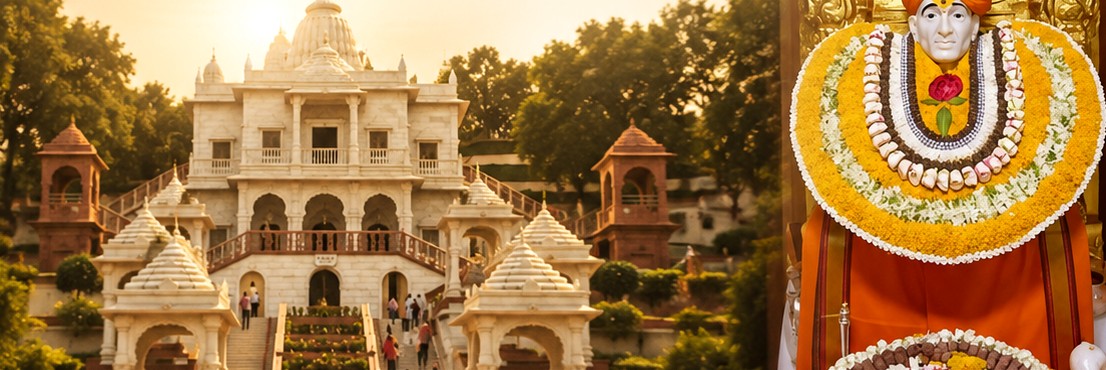
Every few years, one of India’s rivers becomes the centre of the world’s largest gathering of humanity. When the turn belongs to the Godavari, the stage is Nashik and Trimbakeshwar, and the festival is the Nashik Kumbh Mela — known in this region as Simhastha. Millions of pilgrims, saints and seekers converge on Ram Kund and the Kushavarta tirtha to bathe at the moments tradition holds most auspicious. This guide explains the festival’s history and significance, how its dates are reckoned, what to expect on the ground, and how to prepare if your pilgrimage coincides with the next cycle.
What Is the Nashik–Trimbakeshwar Kumbh?
The Kumbh Mela tradition rests on an ancient legend. According to tradition, when the gods and demons churned the ocean for the nectar of immortality (amrit), drops of that nectar fell at four places on earth — and each became the seat of a Kumbh: Haridwar (Ganga), Prayagraj (Ganga–Yamuna–Saraswati), Ujjain (Shipra) and Nashik–Trimbakeshwar (Godavari). At astrologically determined intervals, bathing at these tirthas is believed to confer exceptional merit.
Each Kumbh follows its own astronomical reckoning. For the Nashik–Trimbakeshwar Kumbh, the timing is traditionally tied to Jupiter’s transit into Leo (Simha) — hence the regional name Simhastha — occurring roughly every twelve years. Within the festival period, specific days are designated for the shahi snan, the royal baths, when the akhadas — the organised orders of sadhus — lead processions to the river.
History in Brief
The historical origins of the Nashik Kumbh are layered and, as with many ancient institutions, not precisely documented. Reverence for the Godavari and her ghats is ancient — the Puranas celebrate her sanctity — and the association of Nashik’s Ram Kund with royal baths grew over the medieval and Maratha periods, when the region’s rulers patronised the Godavari ghats and the Trimbakeshwar temple. The modern form of the mela, with administration, akhada processions and designated bathing days, evolved particularly through the nineteenth and twentieth centuries.
The most recent major celebration was the 2015–2016 Nashik–Trimbakeshwar Simhastha, which drew many millions of bathers across its principal days — a scale that tested and shaped the modern management of the festival. Historical accounts of specific earlier melas vary in detail, and it is best to treat precise attendance figures and dates of early melas with caution; what is certain is the unbroken living tradition of pilgrimage to the Godavari in these auspicious years.
The Two Stages: Ram Kund and Kushavarta
The Nashik Kumbh is unusual in unfolding across two sacred centres, approximately 30 km apart, each with its own character.
| Centre | Principal Bathing Site | Character | Notes |
|---|---|---|---|
| Nashik city | Ram Kund and the Godavari ghats at Panchavati | Urban, vast crowds, processions through city streets | The heart of shahi snan in Nashik; explore the area in our Panchavati guide |
| Trimbakeshwar | Kushavarta tirtha at the source town | More contained, intense; tied to the Jyotirlinga | Sadhu processions ascend to this small hill town |
The division of bathing between the two centres, and the schedules of the akhadas between them, are settled by the festival authorities and the akhadas in advance of each Kumbh. Pilgrims typically base themselves in one centre and visit the other.
When Is the Next Kumbh?
After the 2015–16 cycle, the next Nashik–Trimbakeshwar Simhastha is generally expected around 2027–28, in keeping with the approximately twelve-year Jupiter cycle. Two cautions serve every planner well. First, the exact commencement, the shahi snan dates and the festival’s duration are formally determined by religious authorities and announced officially — always confirm dates through official government and festival channels before making arrangements. Second, demand for rooms, transport and darshan during the festival period is extreme, and arrangements evolve right up to the event.
For devotees wishing to experience a Kumbh sooner, the sister festivals follow their own cycles: the Ujjain Simhastha on the Shipra — described in our Ujjain Simhastha Kumbh guide — and the Haridwar Kumbh on the Ganga, introduced in our Haridwar travel guide. Each is the same ocean; only the river differs.
Planning a Visit During Simhastha
A Kumbh is among the most demanding travel environments in India, and among the most unforgettable. Practical guidance from past melas:
- Choose your base early. Nashik city offers more rooms and transport; Trimbak offers proximity to Kushavarta but limited capacity. Book months ahead — a year ahead is not excessive — and expect festival-period premiums. Simple dharamshala and trust accommodation is abundant but fills first.
- Plan around the shahi snan days. The royal bath days are the climax — and the most crowded, with bathing ghats at their densest from pre-dawn. If your aim is darshan of the processions, arrive the previous evening. If your aim is a quieter bath, choose a non-shahi-snan day within the festival period.
- Travel light and move early. Vehicle restrictions near the ghats are extensive on main days; expect to walk the last kilometres. Carry minimal belongings, water and any medicines on your person.
- Care for elders and children. Crowd pressure near ghats at peak hours is serious; keep groups small, agree on meeting points, and consider viewing processions from safer, less dense stretches.
- Health and safety. Follow official crowd-management guidance, use footbridges and designated crossings, and drink only filtered or bottled water. Medical camps are set up across the festival zone.
Summary
The Nashik Kumbh Mela (Simhastha) is the Godavari’s great festival — an approximately twelve-yearly convergence of millions upon Ram Kund in Nashik and the Kushavarta tirtha at Trimbakeshwar, anchored in the legend of the nectar and the transit of Jupiter into Leo. The last major celebration was in 2015–16, and the next cycle is generally expected around 2027–28, though dates must be confirmed through official channels. Whether you bathe on a shahi snan day or simply stand witness to the processions of saints, the Simhastha offers a glimpse of pilgrimage at its most vast and most ancient — the Godavari at her most glorified, and the human heart at its most seeking. Plan early, travel light, and hold the experience with the reverence it deserves.
Frequently Asked Questions
When is the next Nashik Kumbh Mela?
The Nashik–Trimbakeshwar Kumbh follows an approximately 12-year cycle; after the 2015–16 Simhastha, the next major cycle is generally expected around 2027–28. Official dates are announced by the authorities well in advance, so confirm through official channels before planning.
Where does the Nashik Kumbh Mela take place?
The mela is held at two linked centres: Ram Kund and the Godavari ghats in Nashik's Panchavati area, and the Kushavarta tirtha at Trimbakeshwar, about 30 km away. Shahi snan processions take place at both.
What is a shahi snan?
A shahi snan is the royal bath, in which processions of sadhus and saints of various akhadas proceed to the river at auspicious astrological moments, followed by millions of pilgrims. These designated days are the climax of any Kumbh Mela.