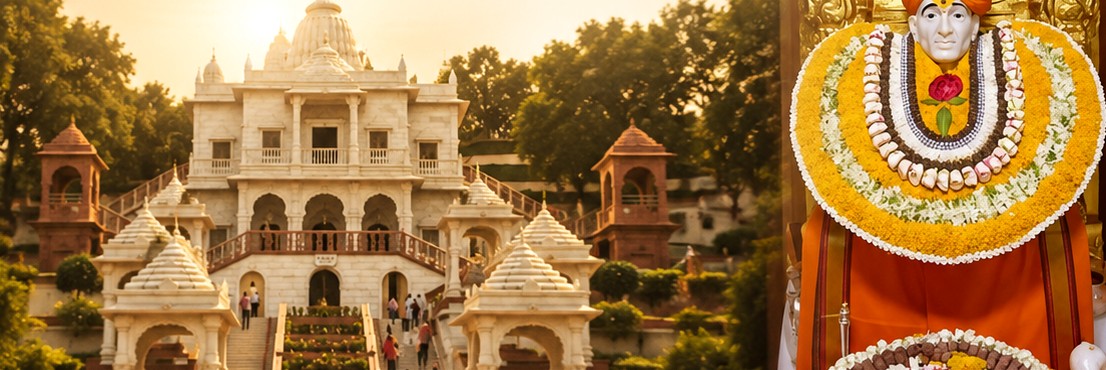
The sacred landscape of Omkareshwar in the Puranas and ancient texts places it among the most venerated tirthas of Hindu tradition. As one of the twelve Jyotirlingas of Lord Shiva, set on an island in the Narmada river, Omkareshwar is described in puranic literature as a place where divine light, sacred water and devout worship converge. This article offers a reverent, scholarly overview of how Omkareshwar is referenced in Hindu scripture — with carefully hedged attributions, since exact verse numbering and textual variants differ across manuscripts.
Omkareshwar as a Sacred Tirtha
In Hindu thought, a tirtha is a “crossing place” — a point where the boundary between the earthly and the divine becomes thin, allowing the pilgrim to cross from ordinary life into the presence of the sacred. Omkareshwar is described in puranic literature as one such tirtha, made powerful by the convergence of three elements:
- The self-manifested Jyotirlinga of Lord Shiva.
- The presence of the Narmada herself, one of the seven sacred rivers.
- The Om-shaped geography of the island, which echoes the primordial mantra.
Together these features made Omkareshwar a key pilgrimage site in the sacred geography of ancient India. For the broader background, see our article on Omkareshwar’s history & spiritual significance.
References in Puranic Literature
The Skanda Purana
The Skanda Purana — the largest of the eighteen Mahapuranas — is especially rich in descriptions of sacred places. Omkareshwar is traditionally referenced in this text, where the glory of the Jyotirlinga and the sanctity of the Narmada are extolled. The relevant sections describe:
- The manifestation of the Jyotirlinga, often linked to the devotion of a legendary king or sage.
- The merit of bathing in the Narmada at this tirtha, believed to purify the soul.
- The power of pilgrimage and parikrama performed at the island.
Because puranic texts circulated in many regional recensions, the precise verses and chapters vary between manuscripts. We therefore present these as traditional references rather than exact citations.
The Shiva Purana
The Shiva Purana is the principal scripture devoted to Lord Shiva. It contains the well-known account of the Jyotirlingas, in which the manifestation of divine light at twelve sacred sites is described. Omkareshwar is included in this list, alongside shrines such as Somnath, Mahakaleshwar, Kashi Vishwanath and Rameshwaram.
The Shiva Purana’s framing of the Jyotirlinga as an infinite, formless column of light is central to the way devotees understand Omkareshwar — not merely as a temple, but as a visible meeting point between the finite world and the limitless divine.
The Concept of the Jyotirlinga in Texts
The word Jyotirlinga — from jyoti, light, and linga, symbol — refers to the luminous symbol of Lord Shiva. According to puranic and later devotional literature:
| Textual Layer | Contribution to the Jyotirlinga Concept |
|---|---|
| Vedic foundations | Reverence for light, fire and the formless Absolute |
| Shiva Purana | The narrative of the infinite column of light |
| Jyotirlinga Stotram | The list of twelve sacred shrines, widely recited |
| Puranic tirtha literature | Descriptions of merit, pilgrimage and ritual at each site |
The Jyotirlinga Stotram — a short devotional hymn recited across India — names all twelve shrines, with Omkareshwar among them. For the mythic narrative associated with Omkareshwar specifically, see our Omkareshwar Jyotirlinga story & legend.
The Narmada in Scripture
The sanctity of Omkareshwar cannot be separated from the Narmada, also known in ancient texts as Reva. The river is described in puranic and later literature as a living goddess — born, according to tradition, from the body of Lord Shiva himself, and therefore exceptionally pure.
Key textual motifs around the Narmada include:
- Her unique east-to-west flow, opposite to most major rivers of India.
- The belief that, unlike other rivers, she is accessible and grace-giving in her liquid form throughout her course.
- The tradition of Narmada parikrama — circumambulating the river itself, a practice undertaken by thousands of pilgrims.
- Her presence as the central sacred river of central India, around which shrines like Omkareshwar and Maheshwar flourished.
For a fuller exploration, see our article on the significance of the Narmada (Reva) river.
Omkareshwar and the Mandhata Legend
Puranic and oral traditions connect Omkareshwar with King Mandhata, a legendary sovereign of the Solar dynasty, after whom the island is named. According to tradition, the king performed intense penance here, pleasing Lord Shiva, who then manifested as the Jyotirlinga. Variants of this story appear across devotional literature, sometimes including additional figures such as the sage Gautama or the divine Mount Vindhya, whose pride and devotion play a role in the narrative.
These stories are best understood not as historical chronicles but as sacred narratives — vessels for theological truths about devotion, grace and the descent of the Divine into a particular place.
Why These Textual References Matter
For the pilgrim, knowing that Omkareshwar is grounded in scripture deepens the experience of darshan. The visit becomes more than tourism; it becomes participation in a tradition that stretches back through centuries of devotion, scholarship and song. The texts remind us that:
- This is a place where the Divine has been worshipped for millennia.
- The river, the island and the linga together form a single sacred whole.
- The merit of pilgrimage here has been affirmed by generations of teachers.
A Note on Scholarship and Devotion
We write carefully here because ancient Indian texts are vast, layered and transmitted in multiple recensions. Identifying a single “definitive” verse about Omkareshwar is not always possible, and scholarly consensus on exact attributions can vary. What is consistent, however, is the devotional witness of countless generations — that Omkareshwar is a Jyotirlinga of incomparable power, and that this truth has been affirmed across the scriptural, puranic and bhakti traditions of India.
Summary
Omkareshwar’s place in the Puranas and ancient texts is both deep and enduring. Traditionally referenced in the Skanda Purana, included in the Jyotirlinga account of the Shiva Purana, and named in the widely recited Jyotirlinga Stotram, it stands as one of the most sacred tirthas of Hindu tradition. Its scriptural significance is inseparable from the Narmada (Reva) river, whose presence elevates this Om-shaped island into a living convergence of light, water and mantra. To walk here in pilgrimage is to step into a story told for millennia — and to add one’s own verse to it.
Frequently Asked Questions
Which Puranas mention Omkareshwar?
Omkareshwar is traditionally referenced in puranic literature, most notably in sections of the Skanda Purana and the Shiva Purana. It is described as a Jyotirlinga and as a sacred tirtha on the Narmada river.
Is Omkareshwar one of the 12 Jyotirlingas according to scripture?
Yes. Omkareshwar is included in the traditional list of twelve Jyotirlingas found in the Jyotirlinga Stotram and in puranic literature recited across India.
What do the ancient texts say about the Narmada at Omkareshwar?
Ancient texts revere the Narmada (also called Reva) as one of the holiest rivers of India. The region around Omkareshwar is described as a particularly powerful tirtha, where pilgrimage and ritual are said to bring great merit.