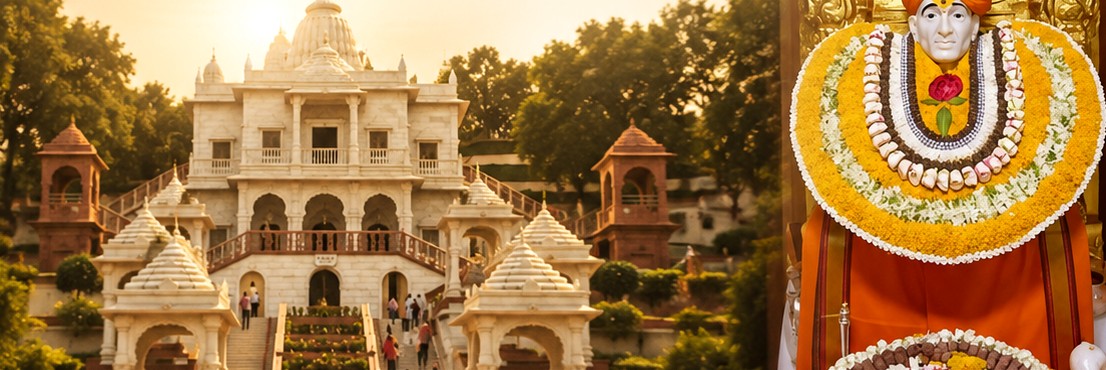
Every great temple town in India is married to a river, and at Pandharpur that river is the Chandrabhaga. Before a single bell rings in the Vitthal-Rukmini Mandir, pilgrims are already down at the water — faces turned to the rising sun, cupping the river in their palms. Understanding the Chandrabhaga river significance is to understand Pandharpur itself: a tirtha where water, story and song prepare the heart for darshan. This guide explores why the Bhima is called Chandrabhaga here, the custom of ritual bathing, the ghats of the town, and the practical wisdom pilgrims have gathered over generations.
The Bhima That Becomes the Chandrabhaga
The river that flows past Pandharpur is the Bhima, one of the great rivers of the Deccan, which tradition traces to the Bhimashankar hills — themselves revered as the seat of one of the twelve Jyotirlingas. Through most of its long journey across Maharashtra and Karnataka the river is known simply as the Bhima. Near Pandharpur, however, it sweeps into a broad, graceful curve, and according to tradition this crescent bend — resembling the arc of the moon, the chandra — gave the river its beloved local name, Chandrabhaga.
The warkari saints sang of this river constantly; for them, the Chandrabhaga was not scenery but a participant in devotion, the water that washes the fatigue of hundreds of walked kilometres and the witness to centuries of ekadashi vows. The holiness of Pandharpur as a tirtha is described, according to tradition, in Puranic literature connected with this region, where a bath at this bend of the river is extolled as a preparation for meeting the Lord who stands on his brick nearby. As with all sacred histories, we recount these traditions with reverence rather than as matters of verifiable record.
Ritual Bathing: Snan Before Darshan
The cherished sequence of a Pandharpur pilgrimage is snan-then-darshan: bathe in the Chandrabhaga, then stand before Vitthal. The bath is understood symbolically as much as physically — the outward washing of dust standing for the inward setting down of burdens. On ordinary days the ghats are busy but unhurried; on ekadashi, and above all around Ashadhi Ekadashi, they become an unbroken congregation of thousands, warkaris in wet white cotton chanting abhangs as the sun comes up.
Devotees customarily offer arghya — water lifted and released in offering to the sun and to the Lord — and some perform a simple tarpana or remembrance of ancestors at the river before climbing the steps to the temple. In the evening, small oil lamps floated at the water’s edge lend the riverfront a golden stillness after the day’s crowds. No one is compelled to any of this; even a token sprinkle of river water on the head is accepted custom for those who cannot bathe.
The Ghats of Pandharpur
The riverfront of Pandharpur is a chain of stone steps and shrines rather than a single grand ghat. The names in local use are given below; arrangements and access change seasonally, and during the great yatras the whole riverfront serves as one continuous bathing ground.
| Ghat or riverfront area | Traditionally associated with | What pilgrims do here |
|---|---|---|
| Mahadwar area steps | The main temple’s riverside gate and spire above | Snan before darshan; the classic first stop of the pilgrimage |
| Pundalik shrine riverfront | The small temple of Sant Pundalik on the bank, upstream of the main complex | Darshan of the shrine tied to the founding legend of Vitthal waiting |
| Vishnupad stretch | A riverside shrine of the Lord’s footprints, according to local tradition | Quiet worship away from the busiest steps |
| Outer ghats north and south | Villages of warkaris camping during yatra | Mass bathing and laundry during the yatra season |
The Pundalik shrine deserves special mention: according to tradition, it stands at the spot associated with the devotee whose service to his parents brought the Lord himself to Pandharpur, and many pilgrims complete their visit by bowing here after the main darshan — the Lord who came for his devotee, and the devotee’s humble shrine beside the water.
The Spiritual Meaning of the Chandrabhaga
Rivers in Indian devotion are mothers, and each great tirtha teaches through its own waters. The Chandrabhaga’s lesson, as the warkari tradition received it, is accessibility: the river accepts every pilgrim equally — king and labourer, scholar and shepherd — just as Vitthal of Pandharpur accepts every heart. The crescent bend is remembered as the moon’s embrace of the town, and saints sang of the river as flowing with the nectar of nam-smaran rather than mere water.
Pilgrims who travel widely will recognise the family resemblance between tirthas. Just as the sacred ghats of Omkareshwar receive pilgrims to the Narmada before they climb to the Jyotirlinga, and just as the significance of the Narmada and Reva is woven into every parikrama of that island shrine, the Chandrabhaga completes Pandharpur — the water half of a single sacred design. At our own Sansthan in Omkareshwar we see daily how the river prepares devotees for darshan; Pandharpur belongs to the same ancient grammar of pilgrimage.
A Pilgrim’s Practical Guide to the River
- Bathe early. Dawn is the traditional and most beautiful hour; it is also cooler in summer and calmer than the festival rush.
- Respect the current. The Chandrabhaga is a working river. In and after the monsoon it runs deep and fast, and steps can be slippery with silt — bathe only where others are bathing, keep to the shallows and hold children by the hand.
- Dress modestly. Pilgrims traditionally bathe fully clothed in simple cotton; carry a dry set and change discreetly in the provided spaces.
- Travel light to the ghat. Leave valuables at your lodging; a wet pilgrim should carry nothing that matters.
- Leave the river clean. Avoid soap directly in the water where others are bathing, and carry away everything you bring.
- Combine the circuit thoughtfully. Many devotees move from the ghats to the temple, and then to Rukmini Devi’s shrine nearby — our Rukmini temple guide explains why her darshan customarily frames the visit.
Summary
The Chandrabhaga is Pandharpur’s first darshan — the crescent bend of the Bhima where, according to tradition, centuries of warkaris have washed the road from their feet and their worries from their hearts before meeting the Lord who waits on his brick. Take your bath at dawn where the crowd gathers, offer what your tradition offers, and treat the river with the caution any river deserves, especially in the monsoon. Then climb the steps, wringing wet and singing, toward the mandir. That sequence — water, then darshan; the mother, then the Lord — is the oldest and simplest pilgrimage plan Pandharpur knows.
Frequently Asked Questions
Why is the Bhima river called Chandrabhaga at Pandharpur?
According to tradition, the Bhima bends near Pandharpur in the shape of a crescent moon, and the river is therefore lovingly called Chandrabhaga in this stretch. Texts and hymns of the region have praised the river's holiness here for centuries.
Is a bath in the Chandrabhaga compulsory before Vitthal darshan?
No, it is not compulsory, but the cherished custom is snan-then-darshan — pilgrims bathe in the Chandrabhaga and then proceed to the temple. Those unable to bathe simply sprinkle a little river water and continue.
Which ghats do pilgrims use in Pandharpur?
Bathing is concentrated around the steps of the Mahadwar area close to the main temple, along with the stretches near the Pundalik shrine on the riverbank. On festival days the entire riverfront fills with bathers from dawn.
Is it safe to bathe in the Chandrabhaga during the monsoon?
Caution is essential. During and just after the monsoon the current is strong and the river can rise quickly, and bathing may be restricted or unsafe at some ghats. Follow local guidance and avoid deep water at all times.