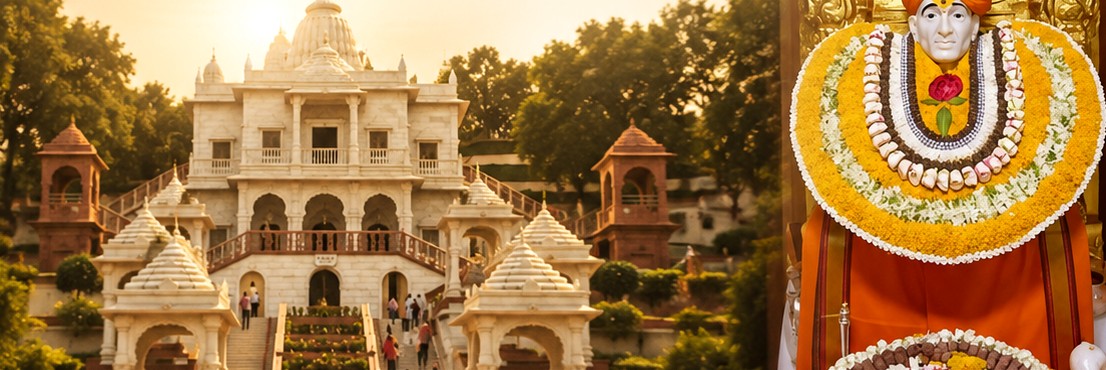
The significance of the Narmada river in Hinduism is profound and, in certain respects, unmatched among India’s sacred rivers. Also known as Reva, she is revered as a living goddess, believed to have flowed from Lord Shiva himself, and uniquely honoured through the practice of parikrama — a full circumambulation of her banks that no other major river receives. From her source at Amarkantak to her confluence with the Arabian Sea, the Narmada shapes the geography, mythology, and spiritual life of central India. This article explores why the Narmada is so sacred, her puranic references, and the traditions that make her central to Hindu devotion.
The Narmada as Shiva’s Own River
Among all the traditions surrounding the Narmada, the most cherished is the belief that she is intimately connected with Lord Shiva. Devotees hold that the Narmada was born from the very being of Shiva — that she is, in essence, his embodied grace flowing across the earth. This is why she is sometimes called Shankari (daughter of Shiva) and why her waters are considered inherently sanctified, requiring no additional consecration.
Because of this Shiva connection, the Narmada is uniquely suited to be used in Shiva worship. Her stones — the rounded bana-lingas naturally shaped in her bed — are themselves worshipped as representations of Shiva, a phenomenon found with no other river. Carrying a small Narmada stone or worshipping a bana-linga is considered as meritorious as worshipping a sculpted Shiva linga.
This deep Shaiva identity also explains the location of Omkareshwar, one of the twelve Jyotirlingas, on her Om-shaped island. For more on that sacred site, see our guide to Omkareshwar’s history and spiritual significance.
The Name “Reva” and Its Meaning
The Narmada is anciently known as Reva, a name that appears throughout the puranas. The word is often interpreted as meaning “the leaping one” or “the swift and surging one”, capturing the river’s energetic, lively flow as she descends from the highlands.
Both names — Narmada and Reva — refer to the same goddess-river and are used interchangeably in hymns, prayers, and pilgrimage songs. Pilgrims often invoke her as “Narmada-Reva” in a single breath, honouring both her tender, nourishing aspect and her powerful, untamed force.
The Unique Parikrama Tradition
What sets the Narmada apart from every other major Indian river is the practice of parikrama — circumambulation. While the Ganga, Yamuna, and other rivers are bathed in, worshipped, and sung, only the Narmada is walked around in full. Pilgrims undertake a journey of approximately 2,600 km, descending one bank from Amarkantak to the Arabian Sea and returning along the other.
No other river in the Hindu tradition receives this honour. The reasons lie in the belief that the Narmada, as Shiva’s own, is herself the deity — and one performs pradakshina (circumambulation) of a deity, not merely of a body of water. To walk her banks is to circle the goddess herself.
For the practical details of this great yatra, see our full Narmada parikrama guide.
Puranic References and Legends (Hedged)
The puranas — especially the Matsya Purana, Vayu Purana, and sections of the Skanda Purana — contain passages glorifying the Narmada. While exact attributions and verses vary across manuscripts and recensions, several broad themes recur in the tradition:
- Her divine origin from Shiva or, in some accounts, from the sweat or meditation of great beings.
- Her parity with or even superiority to the Ganga in certain devotional contexts — some puranic passages suggest that a single sight (darshan) of the Narmada equals the merit of bathing in the Ganga.
- Her purifying power, said to cleanse sins accumulated over many lifetimes.
- The merit of her parikrama, described as capable of granting liberation (moksha).
These references should be understood as devotional and traditional rather than historically verifiable claims. Different texts and regional traditions emphasise different aspects, and the oral lore along her banks is as rich as the written scripture. What is consistent across all sources is the river’s extraordinary sanctity.
The Source at Amarkantak
The Narmada is said to originate at Amarkantak, a hilly town in the Maikal range of eastern Madhya Pradesh, at the junction of the Vindhya and Satpura mountain systems. A sacred pond known as Narmada Kund marks the traditional spot of her emergence, and pilgrims gather here to bathe and offer prayers before the river begins her long westward journey.
Amarkantak is itself a major pilgrimage centre, home to numerous temples and ashrams. It is the starting and ending point of the full Narmada parikrama, lending it a special place in the geography of Hindu devotion.
The fact that the Narmada flows westward — unlike most major peninsular rivers that flow east — is itself treated as spiritually significant, marking her as distinct and exceptional.
The Omkareshwar Connection
Among the many sacred sites along the Narmada, Omkareshwar holds a place of singular importance. Here the river splits around an island shaped like the syllable “Om”, the most sacred sound in Hinduism, upon which sits one of the twelve Jyotirlingas. The convergence of the Narmada, the Om-shaped island, and the Jyotirlinga makes Omkareshwar one of the holiest places in the entire Narmada valley.
Pilgrims believe that bathing in the Narmada here and taking darshan of the Omkareshwar Jyotirlinga together fulfils the deepest purposes of Hindu worship. Learn more in our guide to the Om-shaped island of Omkareshwar.
Why Devotees Revere Her So Deeply
Several qualities converge to make the Narmada so beloved:
- She is Shiva’s own — her waters are inherently sacred, needing no ritual to consecrate them.
- She purifies effortlessly — a single dip or even her darshan is said to cleanse.
- She is approachable year-round — unlike some seasonal rivers, she flows perennially, always available to devotees.
- She grants boons — through her parikrama, her bana-lingas, and her aarti, she is believed to answer sincere prayers.
- She is the mother of central India — sustaining life, agriculture, and culture across Madhya Pradesh and Gujarat.
This combination of divinity, accessibility, and lived intimacy with millions of people gives the Narmada a place in the Hindu heart that is warm and personal as well as reverent.
The Narmada in Everyday Devotion
Beyond grand pilgrimages, the Narmada is woven into daily Hindu life across central India. Households keep small Narmada stones on their home altars. Devotees whisper her name — “Narmadayai Namah” — as a mantra. At every ghat, lamps are lit for her at dusk. And in countless families, a vow to one day walk her parikrama is passed from one generation to the next.
This everyday devotion is perhaps the truest measure of her significance: she is not a distant deity but a near, loving presence in the lives of millions.
Summary
The Narmada (Reva) river is among the holiest rivers in Hinduism, revered as the very embodiment of Lord Shiva’s grace. Known by her ancient name Reva, born at Amarkantak, and uniquely honoured through the practice of full circumambulation, she holds a place no other river occupies in the Hindu imagination. Puranic references (understood as devotional tradition) glorify her purifying power, while the everyday devotion of millions — her stones, her mantras, her aarti — keeps her presence alive in daily life. To understand the Narmada is to understand the spiritual heart of central India and the soul of Omkareshwar itself.
Frequently Asked Questions
Why is the Narmada river considered sacred in Hinduism?
The Narmada is considered sacred because tradition holds that she originates from Lord Shiva and flows as his embodiment. She is one of the holiest rivers and is uniquely honoured by being circumambulated rather than merely worshipped from her banks.
Why is the Narmada also called Reva?
Reva is an ancient name for the Narmada found in puranic texts, meaning 'the leaping one' or 'the swift one,' reflecting the river's lively flow. The two names refer to the same river and are used interchangeably in scripture and devotion.
Where does the Narmada originate?
The Narmada is believed to originate at Amarkantak in the Maikal Hills of Madhya Pradesh. From there she flows westward across Madhya Pradesh and Gujarat to meet the Arabian Sea.