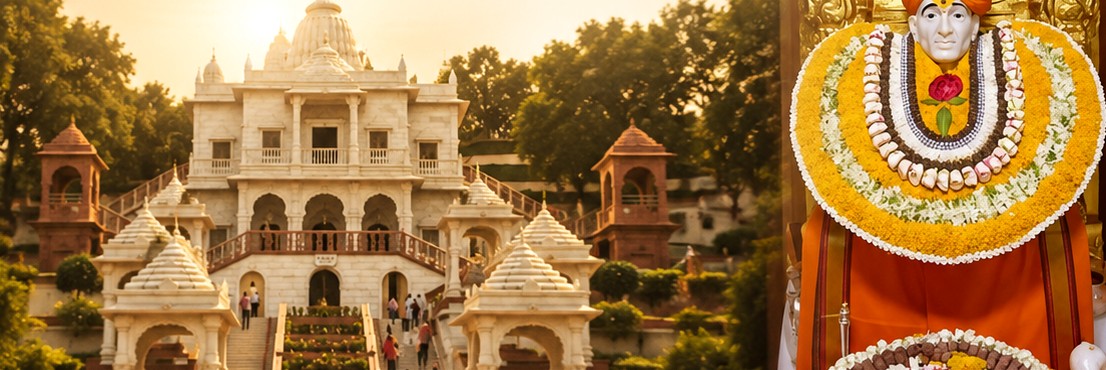
Where the Ganga bursts out of the Himalayan foothills and first touches the plains, pilgrims have gathered for thousands of years. Haridwar — the Gateway of the Gods — is where yatras begin: to the Char Dham, to the sources of the sacred rivers, to the mountains themselves. But Haridwar is far more than a doorway. Its own gift is the evening Ganga Aarti at Har Ki Pauri, its hilltop goddesses, and its standing as one of the four great Kumbh cities of India. This guide covers all of it, with a practical one-day plan.
Gateway of the Gods
The very name speaks: Haridwar, the gate of Hari (Vishnu) — and in its equally ancient form Hardwar, the gate of Har (Shiva). Whatever name one uses, the meaning is experiential. This is the town where the Ganga, after her Himalayan journey, slows and widens for the first time, and where devotees receive her with lamps, offerings and immersions. Haridwar is counted among the seven traditional holy cities of India and is the practical launch pad for the Himalayan Char Dham circuit — the four-abode yatra of Yamunotri, Gangotri, Kedarnath and Badrinath, whose planning we cover in our Chota Char Dham Yatra guide. Almost every yatri’s story in Uttarakhand begins on these ghats.
Har Ki Pauri and the Evening Ganga Aarti
At the heart of the town lies Har Ki Pauri, the sacred steps whose name per tradition refers to the footprint of Vishnu preserved in stone. This is the spiritual nucleus of Haridwar — the site of the Kumbh’s holiest baths, the place where ashes are offered to the river, and the stage for the evening Ganga Aarti that draws visitors from across the world.
The aarti takes place daily around sunset — approximately between 6:00 and 7:30 PM depending on the season, with winter evenings earlier — and follows the choreography beloved of the Ganga’s cities: priests on raised platforms swinging multi-tiered flame lamps in slow arcs, conches sounding, bells answering, and hundreds of small leaf-lamps set afloat afterward. Arrive at least 30–45 minutes early, sit on the steps downstream of the main platforms, and keep valuables secure in the press of the crowd. Those who have watched the great aartis of the Ganga cities — such as the evening ceremony at Varanasi’s Dashashwamedh Ghat, described in our guide to the Varanasi ghats — will find Haridwar’s version more intimate: closer, quieter, and with the foothills dimming behind the flames.
Mansa Devi, Chandi Devi and the Cable Cars
Two goddesses keep watch over the town from its enclosing hills, and both are reached by cable car — an unusual pleasure in a pilgrim’s day.
- Mansa Devi, on Bilwa Parvat above the town, is the wish-fulfilling goddess of Haridwar; her shrine and the sweeping view of the Ganga’s bend make the ascent worthwhile in every sense. The Udan Khatola cable car carries pilgrims up in minutes, and a steep walking path offers the traditional alternative.
- Chandi Devi, atop Neel Parvat on the other bank, commemorates — according to tradition — the Goddess’s slaying of the demons Chanda and Munda. A ropeway serves this hill too, and combined tickets for both shrines are typically available at indicative prices of a few hundred rupees; confirm current fares when purchasing.
Many pilgrims complete both goddesses in one morning, returning by noon — the ideal rhythm before the day heats up.
Haridwar the Kumbh City
Haridwar is one of the four Kumbh cities — alongside Prayagraj, Nashik and Ujjain — where, per tradition, the nectar of immortality fell during the cosmic chase, and where the Kumbh Mela rotates at roughly twelve-year intervals, with Ardha Kumbha gatherings in between. The most recent Haridwar Kumbh was held in 2021 under extraordinary circumstances. Even in ordinary years, the scale of Haridwar’s bathing culture — the weekly baths, the amavasya and purnima ghats-days — echoes the same tradition, just as Ujjain’s Simhastha does on the Shipra, as we explore in our article on the Ujjain Simhastha Kumbh. For lovers of sacred rivers, these great bathing cities form a family: Ganga, Shipra, Godavari and the sangam at Prayagraj, each with her own calendar of grace.
A One-Day Pilgrim Plan
| Time | Activity |
|---|---|
| 5:30 – 7:00 AM | Dip in the Ganga at Har Ki Pauri; morning aarti atmosphere |
| 7:30 – 11:30 AM | Cable car to Mansa Devi, then Chandi Devi; darshan at both |
| 12:00 – 3:30 PM | Bazaar walk at Moti Bazaar; lunch; optional Maya Devi temple or rest |
| 4:00 – 5:30 PM | Optional: Daksha Mahadev temple at Kankhal, associated with the Sati tradition |
| 5:30 PM onward | Secure a spot at Har Ki Pauri for the evening Ganga Aarti and lamp-floating |
Timings are indicative and should be adjusted for season and crowd; verify the aarti time locally, as schedules change. Distances in Haridwar are short — the whole day above is possible with autos between the cable-car bases, the temple quarter and the ghats.
Summary
Haridwar rewards the pilgrim twice over: as a destination in itself — the Har Ki Pauri aarti, the twin goddesses on their hills, the bazaars and bathing ghats — and as the blessed gateway from which the Himalayan yatras rise. Arrive the evening before any mountain journey, let the Ganga aarti steady you, take the goddesses’ darshan by cable car, and set out refreshed. Just as Omkareshwar gathers the Narmada’s pilgrims to her island, Haridwar gathers the Ganga’s — the first embrace of the river that will accompany you all the way to her sources.
Frequently Asked Questions
What time is the Ganga Aarti at Har Ki Pauri?
The Ganga Aarti is held every evening around sunset, roughly between 6:00 and 7:30 PM depending on the season, with winter aartis earlier than summer ones. Arrive at least 30–45 minutes in advance for a good viewing spot, and confirm the exact timing locally as schedules change.
How far is Haridwar from Delhi and Rishikesh?
Haridwar is approximately 220–230 km from Delhi by road or rail and approximately 25 km from Rishikesh. It is among the best-connected pilgrim towns of Uttarakhand, with frequent trains, buses and taxis throughout the day.
What is the best one-day plan for Haridwar?
A comfortable day combines Mansa Devi and Chandi Devi in the morning using the cable cars, a midday walk through the bazaars and, if time permits, a visit to Maya Devi or the Daksha Mahadev temple. Return to Har Ki Pauri by late afternoon for the evening Ganga Aarti.