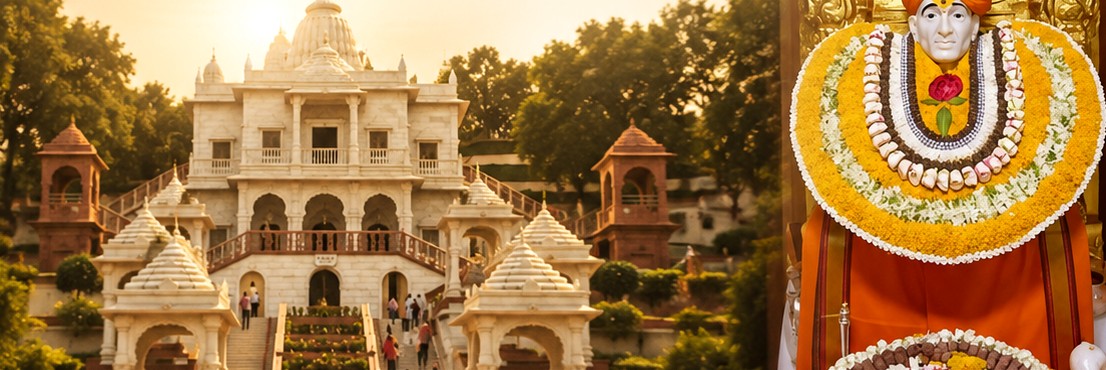
A short drive from Krishna’s Dwarka, on the road toward Okha, stands one of the most distinctive of the twelve shrines of Shiva: the Nageshwar Jyotirlinga, guarded by a gigantic seated statue of the Lord himself. Pilgrims who come for darshan at Dwarkadhish almost always add Nageshwar to their plan — and many, arriving from Omkareshwar and other Jyotirlinga towns, find that the quiet of this temple balances the bustle of Dwarka beautifully. This guide covers the legend, the temple and its great statue, indicative darshan timings, how to reach Nageshwar, and the respectful question of its twin tradition at Aundha Nagnath.
The Legend of Nageshwar, Lord of Serpents
According to tradition, a demon named Daaruka (or the demoness Daruka, in variant tellings) tormented the devotees of Shiva and imprisoned a devout merchant-supplier named Supriya along with other followers at sea. As Supriya, unarmed, continued to worship Shiva and teach his fellow prisoners to chant the Lord’s name, Shiva appeared before them, destroyed the demon and declared that he would abide here as a Jyotirlinga.
Because the Lord manifested in association with serpents — the nagas — he is worshipped here as Nageshwar, the Lord of Serpents, and devotees traditionally seek his protection from poisons, fears and afflictions of every kind. The story is retold in the Jyotirlinga lore of the Shiva Purana, and you will hear it lovingly narrated by the priests within the temple courtyard. Devotees also recall that Supriya’s fearlessness flowed from the name of Shiva he held onto in the darkest moment — a detail that gives this legend its special comfort for anyone passing through fear or hardship.
The Temple and the Great Shiva Statue
What greets you first at Nageshwar is not the temple but the statue: an enormous seated Shiva, approximately 25 metres (about 80 feet) tall by most reports, serene against the Saurashtra sky. The scale of the sculpture makes Nageshwar one of the most photographed Shiva shrines in western India, and the garden courtyard around it gives pilgrims space to sit, rest and absorb the atmosphere.
The sanctum enshrines the Jyotirlinga in an east-facing arrangement that devotees consider distinctive to this shrine. Compared with the crowded lanes of Dwarkadhish, Nageshwar is usually calm, and pilgrims can generally approach for darshan and even perform abhishek arrangements made through the temple office (verify current procedures and any charges on arrival). Photographers among the pilgrims love the first hour after sunrise, when the great statue catches a soft golden light; the garden benches beside it make the wait between darshan and departure genuinely restful, something larger temple towns rarely allow.
Darshan Timings and Rituals (Hedged)
| Session | Approximate Time | Notes |
|---|---|---|
| Morning darshan | About 6:00 AM onwards | Quietest hours, pleasant even in summer |
| Midday closure | Around 12:00–1:00 PM | Reopens in the late afternoon |
| Evening darshan | About 4:00–5:00 PM to 8:00–9:00 PM | Aarti times vary; Mahashivratri draws large crowds |
These hours are indicative and shift with seasons and festivals, so confirm with temple authorities as schedules change. During Mahashivratri and the Mondays of Shravan, the temple takes on a festive bustle, with queues of pilgrims arriving from across Saurashtra in buses and on foot; if you prefer silence, ordinary weekdays in the early hours are the gentlest time for darshan. Pilgrims coming from Somnath usually reach Dwarka first — a run of approximately 230–240 km along the coast — and keep Nageshwar for the following morning. The cooler months from October to February suit the coastal circuit best; in summer the open courtyard heats up by midday, so plan around the morning and evening windows.
Nageshwar or Aundha Nagnath? Two Revered Traditions
The question is natural for pilgrims completing the twelve shrines: the most widely recited list of Jyotirlingas places Nageshwar near Dwarka, yet a strong and ancient tradition in Maharashtra identifies Aundha Nagnath, in Hingoli district, as the Nagesh shrine — local tradition there even describes it as first among the Jyotirlingas. The two claims are not rivals so much as twin streams of the same devotion; many pilgrims visit both. We cover the Maharashtra tradition in detail in our Aundha Nagnath and Parli Vaijnath guide, and the standard ordering of all twelve shrines in our list of the 12 Jyotirlingas.
How to Reach Nageshwar from Dwarka
| Route | Approximate Distance / Time | Notes |
|---|---|---|
| Dwarka town to Nageshwar | About 15–20 km (30–40 minutes) | On the Dwarka–Okha road; signposted clearly |
| By auto-rickshaw or taxi | Roughly INR 400–800 for a round trip (indicative) | Negotiate in advance; drivers usually wait while you have darshan |
| Combined circuit | Add Gopi Talav and Bet Dwarka | A comfortable half-day plan with the Okha jetty beyond |
Most pilgrims fold Nageshwar into a half-day circuit: Dwarkadhish darshan in the morning, then Gopi Talav, Nageshwar and the boat to Bet Dwarka before the afternoon winds pick up. Full details of the Krishna circuit are in our Dwarkadhish Temple darshan guide.
Summary
Nageshwar offers what a Jyotirlinga pilgrimage at its best always offers: a powerful legend, a serene darshan, and a setting — the great statue, the gardens, the nearby sea — that quiets the mind without effort. Keep approximately half a day aside, reach early or late to avoid the heat, treat timings as indicative and confirm locally, and approach the Aundha Nagnath tradition with the respect both shrines deserve. For pilgrims stringing together the western Jyotirlingas — Somnath, Nageshwar and onwards — this small temple by the Okha road often becomes an unexpected favourite.
Frequently Asked Questions
How far is Nageshwar Jyotirlinga from Dwarka?
Nageshwar is approximately 15–20 km from Dwarka, on the road toward Okha and Bet Dwarka. Autos and taxis easily cover the round trip in a couple of hours.
What is special about the Nageshwar temple?
Nageshwar is revered as the Jyotirlinga known as the Lord of Serpents, and its grounds are dominated by a very large seated Shiva statue — approximately 25 metres tall per most reports — which makes it one of Gujarat's most recognisable Shiva shrines.
Is Nageshwar or Aundha Nagnath the true Nagesh Jyotirlinga?
The most widely recited list places the Nageshwar Jyotirlinga near Dwarka, while many devotees in Maharashtra revere Aundha Nagnath in Hingoli district as the Nagesh shrine. Both temples are deeply venerated, and pilgrims traditionally honour both traditions with respect.