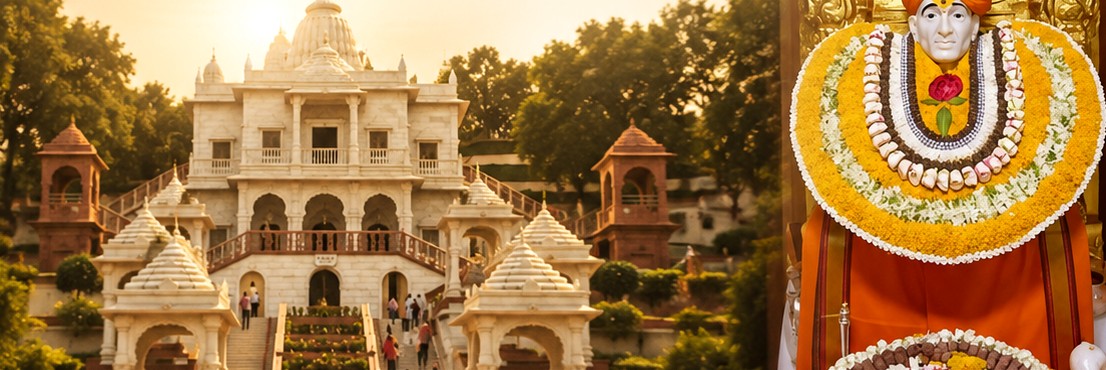
Among the eight Ashtavinayak shrines of Maharashtra, Varadavinayak at Mahad is the one pilgrims seek out with a wish in their heart. The name says it plainly — Varada, the boon-giver — and according to tradition, sincere prayers whispered before this swayambhu murti near Khopoli do not go unanswered. Small, serene and shaped like a sheltering dome, the temple sits just off the old Mumbai–Pune road corridor in Raigad district, making it one of the easiest Ashtavinayak darshans to reach from either city. Our seva team at Gajanan Maharaj Sansthan, Omkareshwar, has prepared this quick-but-complete guide — legend, oil-abhishek custom, timings and routes — for pilgrims planning the visit.
Varada: The Lord Who Grants Boons
According to tradition rooted in the Ganesha Purana lore of the Ashtavinayak cycle, this shrine’s blessings are unusually direct. Devotees with a mannath — a specific request, whether for a child, a marriage, a job or recovery from illness — traditionally pray at Mahad and return to offer gratitude when the wish is granted. Over the years this has given the temple a distinct emotional register: the crowd here is full of people saying thank you, and the coconut offerings piled at the sanctum tell a thousand quiet stories.
One strand of the traditional legend speaks of a sage and his devoted wife whose sincere worship at this spot was blessed by Ganesha, who manifested here to grant their heart’s desire. Another local telling associates the murti with a miracle discovered by a local cowherd whose cow’s milk flowed of its own accord over a buried swayambhu stone — a motif familiar across Maharashtra’s self-manifested shrines. Whatever version one holds, the temple’s essence is the same: Ganesha as the gracious giver.
The Oil Abhishek Tradition
Mahad’s best-known ritual is the tel abhishek, the ceremonial bathing of the murti in oil. Unlike most Ganesha temples where abhishek is done with water, panchamrit or sindoor, at Mahad the sanctified oil used for the abhishek is collected and given to devotees as prasad — a small vial many families keep with reverence. The abhishek is typically arranged through the temple office for a modest indicative fee of a few hundred rupees, subject to change — confirm current rates and booking rules with temple authorities when you go. Devotees often pair the ritual with an offering of coconuts and a recitation of Ganesha’s names.
The murti itself is east-facing and seated, and the sanctum’s intimacy — you stand close enough for a slow, unhurried look — is a large part of Mahad’s charm.
A Dome-Style Shrine in the Hills
| Quick fact | Detail (approximate/indicative) |
|---|---|
| Location | Mahad village, Khalapur taluka, Raigad district |
| Distance from Pune | 85–95 km via the Mumbai–Pune route, about 2 hours |
| Nearest landmark | Khopoli, roughly 10–15 km away |
| Signature ritual | Oil (tel) abhishek, with oil given as prasad |
| Classic pairing | Pali’s Ballaleshwar, about 15–20 km away |
The temple building is modest and distinctive: a dome crowns the sanctum rather than the taller shikhara of larger temples, and the precinct is compact, green and shaded. There is a car park close by, a few prasad stalls, and the general atmosphere of a well-loved village shrine rather than an monumental complex. Fifteen to forty minutes suffice for darshan on ordinary days; on Sankashti Chaturthi, Angaraki Sankashti and Ganesh Chaturthi, allow more. The temple typically opens around dawn and closes by evening — timings shift with the seasons, so confirm with temple authorities as schedules change.
Reaching Mahad: Easy Khopoli Access
Mahad village lies off the Khopoli belt, where the expressway and old Pune–Mumbai highway funnel down from the Khandala ghat into Raigad’s lowlands. From Pune, the drive of approximately 85 to 95 kilometres takes around two hours; from Mumbai, Khopoli is roughly the halfway mark of the expressway. Khopoli also has a railway station on the central line, from which taxis, autos and state buses cover the short hop to Mahad. Pilgrims driving themselves should note that the final approach runs through village roads — slow, scenic and best taken in daylight.
On the traditional Ashtavinayak sequence, Mahad is the fourth shrine, visited on day one after Morgaon, Siddhatek and Pali — our complete Ashtavinayak Yatra guide lays out the full loop. The classic local pairing is with Ballaleshwar at Pali, barely 15 to 20 kilometres across the hills; many pilgrims halt overnight at Pali or Mahad to catch the dawn aarti before driving back towards Theur on day two. Those extending their Raigad day further can also continue towards the Mumbai–Pune corridor with a stop at Siddhivinayak of Siddhatek on the loop’s eastern side, though that adds a longer cross-country leg.
Practical notes for a smooth darshan:
- Book the abhishek early on festival days, as slots fill quickly.
- Carry a small container if you wish to bring the oil prasad home safely.
- Mind the expressway tolls if self-driving from Pune or Mumbai; keep change or a FASTag topped up.
- Dress simply — shoulders and knees covered, footwear at the stands outside the precinct.
Summary
Varadavinayak at Mahad is the boon-giving Ashtavinayak — a small dome shrine near Khopoli, roughly 85 to 95 kilometres from Pune, where the signature oil abhishek yields a prasad pilgrims carry home like a blessing in a bottle. Visit it with Pali’s Ballaleshwar 15 to 20 kilometres away, allow extra time around Sankashti and Chaturthi days, and confirm abhishek rates and timings with temple authorities before you go. Whether you arrive with a request or with gratitude, Mahad’s unhurried sanctum gives the Ashtavinayak Yatra its most tender pause.
Frequently Asked Questions
What is the oil abhishek at Mahad Varadavinayak?
It is the shrine's signature ritual in which the swayambhu murti of Varadavinayak is bathed in oil, and devotees receive a portion of that sacred oil as prasad. Slots can be booked through the temple office for a modest indicative fee — confirm current arrangements and rates when you visit.
How far is Mahad from Pune and Pali?
Mahad village near Khopoli lies approximately 85 to 95 kilometres from Pune by road, roughly two hours' driving. Ballaleshwar at Pali is only about 15 to 20 kilometres away, which is why the two are almost always visited together on the Ashtavinayak circuit.
Why is Varadavinayak called the boon-giving Ganesha?
Varada means a boon or blessing, and according to tradition devotees who pray sincerely at Mahad are granted their heartfelt wishes. Families often visit to give thanks after a wish is fulfilled, offering coconuts and performing the oil abhishek.
What are the darshan timings at Mahad temple?
The temple generally opens in the early morning and closes by evening, with heavier crowds on Wednesdays, Sankashti Chaturthi and Ganesh Chaturthi. Timings vary by season and festival, so confirm with temple authorities before you plan your visit.