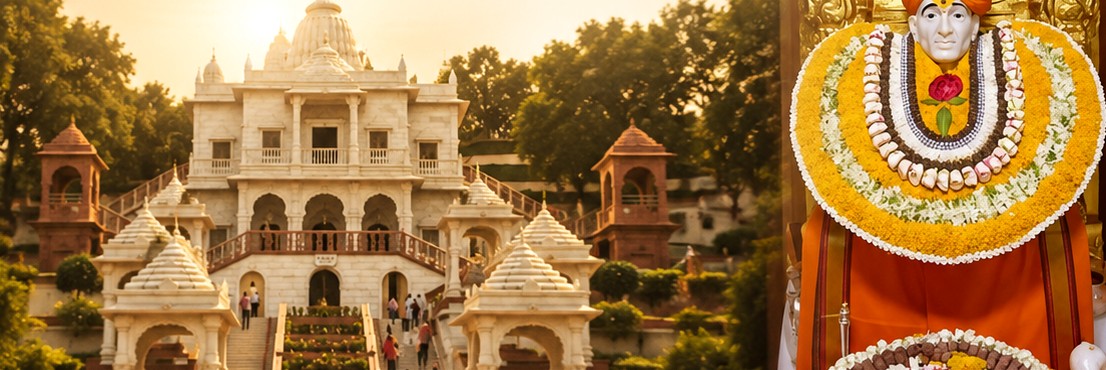
In the forested folds of Raigad district, in the small village of Pali, stands the only Ganesha temple among the eight Ashtavinayak shrines that carries the name of a devotee rather than an epithet of the deity himself. Ballaleshwar — “the Lord of Ballal” — preserves the memory of a child whose worship was so pure that, according to tradition, Ganesha chose to be known by his devotee’s name forever. For pilgrims raised on stories of bhakti, the Pali darshan lands differently from the other seven: here the Lord honours the one who loved him. At Gajanan Maharaj Sansthan, Omkareshwar — a trust that exists because of one great bhakta’s grace — we find this story especially dear, and this guide covers everything you need for a well-planned visit.
The Legend of the Boy Ballal
According to tradition, retold from the Ganesha Purana lore associated with the Ashtavinayak cycle, Ballal was a young boy of a merchant family in Pali devoted heart and soul to Ganesha. Along with his companions he would gather in the forest for puja, making little clay and stone murtis and losing himself in worship. The village elders and, in most tellings, his own father Kalyan were furious at what they saw as neglect of school and duty; the children were rebuked, their worship disturbed, and Ballal beaten and tied to a tree for his stubborn faith.
The story continues that the boy, abandoned and in pain, called upon Ganesha with unwavering single-mindedness. Pleased by such devotion, the Lord is said to have appeared before him, freed him and healed his wounds. When Ganesha asked the boy to name a boon, Ballal asked nothing for himself but that the Lord remain in that forest place forever for all devotees. Ganesha agreed — and, moved beyond measure, declared that he would be worshipped there under his devotee’s name: Ballaleshwar. Tradition adds that the original stone associated with the legend is honoured nearby as Dhundi-vinayak, a shrine pilgrims visit before or after the main darshan.
The Temple and Its Setting
Pali sits in Sudhagad taluka of Raigad district, reached via Khopoli off the Mumbai–Pune Expressway corridor. The temple is built of stone in the traditional style, with two sanctums — the larger for Ballaleshwar, who faces east as the sun rises over the hills, and the smaller Dhundi-vinayak within the same precinct. The village sits at the base of Sudhagad (also called Bhorapgad), a fort whose ramparts crown the ridge above the temple, and the air carries both forest cool and bell metal. It is easily the most atmospheric setting of the southern Ashtavinayak pair.
| Quick fact | Detail (approximate/indicative) |
|---|---|
| Location | Pali village, Sudhagad taluka, Raigad district |
| Distance from Pune | 110–120 km via Khopoli, 2.5–3 hours |
| Nearest town | Khopoli, roughly 30–35 km away |
| Companion shrine | Dhundi-vinayak within the temple precinct |
| Popular add-on | Varadavinayak, Mahad — about 15–20 km away |
The temple generally opens around dawn and remains open into the evening, with a midday break in some seasons. Sankashti Chaturthi, Ganesh Chaturthi and Magha Chaturthi see the largest gatherings, when the village’s small lanes fill with pilgrims from Mumbai and Pune. As always, confirm current timings with temple authorities as schedules change, and plan to arrive early on festival days.
Visiting Pali: Routes and Logistics
From Pune, the standard route runs down the expressway or the old highway to Khopoli and then climbs and winds roughly 30 to 35 kilometres to Pali — approximately 110 to 120 kilometres in total, two and a half to three hours. From Mumbai, Khopoli is the common gateway as well, making Pali the Ashtavinayak most naturally reached from both cities. MSRTC buses and shared vehicles serve Khopoli to Pali through the day, though a hired car makes the day far easier; a Pune–Pali–Mahad day taxi costs indicatively INR 5,000 to 7,000 — confirm at booking.
The classic pairing is with Varadavinayak at Mahad, barely 15 to 20 kilometres away across the hills; almost every pilgrim does the two together, as the traditional yatra itself does on day one. Trekkers add Sudhagad fort for its views and old fortifications, best attempted in the cooler months with a local guide. For the wider sequencing of all eight shrines, our Ashtavinayak Yatra circuit guide places Pali third in the traditional order and suggests an overnight nearby.
A few local notes worth keeping:
- Food and stay. Pali has simple stalls and small lodges; better eating options cluster around Khopoli. For overnight halts on the yatra, many pilgrims choose Pali or Mahad village itself for the early-morning aarti.
- Weather. The Khopoli belt runs warm and humid much of the year; carry water and visit early in the day, especially from March to June.
- Monsoon caution. The hills around Pali are gorgeous in the rains, but the ghat roads demand careful driving.
Why Devotees Keep Coming Back
Ask regular yatris which of the eight Ashtavinayak shrines touches them most and Pali’s name comes up again and again. Part of it is the legend — a child’s faith vindicated — and part is the temple’s unhurried village rhythm, where priests have time to talk and the forest keeps the crowds modest on ordinary days. For parents, it is a favourite shrine to bring children to: the story of Ballal teaches that no devotion is too small, no devotee too young, for the Lord’s attention. That is a lesson worth the drive from anywhere.
Summary
Ballaleshwar at Pali is the Ashtavinayak that wears a devotee’s name — a living tribute to the boy Ballal whose faith, according to tradition, moved Ganesha to stay in these Raigad hills forever. Reach it via Khopoli, approximately 110 to 120 kilometres from Pune, pair it with Varadavinayak at Mahad some 15 to 20 kilometres away, and if the season permits, add the Sudhagad climb. Come for the legend, linger for the forest quiet, and leave with the temple’s quiet lesson: that bhakti, not grandeur, is what names gods.
Frequently Asked Questions
Why is Ballaleshwar at Pali unique among the Ashtavinayak temples?
It is the only one of the eight shrines where Ganesha is named after a devotee — Ballal, the child bhakta of the temple's legend. Every other Ashtavinayak name describes an aspect of Ganesha himself, making Ballaleshwar a standing tribute to bhakti.
How far is Pali from Pune and Mumbai?
Pali lies approximately 110 to 120 kilometres from Pune via Khopoli, usually two and a half to three hours by road. From Mumbai via the Pune Expressway to Khopoli it is roughly 110 to 130 kilometres depending on the route.
What can be combined with a visit to Pali?
Varadavinayak at Mahad is only about 15 to 20 kilometres away and is almost always visited on the same trip. Trekkers often add Sudhagad fort, which rises near Pali, and pilgrims on the full circuit continue from here towards Theur on day two.
What are the darshan timings at Ballaleshwar Temple?
The temple typically opens around dawn and closes by evening, with abhishek and aarti slots through the day and larger crowds on Sankashti Chaturthi and festival days. Confirm current timings with temple authorities, as schedules change seasonally.