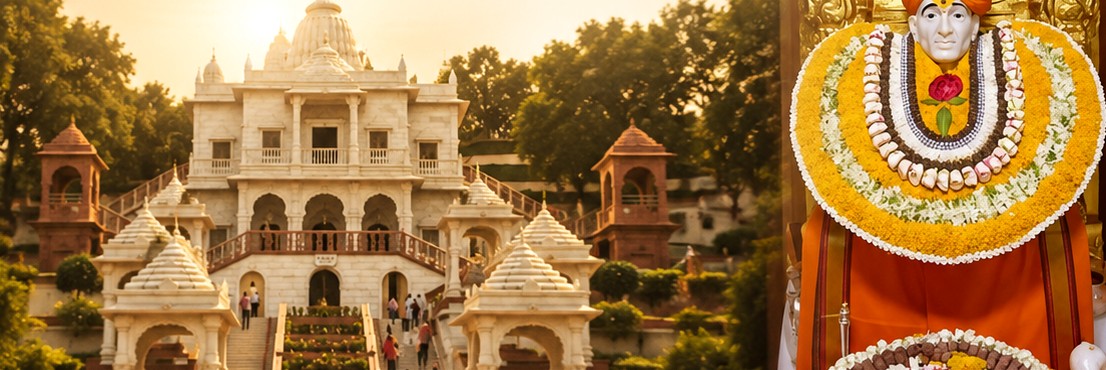
At the village of Verul in Maharashtra, barely two kilometres from the world-famous Ellora caves, stands Grishneshwar, revered in the traditional recitation as the twelfth and last of the Jyotirlingas. Pilgrims who complete their journey of the twelve shrines finish here, at a compact red-stone temple where the worlds of Shaiva devotion, Maratha-era restoration and UNESCO-listed artistry meet within a single walkable circuit. This guide covers the legend, indicative timings, darshan customs, how to reach Grishneshwar from Aurangabad, and how to combine the temple with Ellora and Daulatabad for one unforgettable day.
Why Grishneshwar Is Called the Last of the Twelve
In the Jyotirlinga Stotram’s most widely recited order, the name of Grishneshwar — also spelled Grushneshwar or Ghrishneshwar, and anciently called Ghushmeshwar — appears last, which is why devotees speak of it as the dwadash, or twelfth, Jyotirlinga. The temple’s proximity to the Ellora caves makes it unique among the twelve: nowhere else does a Jyotirlinga stand so close to such a monumental complex of rock-cut shrines, including the breathtaking Kailasa temple carved top-down from a single rock face.
For pilgrims measuring out the full circuit of the twelve shrines — from Somnath in the west to Rameshwaram in the south, and Omkareshwar on the Narmada — Grishneshwar is often the satisfying final chapter. Our complete list of the 12 Jyotirlingas places each shrine in context for such a journey.
The present structure owes much to restoration under Queen Ahilyabai Holkar in the 18th century, according to most accounts, and her era’s hallmark — sturdy masonry, carved pillars and a finely stepped shikhara — defines the temple’s warm red glow at sunrise and sunset. The courtyard is compact, the queue moves under shade, and the whole shrine can be experienced unhurriedly in an hour or two, which devotees of the larger Jyotirlinga towns often find refreshing.
The Legend of Ghushma
According to tradition, a devout woman named Ghushma lived at this place with her husband and son. Even when her family life was shattered by jealousy and the loss of her child, she continued her daily worship of Shiva — making and revering a hundred small lingas each day with unbroken faith. Pleased by her devotion, Lord Shiva appeared before her, restored her son to life and, at her request, settled here as a swayambhu linga. From her name comes the temple’s ancient name, Ghushmeshwar, softened over the centuries into Grishneshwar.
Devotees traditionally associate this shrine with the healing of grief through steadfast devotion — a meaning that many pilgrims carry home with them long after the darshan is over.
Darshan Timings and Customs (Check Current Rules)
| Session | Approximate Time | Notes |
|---|---|---|
| Morning darshan | About 5:30–6:00 AM onwards | Early hours are calm; Mondays draw larger crowds |
| Midday closure | Around 12:00–1:00 PM | Reopens in the late afternoon |
| Evening darshan | About 4:00–4:30 PM to 9:00 PM | Aarti times vary; Mahashivratri is exceptionally busy |
Two practical customs deserve a heads-up. First, sanctum practices at Grishneshwar have varied over the years — there have been periods when darshan arrangements differed for men and women, and men were asked to enter the garbhagriha bare-chested as per prevailing practice. Rules are periodically revised, so check the current customs with temple authorities before your visit. Second, queues can lengthen on Mondays, during Shravan and on Mahashivratri; the free darshan line moves steadily, and special arrangements, where offered, are managed by the temple trust.
How to Reach Grishneshwar
| Starting Point | Approximate Distance / Time | Notes |
|---|---|---|
| Aurangabad city (railway station / central) | About 30 km, roughly 1 hour | Autos, taxis and state buses ply regularly |
| Aurangabad airport | About 35–45 km | Convenient for flyers from Mumbai, Delhi, Hyderabad |
| Ellora caves | About 2 km | Walkable or a short auto ride — combine both in one visit |
| Daulatabad fort | About 10–12 km | Sits conveniently between Aurangabad and Verul |
Aurangabad (officially Chhatrapati Sambhajinagar) is the practical base: it has broad rail connections, an airport and hotels for every budget. Most pilgrims hire an auto or taxi for a half-day circuit of Grishneshwar, Ellora and Daulatabad. The best months to visit are October to March, when the Deccan plateau cools; midsummer afternoons at Verul are hot, so plan darshan for the early morning or evening and carry water and a hat for the walk between the temple and the Ellora gates.
One Day, Three Wonders: Temple, Ellora and Daulatabad
The classic plan is simple and deeply rewarding:
- Early morning: Grishneshwar darshan as the temple opens, when the sanctum is quiet and the morning light touches the red stone shikhara.
- Mid-morning to noon: Walk or ride to the Ellora caves; devotees rarely skip the Kailasa temple, and a nominal entry fee applies for the protected monument (verify current rates).
- Afternoon: Stop at Daulatabad fort, the dramatic hill citadel on the return road, before heading back to Aurangabad.
Pilgrims with more days in Maharashtra often extend from here to the forest Jyotirlinga of Bhimashankar in the Sahyadri, or follow the great devotional triangle described in our Shirdi–Pandharpur–Shegaon circuit guide.
Summary
Grishneshwar distills what is best about Maharashtra’s pilgrimage heritage: an intimate legend of devotion, a living Jyotirlinga of modest size and immense sanctity, and a setting shared with the artistry of Ellora and the history of Daulatabad. Reach it easily from Aurangabad, keep the indicative timings in mind and confirm locally, check current sanctum customs before you queue, and reserve a full day so the temple is not rushed. Whether it is your first Jyotirlinga or your twelfth, Verul’s red-stone shrine is a fitting place to complete — or begin — the sacred twelve.
Frequently Asked Questions
Where is the Grishneshwar Jyotirlinga located?
Grishneshwar is located at Verul village, near the Ellora caves, approximately 30 km from Aurangabad city in Maharashtra. It is regarded in the traditional recitation as the twelfth and last of the Jyotirlingas.
What are Grishneshwar temple timings?
The temple typically opens around 5:30–6:00 AM, closes around midday, and reopens in the late afternoon until about 9:00 PM. Timings vary by season and festival, so confirm with temple authorities before visiting.
Can women enter the Grishneshwar sanctum?
Sanctum customs at Grishneshwar have varied over the years, with periods when entry rules differed for men and women. Check the current rules with the temple trust or authorities before your visit, as practices are periodically revised.