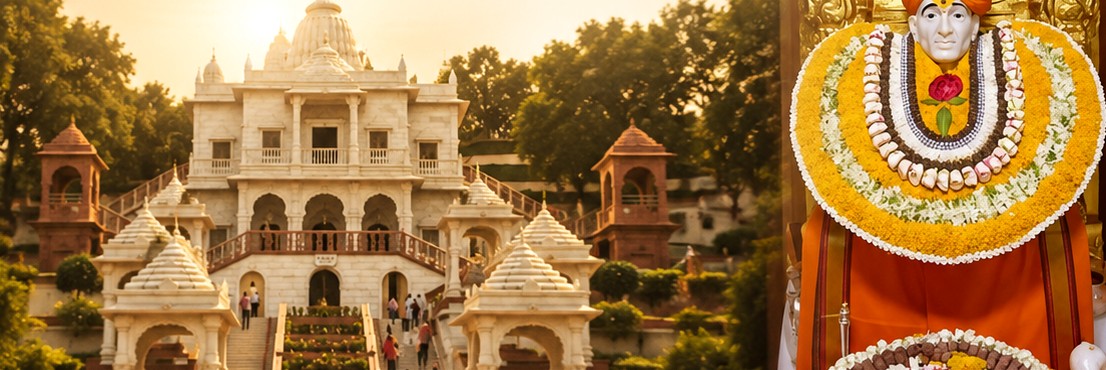
High in the Sahyadri range, on the border of Pune and Thane districts in Maharashtra, the Bhimashankar Jyotirlinga stands wrapped in forest — the only one of the twelve Jyotirlingas set within a wildlife sanctuary. Devotees leave the plains behind, climb forested ghats, and find a temple where the air smells of rain and wet leaves, and where, according to tradition, the Bhima river is born. This guide covers darshan timings, the legend, driving routes from Pune and Mumbai, the trekking option from Khandas, monsoon safety, and where to stay.
A Jyotirlinga Amid the Sahyadri Forests
Bhimashankar lies in Khed taluka of Pune district, within the Bhimashankar Wildlife Sanctuary — home, notably, to the Indian giant squirrel (shekru), Maharashtra’s state animal, which visitors sometimes glimpse leaping through the canopy. The temple’s setting makes its darshan unlike any other Jyotirlinga’s: mist on the stones, hornbills overhead, and a sacred grove stillness that the plains temples cannot offer.
According to tradition, a demon named Bhimasura (linked in some tellings with Tripurasura) performed severe penance to win fearsome boons and terrorised the devout. Lord Shiva, answering the prayers of the oppressed — and of the divine beings themselves — vanquished the demon here. In the aftermath, the tradition recounts, sweat from the Lord’s body streamed forth and became the Bhima river, and Shiva settled here as Bhimashankar. Behind the temple, a small kunda marks the river’s source, and pilgrims traditionally offer prayers at both in a single visit.
Darshan Timings and Aartis (Hedged)
| Session | Approximate Time | Notes |
|---|---|---|
| Temple opens / first aarti | Around 4:30–5:00 AM | Kakad aarti at dawn is deeply peaceful |
| Morning darshan | Until about 12:00 PM | Mondays and Shravan Saturdays are busiest |
| Afternoon | Roughly 12:00–4:00 PM | Generally reduced or closed hours; verify locally |
| Evening darshan and aarti | About 4:00 PM to 8:00–9:30 PM | Queue shortens after 7:00 PM on normal days |
Schedules expand and shift during Mahashivratri and the month of Shravan, when lakhs of devotees climb to the shrine — confirm with temple authorities as schedules change, and expect slow vehicle movement on the ghat road during festival weekends.
How to Reach: Driving from Pune and Mumbai
| Route | Approximate Distance / Time | Notes |
|---|---|---|
| Pune to Bhimashankar via Chakan–Rajgurunagar–Manchar | About 110–120 km, 3–3.5 hours | The standard, well-signposted route |
| Mumbai to Bhimashankar via Kalyan–Murbad side | Roughly 200–230 km, 5–6 hours | Alternatively via the Nashik highway |
| By state bus (ST) | Several hours from Pune’s Shivajinagar and similar stands | Services run regularly; check current timetables |
| By train | Nearest convenient stations are on the Pune and Mumbai suburban networks, still 60+ km away | Combine with road transport |
The final stretch after Manchar climbs through the ghats — scenic and generally in decent condition, but slow and winding, so drive in daylight where possible. Private taxis from Pune charge approximately INR 3,000–5,500 for a round trip, indicative only — confirm at booking. Shared jeeps and ST buses serve pilgrims without cars.
The Khandas Trek Option
For the more adventurous, Bhimashankar is also reached on foot from the base village of Khandas, along trails of approximately 6–9 km through the sanctuary — the classic route of Maharashtra’s trekking devotees. The walk takes roughly three to six hours depending on the trail chosen and demands reasonable fitness, especially in monsoon. We cover the routes, difficulty and packing in detail in our Bhimashankar trek from Khandas guide.
Monsoon Beauty and Safety Notes
Between roughly June/July and September, Bhimashankar transforms: waterfalls streak the cliffs, the forest turns impossibly green, and the Bhima swirls in its kunda. It is the most beautiful season — and the most demanding. Ghat roads become slippery and fog-prone, trekking trails turn muddy and leech-prone, and sanctuary regulations may restrict movement in places. If you visit in monsoon, start early, drive cautiously, carry rain gear, and avoid stream crossings in heavy rain. October to February offers the safest and most comfortable weather, with winter mornings crisp enough to need a light jacket.
Where to Stay and Eat
Bhimashankar’s temple area has simple lodges and a state tourism facility, with indicative tariffs of roughly INR 800–3,000 per night; Dharamshala-style rooms near the temple serve pilgrims on tighter budgets. Do book ahead for weekends, Shravan and Mahashivratri. Food is straightforward Maharashtrian fare — pithla-bhakri, varan bhat, kanda bhaji at small stalls — and vegetarian meals are the norm in the temple precinct. ATMs and signal connectivity are limited on the hill; carry sufficient cash.
Summary
Bhimashankar rewards the pilgrim willing to climb a little higher: a forest-wrapped Jyotirlinga where the Bhima river is born, dawn aartis carry the hush of the sanctuary, and every season repaints the Sahyadri backdrop. Drive up from Pune via Manchar in about three hours, or earn the darshan on foot from Khandas; keep timings approximate and confirm locally; and treat the monsoon with the respect its beauty demands. Paired with Grishneshwar near Ellora and the other shrines in our list of the 12 Jyotirlingas, it completes Maharashtra’s share of the sacred twelve — and for many devotees, it is the most memorable of them all.
Frequently Asked Questions
How far is Bhimashankar from Pune?
Bhimashankar is approximately 110–120 km from Pune by road via Chakan, Rajgurunagar and Manchar, and the drive usually takes about 3–3.5 hours depending on traffic and weather.
What are Bhimashankar temple darshan timings?
The temple generally opens around 4:30–5:00 AM and remains open until about 8:00–9:30 PM with a usual midday pattern; aarti timings vary by season and festival. Confirm with temple authorities as schedules change.
Is the Bhima river's origin at Bhimashankar?
Yes — according to tradition and local geography, the Bhima river, a major tributary of the Krishna, rises in the Bhimashankar hills. A small kunda behind the temple marks the river's source.