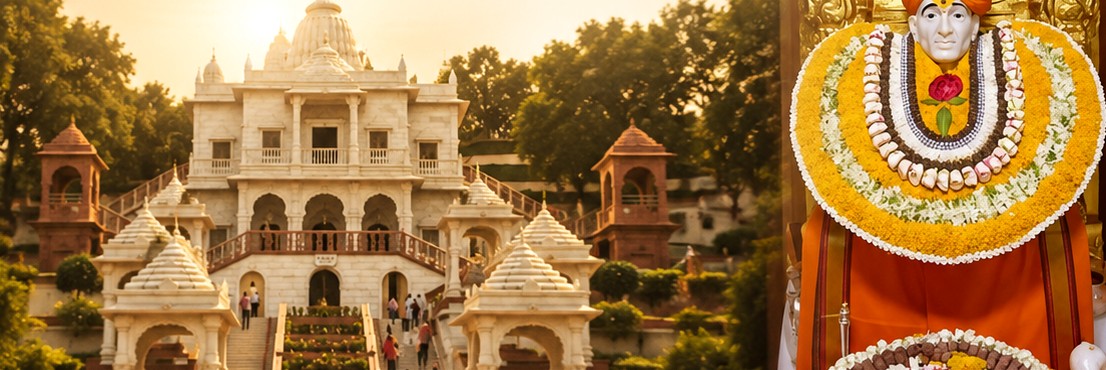
Some pilgrimages are meant to be earned step by step, and the Bhimashankar trek from Khandas is Maharashtra’s favourite example. Every weekend, devotees and trekkers alike set out from the small base village of Khandas to walk forest trails up the Sahyadri crest to the Bhimashankar Jyotirlinga — arriving, as pilgrims have for generations, on foot and on faith. This guide explains how to reach Khandas, the two classic routes (Ganpati Ghat and Shidi Ghat), realistic difficulty, the best season, a packing list, and how to plan the darshan after the climb.
Getting to Khandas, the Base Village
Khandas lies on the Mumbai side of the Sahyadri, roughly 105–115 km from Pune and about 110–130 km from Mumbai by road, depending on the route. The most convenient rail head is Karjat, on the Central line, from which shared jeeps and transport to Khandas cover approximately 40–50 km — arrangements best made the previous evening if you want an early start. State transport buses also serve the region, though services are limited and timetables change.
Plan to overnight near Karjat or in Khandas village itself (simple homestay-style accommodation, indicative rates roughly INR 500–1,500 per night — confirm at booking), so you can begin walking by 6:00–7:00 AM. An early start keeps the hardest climbing in the cool hours and leaves ample buffer for the darshan.
Ganpati Ghat vs Shidi Ghat: Choosing Your Route
| Feature | Ganpati Ghat Route | Shidi Ghat Route |
|---|---|---|
| Approximate trail length | About 6–7 km | About 8–9 km |
| Typical trekking time | 3–4 hours | 4–6 hours |
| Gradient | Steadier, gentler climbs | Steep, with rocky patches and iron ladders (shidi) |
| Character | Forest, stream sections, farmland | Wilder ridges, exposed rock, dramatic views |
| Best suited for | First-timers, families with older children, monsoon-averse groups | Fit, experienced trekkers seeking challenge |
Distances vary with where you measure from and which fork you take — treat the figures above as approximate. Local guides in Khandas accompany groups for a modest fee and are genuinely useful on Shidi Ghat, where route-finding is trickier. Whichever trail you choose, both converge near Bhimashankar’s sacred groves for the final approach to the temple.
Difficulty, Fitness and Safety
The trek is generally rated moderate: no technical climbing, but sustained ascent — the temple sits at roughly 1,000-plus metres above sea level — and a few demanding stretches on either route. Anyone who walks regularly can manage Ganpati Ghat at a steady pace; Shidi Ghat deserves respect, especially in wet conditions when the rock near the ladders is slick.
Keep these safety notes in mind:
- Trek in groups, ideally with a local guide if it is your first visit or the season is wet.
- Monsoon caution: the trail is beautiful but slippery and leech-prone; carrying a little salt or using leech socks is common local practice.
- Mobile signal is patchy on both routes; share your plan with someone at the base.
- Turn back wisely: if rain catches you mid-trail, avoid stream crossings in spate and wait it out.
- Descent care: most slips happen on the way down — tired legs need deliberate steps.
Best Season for the Trek
October to February is the ideal window: clear skies, green post-monsoon undergrowth in the early part, and cool air for the climb. The monsoon months — roughly June/July to September — transform the Sahyadri into a waterfall-laced wonderland and attract many trekkers, but they also multiply the risks above. Summer is feasible if you start before dawn and carry ample water, since shade is limited on exposed stretches. The same seasonal logic applies across pilgrimage India — we use it ourselves in choosing the best time to visit Omkareshwar — and it is worth planning your Bhimashankar trek around the same calendar.
What to Carry
| Item | Why It Matters |
|---|---|
| At least 2 litres of water per person | No reliable treated water on the trail |
| Electrolytes and light snacks | Sustained climbing drains energy quickly |
| Sturdy, grippy trekking shoes | Rocky and often slippery sections |
| Rain jacket or poncho | Weather in the Sahyadri turns quickly |
| Cap, sunscreen and sunglasses | Exposed stretches on both routes |
| Small first-aid kit, salt for leeches | Scrapes and leeches are the commonest complaints |
| Torch and power bank | For early starts or unexpected delays |
| Light change of clothes | To enter the temple fresh after the trek |
Do not carry these in your hands — use a comfortable day-pack, and leave heavier luggage at your Khandas or Karjat stay.
Darshan After the Trek
Arriving at the Bhimashankar temple after the climb, most trekkers freshen up, change into dry clothes and join the darshan queue; typical temple hours run from approximately 4:30–5:00 AM to 8:00–9:30 PM with a midday break, but confirm with temple authorities as schedules change. Full details of aartis, the sanctum, and the drive-up alternative are in our Bhimashankar Jyotirlinga darshan guide. After darshan, take the winding kunda behind the temple where the Bhima river rises, then allow your legs a rest before the return: many groups descend the same day to Khandas, while others stay overnight on the hill.
A final, honest note: the trek is a beautiful discipline but not a requirement. Elderly devotees and families with young children are better served by the road route or a relaxed pilgrimage plan in the style of our family trip to Omkareshwar guide — the Jyotirlinga receives every devotee equally, whether they arrive by bus or by boot.
Summary
The Khandas trek turns a darshan into a yatra: roughly 6–9 km of Sahyadri forest, a choice between the gentler Ganpati Ghat and the steeper Shidi Ghat, and the reward of Bhimashankar’s aarti after the final climb. Start early from Khandas, carry water and rain gear, respect the monsoon, and treat all distances and times as approximate. Fit devotees will remember the walk for a lifetime — and those who prefer the road should feel no less devout for choosing it.
Frequently Asked Questions
How long is the trek from Khandas to Bhimashankar?
The trail from Khandas to Bhimashankar is approximately 6–9 km depending on the route taken, with Ganpati Ghat being the shorter and gentler option and Shidi Ghat the longer, steeper one. Most trekkers complete it in three to six hours.
Which is the easier route, Ganpati Ghat or Shidi Ghat?
Ganpati Ghat is generally considered easier, with a steadier gradient through forest and farmland. Shidi Ghat is steeper and rockier, using iron ladders at a couple of patches, and suits experienced trekkers.
What is the best time to trek to Bhimashankar?
October to February offers the safest and most comfortable conditions. The monsoon is spectacular but makes the trail slippery and leech-prone, and summer heat can be harsh on exposed stretches.