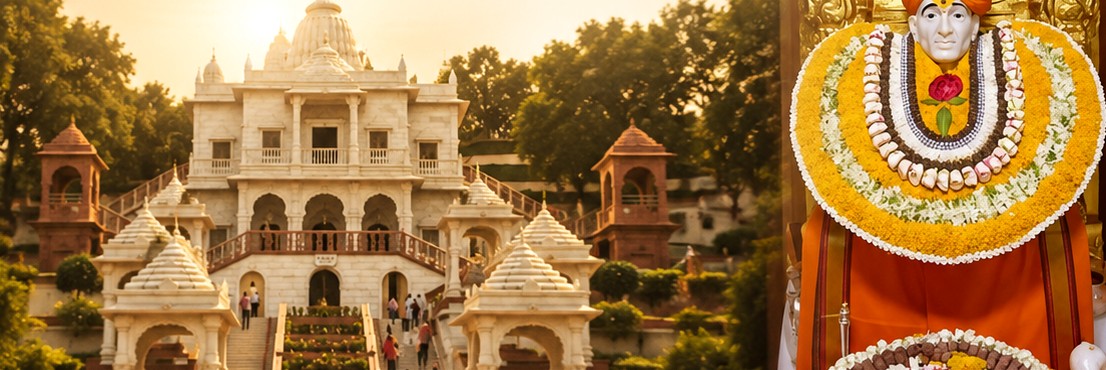
The Siddhanath Temple in Omkareshwar is one of the most striking medieval temples in the Narmada valley, admired for its finely carved shikhara, sculpted walls and quiet dignity. While most pilgrims come for the Omkareshwar Jyotirlinga, this Parmar-era stone temple rewards anyone with an interest in history, architecture or sacred art.
A Gem of the Parmar Era
The Parmar dynasty, which ruled the Malwa region from its capital at Dhar for several centuries, was a great patron of temple architecture. The Siddhanath Temple is generally attributed to this medieval period (around the early second millennium CE), though exact dates vary across scholarly sources. Its style places it squarely within the north Indian Nagara tradition — characterised by a curvilinear tower, square sanctum and richly carved exterior.
For the wider spiritual and historical context of the region, see our article on Omkareshwar’s history and spiritual significance.
Architectural Highlights
The Siddhanath Temple is celebrated by lovers of temple art for several features:
- The shikhara (tower): A tall, curvilinear spire rising over the sanctum, covered in horizontal mouldings and miniature spirelets (urushringas) that create a rhythmic, mountain-like silhouette.
- Sculpted bands: The outer walls carry bands of carving depicting deities, celestial beings, dancers, floral motifs and geometric patterns, executed with remarkable precision in local sandstone.
- Mandapa and entrance: The columned hall and doorway feature intricate lintel carvings and graceful bracket figures.
- Integration with the landscape: Set near the river, the temple’s silhouette is beautifully framed against the sky, making it a favourite for photographers and artists.
For tips on capturing the temple respectfully, see our Omkareshwar photography guide.
Location and How to Visit
The Siddhanath Temple is situated in the Omkareshwar area, near the ghats on the island side, within easy walking distance of the main Omkareshwar Jyotirlinga temple. It is commonly visited:
- As part of the island parikrama — many pilgrims encounter it while walking the sacred circumambulation of the island.
- As a short detour from the main temple complex, ideal for those with an hour to spare.
- For sunrise or sunset — when the carved stone glows in golden light and crowds are thinner.
Because it sits close to the riverbank, you can combine the visit with a stroll along the sacred ghats of Omkareshwar, which are central to the town’s ritual life.
Protected Monument Status
The Siddhanath Temple is recognised as an ancient and protected monument, falling under the care of India’s archaeological authorities. This status helps preserve its fragile carvings and ensures that any restoration follows conservation norms. Visitors are therefore requested to:
- Refrain from touching or leaning on the delicate sculptures.
- Avoid applying oil, kumkum or other substances to the ancient stone.
- Not climb on the structure for photographs.
- Respect any signage regarding restricted areas or ongoing conservation work.
Why Architecture Lovers Should Not Miss It
While Omkareshwar is primarily a living pilgrimage site, the Siddhanath Temple offers a window into the sophisticated building traditions of medieval Malwa. Its proportions, the discipline of its carving and the way it harmonises with the river setting make it a textbook example of the era’s temple craft. Students of architecture, heritage travellers and anyone curious about India’s stone-building heritage will find it genuinely absorbing — often more so than larger, heavily renovated temples.
Practical Visitor Tips
- Timing: Visit in the early morning or late afternoon for the best light, cooler temperatures and fewer people.
- Footwear: As with most temple areas, you may be asked to remove shoes before entering the inner spaces; carry an easy pair.
- Dress: Modest, traditional clothing is appreciated.
- Photography: Natural light and the temple’s silhouette make for beautiful images; check locally whether flash or tripods are permitted inside, and always be respectful of any worshippers present.
- Combine visits: Pair the temple with the main Omkareshwar darshan, a ghat walk and a short boat ride for a full, unhurried experience.
A Note on Reverence
Although the Siddhanath Temple is often approached as an architectural treasure, it remains a sacred space. Many visitors offer a quiet prayer or a moment of meditation in its cool, stone-walled sanctum, finding that the art and the devotion are not separate things but two expressions of the same faith that built it.
Summary
The Siddhanath Temple at Omkareshwar is a medieval Parmar-era masterpiece of carved stone, a protected monument near the river that enchants pilgrims and architecture lovers alike. With its soaring shikhara, intricate sculptures and serene setting close to the ghats, it adds a layer of historical depth to any visit to the Omkareshwar Jyotirlinga — and is well worth the short detour from the main temple.
Frequently Asked Questions
What is the Siddhanath Temple in Omkareshwar known for?
The Siddhanath Temple is known for its medieval Parmar-era stone architecture, an elaborately carved shikhara and sculpted figures. It is one of the finest ancient temples in the Omkareshwar area and is a protected monument.
How old is the Siddhanath Temple?
The temple is generally dated to the medieval Parmar period (around the early second millennium CE), though exact dates vary by source. Its architectural style places it firmly within the north Indian Nagara temple tradition.
Where is the Siddhanath Temple located?
The Siddhanath Temple is located in the Omkareshwar area, near the ghats on the island side. It is within easy walking distance of the main Omkareshwar temple and the parikrama route.