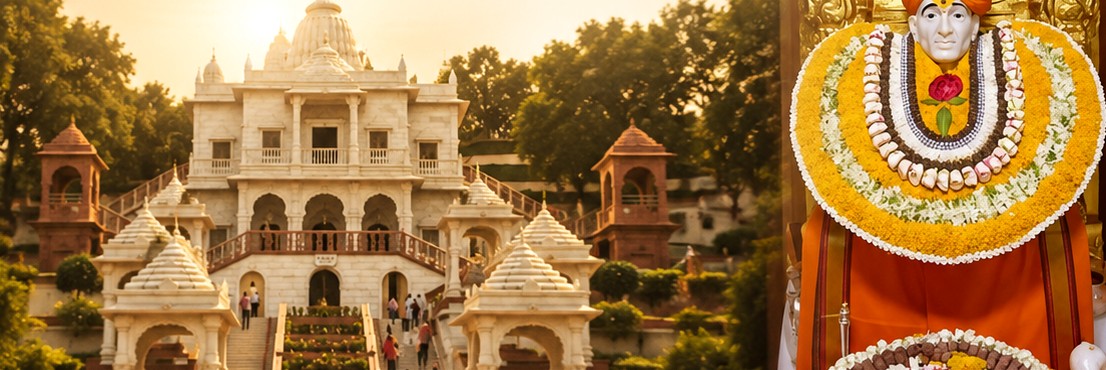
For countless devotees across India and abroad, Shirdi Sai Baba darshan at the Samadhi Mandir is the emotional high point of a pilgrimage to Maharashtra. Shirdi, a small town in Ahmednagar district, was home to Sai Baba for decades until his passing in October 1918, according to records maintained by the Sansthan. Today his samadhi draws some of the largest pilgrim gatherings in the country, on ordinary days and festival days alike. This darshan guide explains how the Samadhi Mandir works, the free and paid options, the queue system, the best hours to visit, and practical tips to make your darshan calm and fulfilling.
The Samadhi Mandir at a Glance
The Samadhi Mandir is the heart of Shirdi. It stands over the samadhi of Sai Baba and enshrines a life-size white marble statue of Baba seated in his familiar posture, installed around the mid-twentieth century according to Sansthan records. Devotees file past the samadhi, which is decorated with flowers, fabric and silver work, and offer their salutations to the statue that appears to gaze back with the same serene expression Baba carried in life.
The temple opens in the pre-dawn hours with the Kakad Aarti and generally remains accessible until after the Shej Aarti at night, approximately 9 to 10 PM. Exact timings shift with the seasons and the lunar calendar, so confirm with temple authorities as schedules change. The wider complex includes the Dwarkamai masjid, the Chavdi, Gurusthan, Lendi Baug, a museum displaying articles associated with Baba, and the smaller Maruti and Mahalaxmi temples he himself honoured.
How the Darshan Queue Works
Darshan at the Samadhi Mandir is managed through a system of organized queues that begin outside the temple complex. After a security check, devotees join lanes that are generally separated for men, women, families and senior citizens, with dedicated arrangements for differently-abled pilgrims where available. Electronic items, including mobile phones and cameras, must usually be deposited at counters or left in your vehicle or room, as photography inside the sanctum is prohibited.
The queue moves past the samadhi and the statue, allowing each devotee a brief but unhurried moment in Baba’s presence. During heavy rush periods, the Sansthan regulates flow with barricaded lanes and holding areas; volunteers and security staff guide pilgrims throughout. On festival days the queue can wind far outside the complex, and waiting times of several hours are common, so plan food, water and medication needs accordingly.
Free and Paid Darshan Options
General darshan is free for everyone — this has always been the Sansthan’s position, in keeping with Baba’s own indifference to money during his lifetime. Alongside the free queue, the Sansthan offers, or has offered at various times, paid sevas and access options. The table below gives a general picture; availability and rates change periodically, so confirm at booking through official channels.
| Option | Indicative Cost | What to Expect |
|---|---|---|
| Free darshan (common queue) | Free | Standard darshan of the samadhi and statue; waits vary by day and season |
| Aarti passes (when offered) | Nominal, confirm current rates | Closer position during the four daily aartis; often limited in number |
| Abhishek and pooja sevas | Approx. ₹100–₹600+ | Sponsored rituals such as abhishek, satyanarayan pooja or havan, with prasad |
| Online darshan (live stream) | Free | The Sansthan broadcasts darshan and aartis for devotees unable to travel |
A note of caution: touts near the temple may promise “VIP darshan” for inflated sums. Genuine passes and sevas are booked only through the Sansthan’s official counters, website or app.
Best Hours and Peak-Day Crowds
Choosing your hour wisely can transform your Shirdi experience. The calmest windows are usually the pre-dawn period around the Kakad Aarti — hushed, cool and deeply atmospheric — and the early-afternoon lull after the Madhyan Aarti, when many day-trippers have already departed. The evening Dhoop Aarti draws a large but devoted crowd, and the temple takes on a luminous quality after sunset.
Thursdays are traditionally the busiest weekdays, since Thursday is associated with Baba and with the guru in Hindu tradition. Weekends naturally amplify footfall. For a detailed hour-by-hour picture of the day’s rituals, see our companion piece on Shirdi aarti timings, which explains each of the four daily aartis and how to attend them.
The three great Shirdi festivals — Ram Navami, Guru Purnima and Vijayadashami, the anniversary of Baba’s mahasamadhi — attract enormous gatherings, often running into lakhs of devotees. If you travel during these periods, expect long queues, road diversions and dense crowds in every lane around the temple. Book accommodation and transport well in advance, keep elderly family members and children within reach, and carry minimal valuables.
Even on ordinary days, a few habits help: travel light, wear comfortable footwear you can remove and carry easily, keep a water bottle, and use the Sansthan’s cloakrooms for bags. Elderly devotees and those with health conditions should consider the quieter darshan windows and avoid the peak festival rush altogether.
Beyond the Mandir: Dwarkamai, Chavdi and the Rest of Shirdi
A complete Shirdi pilgrimage is not confined to the Samadhi Mandir. Devotees traditionally visit Dwarkamai, the dilapidated masjid where Baba lived for decades and kept the sacred dhuni burning; the Chavdi, where he alternated his night’s rest; Gurusthan, the spot under the neem tree associated with Baba’s arrival in Shirdi; and Lendi Baug, the garden he watered daily. Our detailed guide to Dwarkamai, Chavdi and the other sacred places in Shirdi includes a walking route that covers them all in a single morning.
Getting to Shirdi
Shirdi is well connected by air, rail and road. Shirdi Airport lies approximately 14 to 15 km from the temple town, Sainagar Shirdi railway station connects it to major cities, and good highways link it to Mumbai (approximately 245 to 260 km), Pune (approximately 185 km), Nashik (approximately 90 km) and Aurangabad (approximately 130 km). Full transport details, including the route we recommend from each city, are in our guide on how to reach Shirdi.
Summary
Shirdi Sai Baba darshan at the Samadhi Mandir is free, well-organized and deeply moving when planned thoughtfully. Aim for the pre-dawn or early-afternoon windows if you prefer quiet, avoid Thursdays and festival peaks unless you specifically want that collective fervour, book sevas only through official Sansthan channels, and set aside time for Dwarkamai, Chavdi, Gurusthan and Lendi Baug so your yatra embraces the full landscape of Baba’s life. Just as pilgrims plan their Omkareshwar darshan around the island’s aarti rhythm, a little timing wisdom in Shirdi rewards you with the peaceful, unhurried darshan every devotee carries home in their heart.
Frequently Asked Questions
Is darshan at the Shirdi Samadhi Mandir free?
Yes, general darshan of Sai Baba's samadhi and statue through the common queue is free for all devotees. The Sai Sansthan has, at various times, offered quicker-access passes and paid sevas such as abhishek and pooja, so check the official Sansthan website or app for current options and rates.
How long does darshan usually take in Shirdi?
On a normal weekday the free queue may take roughly 30 minutes to two hours, while Thursdays, weekends and festival days can stretch the wait to several hours. Arriving for the pre-dawn Kakad Aarti or later in the evening usually shortens the wait considerably.
What is the best time of day for peaceful darshan?
The pre-dawn window around Kakad Aarti and the early-afternoon lull after the Madhyan Aarti tend to be the calmest. Thursdays and the three major festivals — Ram Navami, Guru Purnima and Vijayadashami — draw the largest crowds, so plan accordingly.