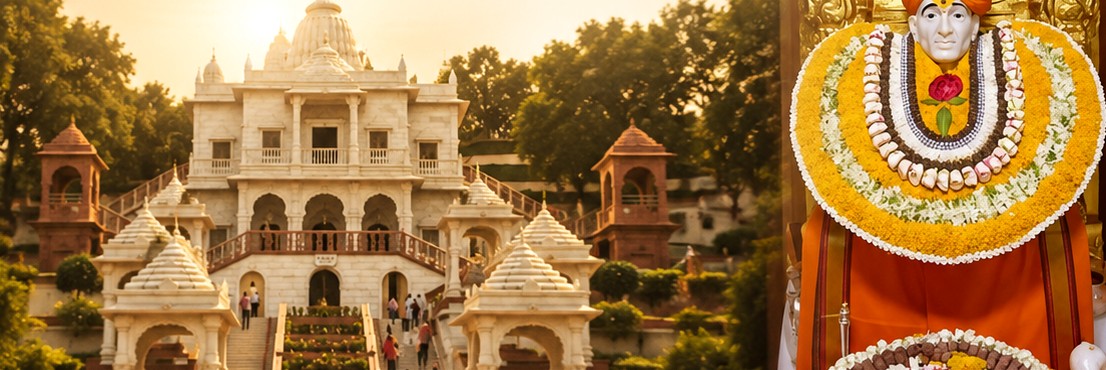
The Shirdi festivals calendar revolves around three great observances — Ram Navami, Guru Purnima and Vijayadashami — each rooted in a specific episode of Sai Baba’s life and each drawing lakhs of devotees to the Samadhi Mandir. Between them, they transform this small town in Ahmednagar district into one of India’s most intense centres of pilgrimage. This guide explains why each festival matters, what happens during the celebrations, how the crowds behave, and how to plan a visit so that you experience the devotion rather than the stress.
The Three Great Festivals at a Glance
| Festival | Season / Approximate Timing | Commemorates | Crowd Level |
|---|---|---|---|
| Ram Navami | Chaitra month (March–April window) | Rama’s birth, and by tradition a festival Baba began for a Muslim devotee’s son born on that day | Very heavy |
| Guru Purnima | Ashadha full moon (July window) | Worship of the guru; Baba’s explicit blessing of the observance | Very heavy, year’s largest |
| Vijayadashami | Around September–October | Anniversary of Baba’s mahasamadhi in October 1918 | Heavy to very heavy |
All three dates shift each year with the Hindu lunar calendar, so always confirm the current year’s dates with the Sai Sansthan before booking travel.
Ram Navami: The Festival Baba Permitted
Ram Navami’s special place in Shirdi rests on a story every devotee knows. According to tradition, the festival was started at Baba’s own instance: a Muslim devotee’s son had been born around the time of the Hindu festival of Rama’s birth, and Baba, in his characteristically boundary-crossing way, is said to have suggested that the occasion be celebrated as both. From that origin, Ram Navami grew into Shirdi’s biggest spring celebration — a living emblem of “Sabka Malik Ek”, the phrase attributed to Baba proclaiming one God for all.
Today the festival spans several days of palkhi processions, aartis, bhajans, the changing of the flag atop the Samadhi Mandir, and large-scale prasad distribution and bhandara. The contrast is part of the magic: qawwalis and bhajans, Hindu rites and Muslim salutations, all offered at the same shrine.
Guru Purnima: The Largest Gathering of the Year
If one festival claims the deepest devotional significance in Shirdi, it is Guru Purnima, the full-moon day of Ashadha dedicated to the worship of the guru. According to tradition, a devotee once sought Baba’s permission to celebrate Guru Purnima in his honour; Baba agreed, directing that the observance belong to the guru principle rather than to him personally. The practice took permanent root.
On this day the Samadhi Mandir receives what is generally regarded as its largest crowd of the year. Devotees offer symbolic guru-dakshina, stand in darshan lines through the night, and participate in the continuous cycle of aartis. The atmosphere is austere rather than festive — hours of quiet queueing under the summer sun — and pilgrims should prepare accordingly: light clothing, water, sun protection and enormous reserves of saburi, the patience Baba himself taught.
Vijayadashami: Remembering the Mahasamadhi
Vijayadashami is observed in Shirdi as the anniversary of Sai Baba’s passing. According to records, Baba left his body in October 1918, on the day of Vijayadashami as that year fell, and the festival has since become his annual remembrance — the day the whole Shirdi tradition pauses to recall his life and teachings.
The observances include special abhishek and pooja at the samadhi, processions, cultural programmes of bhajans and discourse, and extensive annadaan. For many life-long devotees this is the most emotionally charged of the three festivals — less a celebration than a family’s remembrance. Weather in late September or October is generally milder, which makes the long queues somewhat easier to bear.
Planning a Festival Visit: Crowds, Stays and Bookings
Festival-time Shirdi rewards early planners and punishes improvisers. Consider the following:
- Transport: trains to Sainagar Shirdi and buses from Mumbai, Pune and Nashik fill up weeks ahead of all three festivals; book as soon as dates for the year are announced.
- Accommodation: rooms near the temple are scarce and premiums are common. Our Shirdi accommodation guide compares Sai Sansthan devotee rooms with private hotels so you can book wisely.
- Darshan: expect waits of several hours; the elderly and unwell should avoid peak days or use quieter windows. Aarti passes, where offered, are limited — apply through official channels early.
- Schedule checks: the four daily aartis and processions follow special festival timings; our article on Shirdi aarti timings explains the daily baseline, but confirm the festival-day schedule with temple authorities as schedules change.
- Essentials: carry minimal valuables, keep children close, and use Sansthan cloakrooms for bags.
A Note for Devotees of Many Shrines
Devotees who travel across Maharashtra’s sacred geography will recognize the same pattern of festival intensity in every great kshetra. At our own home in Omkareshwar, the festival calendar likewise reshapes the island — as our account of festival celebrations at Gajanan Maharaj Sansthan describes — and pilgrims who have stood in the Guru Purnima crowds of Shirdi will find the same spirit of collective devotion on the Narmada’s ghats.
Summary
Ram Navami, Guru Purnima and Vijayadashami form the spiritual heartbeat of Shirdi — spring celebration, monsoon guru-worship and autumn remembrance of the mahasamadhi respectively. Each is magnificent, each is crowded far beyond ordinary days, and each rewards preparation: book transport and rooms early, confirm dates and schedules with the Sai Sansthan, travel light, and go with patience rather than haste. Witnessed with that preparation, a Shirdi festival becomes not an ordeal of queues but a rare immersion in living devotion.
Frequently Asked Questions
Which are the three main festivals celebrated in Shirdi?
The three principal festivals at the Shirdi Samadhi Mandir are Ram Navami (in the Chaitra spring season), Guru Purnima (the full moon of Ashadha) and Vijayadashami, which marks the anniversary of Sai Baba's passing in October 1918. Each draws enormous crowds of devotees.
Why is Vijayadashami important in Shirdi?
Vijayadashami is observed in Shirdi as the day of Sai Baba's mahasamadhi, since his passing in October 1918 coincided with that festival according to records. It is commemorated with special pujas, processions and the annual remembrance of Baba's life and teachings.
How should I plan a festival visit to Shirdi?
Book train or bus tickets and accommodation weeks in advance, expect darshan waits of several hours, and confirm aarti and event schedules with the Sai Sansthan closer to your date. Many devotees prefer arriving a day early and staying through the following morning.