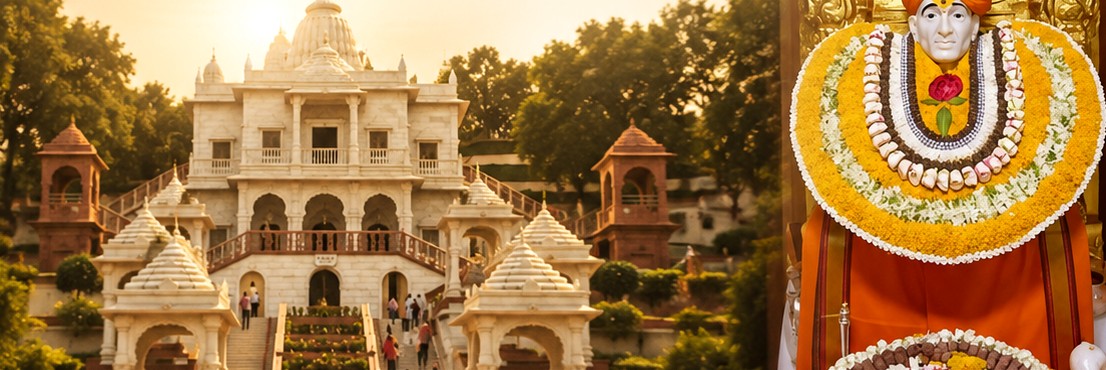
The Omkareshwar parikrama route is the sacred walk around the island that gives this Jyotirlinga its name. Shaped like the Sanskrit syllable “Om” where the Narmada splits and rejoins, the island is circumambulated by thousands of pilgrims each year in a clockwise tradition believed to confer the merit of a great yatra. This complete walking guide explains the route, the approximate distance and time, every key stop, the terrain you will encounter, and practical tips — including advice for elderly pilgrims. Note that this island circuit is entirely distinct from the full river parikrama; for that, see our Narmada parikrama guide.
Understanding the Island Parikrama
Before setting out, it helps to understand what the parikrama represents. Omkareshwar sits on an island formed by the Narmada’s loop, and walking its perimeter is a form of pradakshina — reverential circumambulation — of both the Jyotirlinga and the river that cradles it.
Pilgrims traditionally walk the parikrama clockwise (keeping the sacred site to one’s right), beginning after a dip in the Narmada and darshan of the Omkareshwar Jyotirlinga. The path winds past ancient shrines, ghats, rocky outcrops, and small temples, blending devotion with a gentle physical challenge.
Distance and Time Required
The island parikrama is approximately 5 to 8 km, with the exact figure varying by which sub-paths and shrines you include. Most healthy adults complete it in about three to five hours at a relaxed pace with stops for darshan and rest.
| Factor | Detail |
|---|---|
| Distance | ~5 to 8 km (varies by route) |
| Time | ~3 to 5 hours at a gentle pace |
| Difficulty | Moderate (steps, uneven stone) |
| Best time of day | Early morning (cooler, fewer crowds) |
| Footwear | Easy-to-remove shoes (temples require bare feet) |
If you are travelling with elderly family or young children, allow more time and plan rest stops.
Step-by-Step Route of the Omkareshwar Parikrama
The route below follows the traditional clockwise sequence. Landmarks are approximate; small shrines and markers line the entire path.
1. Start at the Omkareshwar Temple
Begin after darshan of the main Omkareshwar Jyotirlinga on the island. Offer a prayer and set your intention (sankalpa) before descending toward the river.
2. Descend to the Narmada Ghats
Steps lead down to the ghats where pilgrims bathe and offer arghya to the Narmada. This is where the circumambulation physically begins. Our guide to the sacred ghats of Omkareshwar describes each ghat in detail.
3. Past Govindeshwar and Other Small Shrines
The path passes several smaller temples, including shrines devoted to various deities associated with the Shaiva and Vaishnava traditions. Take a moment at each — the calm is part of the experience.
4. The Ashtavinayaka and Other Holy Spots
Along the route you will encounter spots revered for their connection to Ganesha and other deities. These landmarks help you track progress and offer places to rest.
5. Siddhanath Temple Area
A significant landmark on the parikrama is the area around the Siddhanath Temple, an ancient temple perched dramatically on a plateau. The architecture and views here are remarkable, and many pilgrims pause for darshan and photographs.
6. Return Along the Narmada
The final stretch loops back along the river, with the Narmada in view and the Omkareshwar temple approaching again. The sound of water and temple bells marks your return.
7. Conclude at the Starting Point
Complete the circuit where you began, ideally with a final darshan and a small offering. This closes the parikrama in the traditional manner.
Terrain and What to Expect Physically
The route mixes paved sections, stone steps, and uneven rocky patches. Be prepared for:
- Steep ascents and descents, especially near the ghats and the Siddhanath area.
- Stone steps that can be slippery when wet — walk carefully, especially in monsoon.
- Sun-exposed stretches — carry water and a hat if walking in warmer hours.
- Small crowds at narrow points, particularly near popular shrines.
The effort is moderate, comparable to a hilly nature walk with frequent pauses. Most reasonably fit adults manage it comfortably.
The Clockwise (Pradakshina) Tradition
In Hindu worship, pradakshina is always performed clockwise, keeping the deity or sacred object to the right side of the body. The same principle governs the Omkareshwar parikrama: you walk around the island in a clockwise direction so that the sacred Jyotirlinga remains on your right throughout.
This tradition is not arbitrary. It symbolises keeping the divine at the centre of one’s attention and is believed to align the pilgrim’s energy with the sanctity of the site. Walking in the opposite direction is generally avoided.
What to Carry
Pack light but prepare thoughtfully:
- Water bottle — stay hydrated, especially in summer.
- Easy-to-remove footwear — you will take shoes off at temples; slip-ons or sandals are ideal.
- Light snacks or fruit — for energy, though many pilgrims fast until completion.
- Small cloth bag — for prasad and to carry your own litter.
- Sun hat and light shawl — for sun and for covering the head in temples.
- A walking stick — helpful for elderly pilgrims on uneven steps.
Tips for Elderly Pilgrims
The parikrama is achievable for many elderly devotees with care:
- Start very early to avoid heat and crowds.
- Walk in segments, resting at shaded shrines and benches.
- Hire a local helper or porter for support on steps.
- Carry a walking stick and wear sturdy, grippy sandals.
- Stay hydrated and carry any essential medicines.
- Skip the steepest detours if fatigued — completing the core circuit is itself meritorious.
Family members should pace themselves to the slowest walker and never rush an elderly pilgrim. The parikrama is about devotion, not speed.
Omkareshwar vs Mamleshwar in the Parikrama
The parikrama naturally encompasses the island and the Omkareshwar temple. Across the water, on the south bank, stands the Mamleshwar (Amareshwar) temple, itself counted among the Jyotirlinga pair. Many pilgrims cross the suspension bridge or take a boat to also offer darshan at Mamleshwar. Our comparison of Mamleshwar vs Omkareshwar explains how the two relate.
Summary
The Omkareshwar island parikrama is a profound few-hour walk of roughly 5 to 8 km that circuits the sacred Om-shaped island in the Narmada. Begin at the Jyotirlinga, descend to the ghats, pass the ancient shrines and Siddhanath temple, and return along the river, always walking clockwise. Carry water and easy footwear, rest often, and adjust the pace for elderly family. Complete the circuit with a final darshan, and you will have performed one of the most beloved yatras of a Hindu pilgrim’s life — a perfect companion to darshan at this great Jyotirlinga.
Frequently Asked Questions
How long is the Omkareshwar island parikrama?
The island parikrama is approximately 5 to 8 km long, depending on the exact path taken, and most pilgrims complete it in a few hours. It is a shorter, localized circumambulation of the sacred Om-shaped island.
Can elderly pilgrims do the Omkareshwar parikrama?
Much of the route is walkable, but there are steep stone steps and uneven sections. Elderly visitors can take it slowly, hire a helper for support, or opt to do shorter segments and rest at shaded spots along the way.
Is the island parikrama the same as the full Narmada parikrama?
No. The island parikrama is a short few-hour walk around Omkareshwar's Om-shaped island. The full Narmada parikrama covers about 2,600 km along both banks and takes several months.