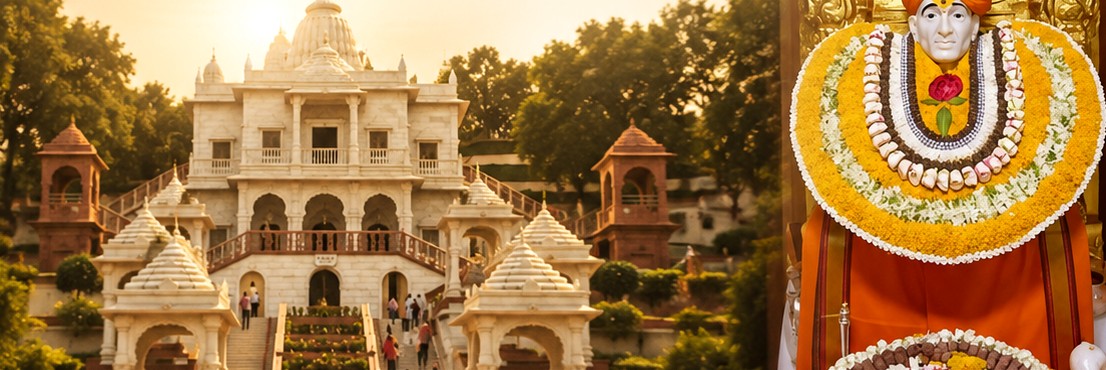
Maihar Sharda Devi, the hilltop mother goddess of Satna district in Madhya Pradesh, is one of the most beloved Devi shrines of central India. The temple sits high on the Trikuta hill above the small town of Maihar, drawing devotees from across the Vindhya region, from Uttar Pradesh, and from far beyond. Part of the shrine’s pull is the climb itself — a stone stairway of approximately 1,063 steps winding up the hillside — and part is the deep local devotion to a Devi whom tradition links to the legendary warriors Alha and Udal. Whether you come for a Navratri darshan or a quiet weekday visit, this guide covers the legend, the climb, the ropeway, the timings and the routes so that your yatra is smooth and unhurried.
Who Is Sharda Devi of Maihar?
The temple enshrines Goddess Sharda, a form of the Divine Mother associated with wisdom and learning, and her shrine on Trikuta hill has been a centre of Devi worship for generations. According to tradition, the site’s association runs back to the brothers Alha and Udal, the famed Bundela-Rajput warrior heroes of the Alha-Khand ballads. The story told in the region holds that Alha was a devoted worshipper of the goddess, and that the deities at Maihar were discovered and consecrated in circumstances wrapped in local legend; the name “Maihar” itself is popularly explained as deriving from “Mai ka har” — the necklace of the Mother — though scholars note that etymologies of sacred names are often layered with later storytelling.
What is certain on any visit is the living intensity of the devotion. Pilgrims touch the cool stone of the steps, tie threads at the shrine, and speak of Sharda Devi as “Mai” — Mother — with the familiarity of a family member. The hill, the town and the temple together form a single sacred geography that devotees experience as the Mother’s own home.
Climbing Trikuta Hill: The Steps or the Ropeway
The classic Maihar experience is the climb. The stairway — popularly counted at approximately 1,063 steps, though you will hear slightly different figures from different guides — rises from the base of the hill through shaded stretches and open ridgelines. Most reasonably fit pilgrims complete it in roughly 30 to 60 minutes, with rest platforms along the way. Elderly devotees and those with knee or heart concerns should consider the ropeway instead.
| Parameter | Climbing the Steps | Taking the Ropeway |
|---|---|---|
| Approximate time | 30–60 minutes upward | Roughly 5–10 minutes |
| Indicative cost | Free | Roughly INR 100–250 per person for one-way or return; confirm at booking |
| Best suited for | Able-bodied pilgrims seeking merit of the climb | Seniors, families with small children, time-pressed travellers |
| Crowds | Queues on narrow stretches during festivals | Long ropeway queues on Navratri weekends and holidays |
| Experience | Sunrise views, roadside shrines, rest stops | Panoramic glides over the town and Vindhya slopes |
The ropeway station sits near the base of the hill, and cable cars run at short intervals through the day; verify current operating hours and fares before you travel, as maintenance closures do occur. Note that even with the ropeway, a short final stretch of steps and walkways leads to the sanctum, so modest assistance may still be needed for wheelchair users.
Darshan Timings, Aarti and the Best Hours
The temple generally opens in the early morning, closes for a midday interval, and reopens through the afternoon until evening aarti — but timings shift with seasons and festival calendars, so always confirm current timings with the temple trust or a reliable local source before finalising your plans. As a practical rhythm, early morning shortly after opening tends to be the calmest window, with the thinnest queues and the coolest air for the climb. Midday is best spent resting in the town, and the evening aarti, with lamps and bells ringing over the hilltop, is a moving sight worth waiting for.
During both Navratris, the temple hums with continuous activity: special decorations, extended darshan hours, recitations of the Durga Saptashati and long queues that can stretch for hours. If you visit during these peaks, start your climb or ropeway queue well before dawn and carry water, head covering and patience in equal measure.
How to Reach Maihar
Maihar lies in Satna district of Madhya Pradesh, in the Vindhya region that also holds Khajuraho and Chitrakoot, making it a natural anchor for a Bundelkhand-Baghelkhand temple circuit.
| Route | Approximate Distance / Detail | Notes |
|---|---|---|
| From Satna | ~40–50 km by road | Buses, taxis and shared vehicles available; roughly 1–1.5 hours |
| From Khajuraho | ~210–230 km by road | Usually via Panna and Satna; allow most of a day with darshan stops |
| From Prayagraj (Allahabad) | ~200 km (approx.) | Road via Rewa side routes; verify road conditions seasonally |
| By train | Maihar station | Small station on the Katni–Satna section; many long-distance trains prefer Satna junction |
If you are flying in, Khajuraho and Prayagraj are the nearest practical airports, each roughly a four-to-five-hour drive depending on route and stops, while Varanasi offers more flights at the cost of a longer road leg. For a wider Devi-and-dharma itinerary, pair Maihar with the sacred town of Chitrakoot, which is covered in detail in our Chitrakoot pilgrimage guide.
Navratri and the Best Time to Visit
The twin Navratris are the spiritual high points at Maihar. Chaitra Navratri, falling around March-April, and Sharadiya Navratri, around September-October, each bring nine days of fasting, folk music and overflowing crowds, with the Ashtami and Navami days especially heavy. The weather in these windows is generally kind — the Vindhya hills are warm but not punishing before the summer builds.
For a quieter darshan, the winter months from November to February offer cool, clear climbing weather and manageable crowds, and devotees of hill shrines will find the experience comparable in spirit to the Sahyadri pilgrimage covered in our Bhimashankar trek guide, where the effort of the ascent is itself treated as part of the offering. Avoid the peak of summer (late April to June), when the exposed stairway becomes gruelling by mid-morning.
Pilgrim Tips for a Smooth Darshan
A few practical notes will make the visit easier. Wear closed walking shoes with grip, as some steps are worn smooth. Carry a small bag with water, a light snack and any medicines, but leave larger luggage at your hotel or vehicle, since the queue on the hill is easier without it. Mobile network coverage on the hilltop is patchy on some operators, so agree on meeting points with your group in advance. Modest dress is expected, as at any Devi temple, and photography inside the sanctum is prohibited. For senior citizens, the ropeway plus a slow final approach is far wiser than attempting the full stairway in festival heat, and hiring a local guide at the base — typically for a modest fee — can help with queue navigation and darshan etiquette.
Summary
Maihar Sharda Devi is a pilgrimage of both heart and calf muscle: a sacred hill in Satna district, a Mother goddess cherished by tradition since the days of Alha and Udal, and a climb of approximately 1,063 steps that turns the journey itself into offering. Plan around the Navratri peaks if you want the festival’s fervour, or choose a winter weekday if you prefer quiet. Reach Maihar via Satna in about an hour by road, use the ropeway if the stairs are not feasible, and confirm timings and fares before you go. And if your yatra extends across this sacred region of Madhya Pradesh, remember that our Sansthan at Omkareshwar stands ready with rooms, prasad and seva — a home base from which the Devi hills and the Narmada’s island Jyotirlinga can both be embraced.
Frequently Asked Questions
How many steps are there to the Sharda Devi temple at Maihar?
The stairway to the temple atop Trikuta hill is popularly counted at approximately 1,063 steps, though the exact figure varies slightly with where the count begins. The climb usually takes somewhere between 30 and 60 minutes for a reasonably fit pilgrim. A ropeway offers an alternative for those who cannot manage the stairs.
What is the best way to reach Maihar from Satna?
Maihar is approximately 40 to 50 km from Satna by road, and the drive usually takes around an hour to ninety minutes depending on traffic. Maihar also has its own small railway station, though longer-distance options via Satna junction are usually more frequent. Buses and shared jeeps run between Satna and Maihar through the day; confirm current timings locally.
When is the busiest time at the Maihar temple?
Both Navratris — Chaitra (around March-April) and Sharadiya (around September-October) — draw very large crowds, as do the nine days of special Devi worship. Weekends and full moon days are also busy. If you prefer a quieter darshan, arrive on a weekday morning soon after the temple opens.