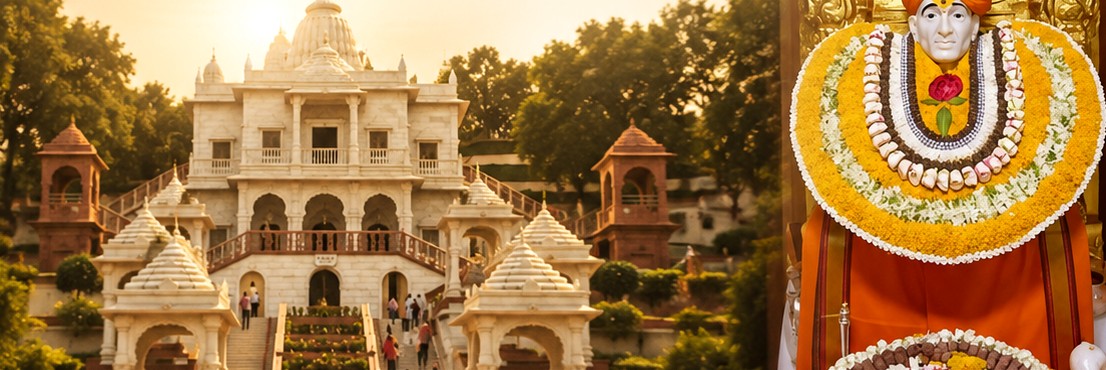
Set along the gentle Mandakini river where Madhya Pradesh meets Uttar Pradesh, Chitrakoot is one of the most evocative pilgrimage towns in India — a forested landscape of ghats, hills and springs that tradition holds was the refuge of Lord Ram, Sita and Lakshman during their exile. A Chitrakoot pilgrimage is not a single-temple darshan but a walk through sacred geography: the lamp-lit steps of Ram Ghat, the wooded parikrama path around Kamadgiri hill, the crystal rock of Sphatik Shila and the hidden waters of Gupta Godavari. This guide walks you through each of these, with an itinerary, timings and travel routes so your visit honours both the tradition and your own pace.
Why Chitrakoot Holds a Special Place
According to tradition — expressed most beautifully in Valmiki’s Ramayana and retold by Tulsidas in the Ramcharitmanas — Ram, Sita and Lakshman spent a significant part of their forest exile in these hills, and it was here that the sage Atri and his wife Anasuya hosted Sita. The Goswami Tulsidas is also traditionally associated with Chitrakoot, deepening its hold on the devotional imagination of the Hindi heartland. Pilgrims often describe the town less as a place to see and more as a place to inhabit for a day or two, walking where the Ramayana’s forest chapters unfolded.
The town straddles the MP-UP border, with most of the major shrines accessible from the Chitrakoot side in Uttar Pradesh and the Satna-side approach in Madhya Pradesh. Distances are short — a few kilometres separate the major sites — but the terrain means comfortable footwear and unhurried planning matter more than speed.
Ram Ghat and the Evening Mandakini Aarti
The heart of any Chitrakoot pilgrimage is Ram Ghat, the principal bathing ghat on the Mandakini river, where the water moves slowly enough for pilgrims to take a holy dip and offer lamps to the stream. Through the day the ghat hosts bathing devotees, priests under parasols, and sadhus who have made the forests their home; the atmosphere is intimate rather than grand, closer to a living village ghat than a monumental complex.
The evening aarti is the day’s climax, when dozens of brass lamps are swung in unison as bells, conches and drums rise over the water. Arrive early to sit on the ghat steps; the aarti begins around sunset and lasts roughly half an hour, though you should confirm current timings with local priests or your accommodation, as seasonal shifts apply. A boat ride on the Mandakini during the aarti — for a modest indicative fare, agree it beforehand — offers a memorable view of the flames reflected in the river. Devotees who have experienced the evening aarti on the Shipra at Ujjain will find a similar intimacy in our Ram Ghat Shipra river guide, and many pilgrims consciously pair the two river towns in one yatra.
The Kamadgiri Parikrama
Kamadgiri, the forested hill at the centre of Chitrakoot’s sacred geography, is regarded by tradition as the embodiment of the place’s holiness — so much so that devotees circumambulate the hill rather than climb it. The parikrama path is approximately 5 to 6 km long, ringed by temples and shaded much of the way, and takes most pilgrims two to three hours including darshan stops.
The tradition of sacred circumambulation is shared across India’s tirthas, most famously in the great Narmada parikrama; if that tradition draws you, our Narmada parikrama guide from Omkareshwar explains how Chitrakoot’s hill walk sits within the same devotional logic. Walk the Kamadgiri path in the early morning, carry water, and go barefoot only if your feet are accustomed to it — the path is mostly paved but has rough patches. Small shrines along the way invite brief stops, and many pilgrims offer prayers at the Bharat Milap temple, associated by tradition with the meeting of the brothers.
Sphatik Shila and Gupta Godavari
Two further sites complete the classic Chitrakoot circuit. Sphatik Shila, a short drive plus a manageable climb from the town centre, is a spot with a quartz-bearing rock where, according to tradition, Ram and Sita sat and admired the beauty of Chitrakoot; footprints revered as theirs are worshipped here, and the view over the forested hills rewards the climb.
Gupta Godavari, a little farther out, is the more mysterious of the two: a cave shrine where, tradition says, the Godavari river flows underground from its distant source to emerge here in homage to Ram. Pilgrims wade into the narrow, stream-filled cave — water is typically knee-deep, and a priest with a lamp guides visitors — making it an atmospheric, slightly adventurous experience. Carry a change of clothes if you intend to enter the cave, and note that the passages are narrow and not suited to those with claustrophobia or limited mobility.
A Two-Day Chitrakoot Itinerary
Two unhurried days are ideal for Chitrakoot. Here is a rhythm that most pilgrims find comfortable:
| Day | Morning | Afternoon | Evening |
|---|---|---|---|
| Day 1 | Holy dip and darshan at Ram Ghat; visit nearby shrines | Sphatik Shila climb and forest viewpoints | Mandakini evening aarti at Ram Ghat |
| Day 2 | Kamadgiri parikrama (start by 7 am in warmer months) | Gupta Godavari cave visit | Quiet second aarti or rest; optional Hanuman Dhara if time permits |
Hanuman Dhara, a hill spring associated by tradition with Hanuman, involves a longer stairway climb and can be added on a second evening or squeezed into a third morning if your legs are willing.
How to Reach Chitrakoot
Chitrakoot is approximately 70 to 80 km from Satna by road, a drive of roughly one and a half to two hours, and this is the route most pilgrims from the MP side take. Satna junction is the most convenient major railhead, with trains from Delhi, Mumbai, Kolkata, Bhopal and Jabalpur among others; from the east, Prayagraj (Allahabad) is roughly 130 km, give or take depending on the exact route. Chitrakoot’s own small railway station, on the Manikpur-Jhansi section, is served by a limited number of trains — verify halts before relying on it. Buses and shared jeeps connect Satna, Karwi and Chitrakoot town through the day; confirm current timings at the stand, as frequencies thin in the evening. Basic accommodation is available across budgets in Chitrakoot town; during Navratri and major festivals, book ahead.
For a fuller Bundelkhand yatra, consider pairing Chitrakoot with the hilltop Devi shrine covered in our Maihar Sharda Devi guide — the two can be combined comfortably in three days using Satna as the pivot.
Summary
Chitrakoot rewards the unhurried pilgrim: a Mandakini aarti at Ram Ghat, a shaded parikrama of approximately 5 to 6 km around Kamadgiri, the view from Sphatik Shila and the hidden stream of Gupta Godavari together retell the exile chapters of the Ramayana in living landscape. Reach it via Satna in under two hours by road, plan two days, walk early in the day, and confirm aarti timings and train halts before you travel. And if your devotion carries you onward to the Narmada, our Sansthan at Omkareshwar offers rooms, prasad and guidance for the next leg of your yatra.
Frequently Asked Questions
How long is the Kamadgiri parikrama at Chitrakoot?
The circumambulation path around the sacred Kamadgiri hill is approximately 5 to 6 km and usually takes about two to three hours at a gentle, devotional pace. Most pilgrims walk it barefoot, stopping at the shrines dotted along the route. Morning hours are coolest for the walk.
What is the best time to attend the aarti at Ram Ghat?
The evening aarti on Ram Ghat, held on the banks of the Mandakini river at sunset, is the most celebrated, though a morning aarti also takes place. Arrive at least twenty to thirty minutes early in peak season to find a good spot on the steps. Confirm current timings locally, as they shift with the seasons.
How do I reach Chitrakoot from Satna?
Chitrakoot lies approximately 70 to 80 km from Satna by road, a drive of roughly one and a half to two hours. Buses and shared vehicles ply the route regularly. Chitrakoot also has a small railway station on the Jhansi side, though Satna junction usually offers far more train connections.