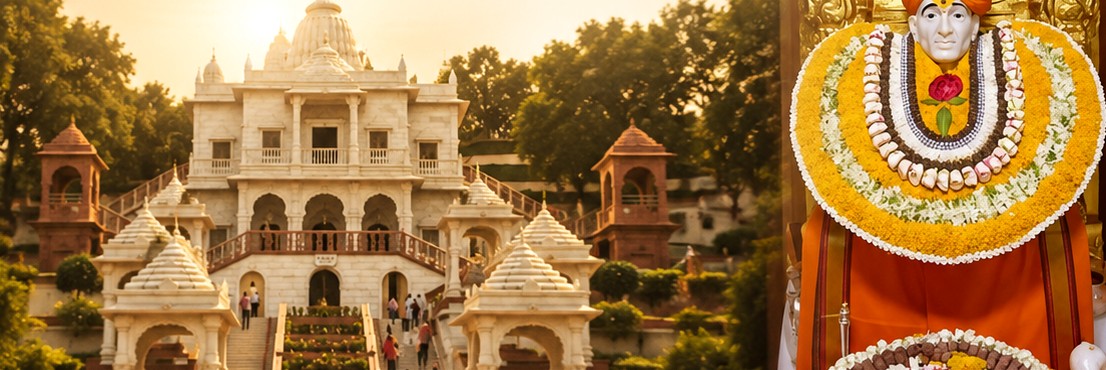
Few temples in India occupy the place in the popular imagination that Kashi Vishwanath does. Standing on the western bank of the Ganga in Varanasi, Uttar Pradesh, this great shrine is among the most sacred abodes of Lord Shiva anywhere in the world — the house of Vishweshwara, the Lord of the Universe, at the heart of the ancient city of Kashi. For generations, darshan here has been considered the crowning act of a Hindu pilgrimage. This Kashi Vishwanath darshan guide covers the temple’s significance, the aarti and darshan system, the transformation brought by the new Dham corridor, and how to reach Varanasi.
Why Kashi Vishwanath Matters
Kashi — today’s Varanasi — is described in the Puranas as the city of Shiva, a place that stands outside ordinary time. According to tradition, the city rests upon the tip of Shiva’s trident and is never destroyed even when the world is dissolved; to be granted darshan of Vishwanath here, or to leave one’s body here, is believed to open the door to liberation. The temple enshrines one of the twelve Jyotirlingas, the self-manifested symbols of divine light that together form the most sacred map of Shaiva India — a complete list of which we present in our article on the 12 Jyotirlingas and their locations.
The shrine has been rebuilt many times over the centuries, most famously by Maharani Ahilyabai Holkar of Indore in the eighteenth century, whose golden spire still crowns the sanctum. That act of devotion by the same Holkar line that shaped Maheshwar, downstream of Omkareshwar on the Narmada, is a quiet reminder of how the great tirthas of India have long been connected by shared threads of patronage and faith.
Darshan and Aarti — How the Temple Day Unfolds
The temple generally opens in the pre-dawn hours with the Mangala Aarti and remains accessible until late at night, with darshan pausing during certain ritual windows. On ordinary days devotees join a free darshan queue, while paid darshan passes and special aarti tickets — issued by the temple trust at rates revised from time to time — allow closer access at particular rituals. Mondays, the month of Shravan, and major festivals draw the heaviest crowds; the quietest darshan is usually in the early morning.
The indicative ritual schedule is as follows:
| Ritual | Indicative Time | What Happens |
|---|---|---|
| Mangala Aarti | approximately 3:00 AM | The first aarti of the day, before a limited number of ticketed devotees |
| General darshan | morning to mid-afternoon | Regular darshan queues, with the linga adorned for the day |
| Bhog Aarti | approximately 11:15 AM – 12:30 PM | Offering of food; darshan pauses for a while |
| Sandhya Aarti | approximately 7:00 PM | The best-known evening aarti of the temple |
| Shringar / Shayan Aarti | approximately 9:00 PM onwards | Final adornment and night rituals |
All timings above are approximate and shift with season and festival calendars — always confirm the current schedule with temple authorities before planning your day.
The Old City and the New Corridor
For most of living memory, reaching Kashi Vishwanath meant squeezing through the dense, lamp-lit lanes of the old city — an atmosphere older pilgrims remember fondly, but a difficult approach for the elderly and for the huge festival crowds. Since the Kashi Vishwanath Dham corridor opened in phases around 2021–22, the temple connects directly to the Ganga ghats through a broad, sandstone-paved complex. The change is dramatic: pilgrims can now move from the river to the sanctum in minutes, supported by facilities that were unimaginable a decade ago. We cover this transformation in detail in our Kashi Vishwanath Dham corridor guide.
Around the Temple — Annapurna, Kaal Bhairav and Sarnath
A pilgrimage to Vishwanath is traditionally incomplete without the shrines around him. The Annapurna Devi temple, a short walk away, honours the goddess of nourishment, and annadanam — the giving of food — remains a living seva of Kashi. The Kaal Bhairav temple, where Kaal Bhairav is revered according to tradition as the appointed guardian of the city, is customarily visited before or after Vishwanath darshan. Roughly 10 km away lies Sarnath, where Gautama Buddha delivered his first sermon; many pilgrims combine the two in a single day, experiencing Kashi’s overlapping spiritual traditions together. For the riverbank side of the city, our guide to the ghats of Varanasi covers dawn boat rides and the evening Ganga Aarti at Dashashwamedh.
How to Reach Varanasi
- By air: Lal Bahadur Shastri Airport at Babatpur is approximately 25–30 km from the temple; a prepaid taxi takes about an hour to the old city.
- By train: Varanasi Junction (Cantt) is approximately 4–5 km away, with Kashi and Banaras stations serving additional trains from different directions.
- By road: Varanasi is well connected to Prayagraj (approximately 120 km), Gorakhpur (approximately 200 km) and Lucknow (approximately 300 km) by highway buses and taxis.
From any of these arrival points, autos and e-rickshaws run to the Godowlia area, from where the temple complex is a short walk.
Summary
The Kashi Vishwanath Temple is many things at once — a Jyotirlinga among the twelve, the beating heart of the eternal city of Kashi, and, since the opening of the Dham corridor, one of the most comfortably accessible great shrines of India. Plan an early-morning darshan, keep an evening free for the Ganga Aarti at Dashashwamedh, pair the visit with Annapurna, Kaal Bhairav and Sarnath, and confirm aarti timings with the temple trust before you travel. Darshan of Vishwanath followed by a dawn boat ride on the Ganga is an experience that stays with a devotee for life — much as a complete Omkareshwar yatra pairs the Jyotirlinga with the parikrama of the Narmada.
Frequently Asked Questions
What is the best time of day for Kashi Vishwanath darshan?
Early morning, especially around the Mangala Aarti, is traditionally the least crowded time, though queues swell on Mondays and festival days. The temple generally remains open from the pre-dawn hours until late at night. Exact aarti and darshan timings change from time to time, so confirm the current schedule with the temple authorities.
How do I reach Kashi Vishwanath temple?
Varanasi Junction (Cantt) railway station lies approximately 4–5 km away, and Lal Bahadur Shastri airport at Babatpur approximately 25–30 km. Autos, taxis and e-rickshaws run to the Godowlia area, from where the temple complex is a short walk through the old-city lanes.
Are mobile phones allowed inside Kashi Vishwanath temple?
No. Mobile phones, cameras, leather items and large bags are generally not permitted inside, and locker facilities are available near the entrance. Security screening is in place, so it is best to travel light and carry only essentials.