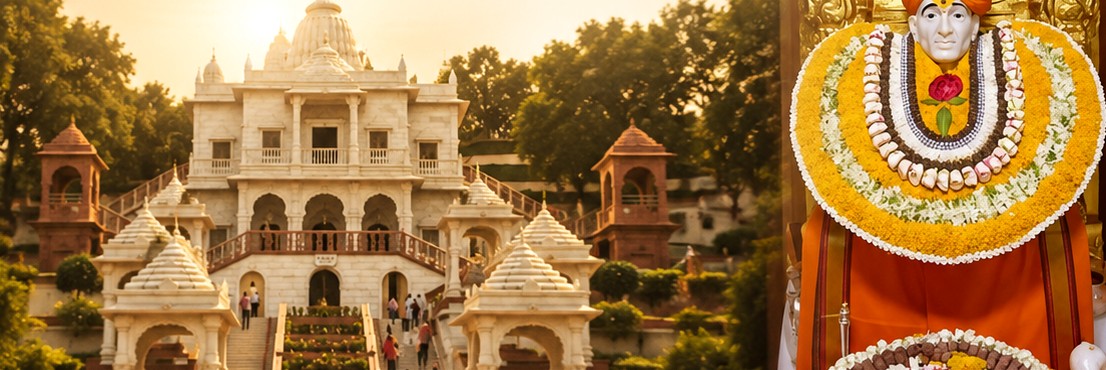
A pearl-drop of an island in the Gulf of Mannar, connected to the Tamil Nadu mainland by a rail bridge over a century old, Rameshwaram is one of the most complete pilgrimage experiences in India. Its great temple, the Ramanathaswamy temple, is a Jyotirlinga and a Char Dham abode at once — a place where the Ramayana tradition, monumental Dravidian architecture and the endless sea meet. This guide covers the island’s sacred story, its corridors and theerthams, the Pamban bridge, Dhanushkodi, and how to plan the visit.
An Island of Atonement — The Rama Tradition
According to tradition, after the war against Ravana, Lord Rama came here — to the island from which his bridge to Lanka was said to have been built — wishing to be freed from the burden of having killed a Brahmin-born king. Advised by sages to install and worship a linga of Shiva, Rama sent Hanuman to bring a linga from Kailasa. When Hanuman’s return was delayed, the rituals could not wait; Sita, per tradition, fashioned a linga of sand, and Rama worshipped it — the Ramanathaswamy linga, the Lord worshipped by Rama, which rests in the sanctum to this day. When Hanuman arrived with the linga from Kailasa, tradition holds that Rama consoled him by installing that Vishwalingam beside the sanctum and ordaining that it be worshipped first — a story pilgrims still enact in the order of darshan. The island thus carries a unique theme: atonement, humility and reconciliation.
Inside the Ramanathaswamy Temple
The temple is a city of stone in itself, with towering gopurams, long mandapams and, most famously, its corridors — among the longest temple corridors in India, running to roughly 1,200 metres in total and supported, by common accounts, by well over a thousand richly carved pillars. To walk these pillared avenues, light falling in shafts between the columns, is one of the great architectural experiences of Indian pilgrimage. The temple generally opens in the early morning (around 5:00 AM), pauses in the early afternoon, and reopens in the evening until around 9:00 PM — but timings change, so confirm with temple authorities as schedules shift. Queues move steadily; free darshan is available along with paid darshan options offered by the temple administration.
The Sacred Theerthams
Water is the second sanctity of Rameshwaram. The customary sequence begins at Agni Theertham, the sea beside the eastern gopuram, where pilgrims bathe before entering the temple. Inside the corridors lie approximately 22 theertham wells, and many devotees have well water poured over them by temple assistants as they move from tank to tank — a ritual bath that can take an hour or more.
| Theertham | Where | Tradition |
|---|---|---|
| Agni Theertham | The sea by the east gopuram | The customary first bath before darshan |
| The 22 temple theerthams | Wells along the inner corridors | Ritual bathing well by well; water offered by temple staff |
| Koti Theertham | Within the temple precincts | Bathing here is believed, per tradition, to confer great merit |
Beyond the temple, island tradition counts dozens more theerthams — often spoken of as 64 — turning the whole island into a water-sanctuary of the Rama story.
Pamban Bridge and Dhanushkodi
The approach to Rameshwaram is itself memorable. The Pamban rail bridge, opened in 1914 and therefore over a century old, carried trains across the sea long before modern causeways, and its bascule section still lifts for ships; the road bridge alongside gives travelers a sweeping view of the turquoise strait and the distant silhouette of the temple town. At the island’s eastern end lies Dhanushkodi, roughly 20 km away — a haunting landscape of sand, sea and ruins. Ravaged by a cyclone in 1964, the town was abandoned, and today pilgrims travel to its tip, where the Bay of Bengal and the Indian Ocean are popularly said to meet, and where the tradition of Rama’s setu — the bridge to Lanka — feels geographically real. Allow a half-day; local vehicles ply the sand road, and the wind and light are extraordinary.
Rameshwaram in the Char Dham
Rameshwaram is one of the four classical Char Dham abodes — with Badrinath in the north, Puri in the east and Dwarka in the west — a compass of sacred India associated with the tradition of Adi Shankaracharya. Pilgrims completing this circuit often pair the island with Dwarka’s temple, its western sister on the Arabian Sea. It should not be confused with the Himalayan Chota Char Dham of Uttarakhand, the four-abode mountain circuit covered separately in our Chota Char Dham Yatra guide. Within the Shaiva tradition, Rameshwaram simultaneously holds its place among the 12 Jyotirlingas — a rare double honour that draws both the Shiva bhakta and the all-India pilgrim to the same sanctum.
How to Reach Rameshwaram
- By train: Rameswaram railway station sits in the town itself, connected by direct services from Chennai, Madurai and other major cities across the Pamban bridge.
- By air: Madurai airport is approximately 160–175 km away — the usual flying gateway, about three to four hours by road.
- By road: Chennai lies roughly 550–600 km away by road and rail; buses and taxis connect via Madurai and Ramanathapuram.
Most pilgrims base themselves within walking distance of the temple, where dharamshalas and lodges cluster — book ahead in festival season, and confirm tariffs at booking.
Summary
Rameshwaram unites everything a tirtha can offer: the Rama tradition of atonement embodied in the Ramanathaswamy linga, the ritual journey through approximately 22 sacred theerthams, corridors ranked among the longest in India, a sea-crossing arrival over the Pamban bridge, and the windswept ruins of Dhanushkodi. Give it two unhurried days — one for the temple and its wells, one for the island’s edges — and you will understand why this Jyotirlinga and Char Dham abode is spoken of in the same breath as Kashi itself. As at Omkareshwar, where the Narmada embraces the shrine, here the ocean embraces the pilgrim.
Frequently Asked Questions
How many theerthams are there in Rameshwaram?
The Ramanathaswamy temple itself is associated with approximately 22 sacred theerthams (water tanks), and island tradition counts many more, often spoken of as 64 in total. Bathing at Agni Theertham by the sea is the customary first act before entering the temple.
Why is Rameshwaram both a Jyotirlinga and a Char Dham site?
Rameshwaram is one of the 12 Jyotirlingas and also one of the four classical Char Dham abodes associated with the tradition of Adi Shankaracharya, alongside Badrinath, Dwarka and Puri. This rare double distinction makes it a goal for both Shaiva and general Hindu pilgrimage.
How far is Dhanushkodi from Rameshwaram?
Dhanushkodi lies approximately 20 km from Rameshwaram town, at the island's eastern tip where the Bay of Bengal and the Indian Ocean are popularly said to meet. It is usually visited as a half-day trip by road.