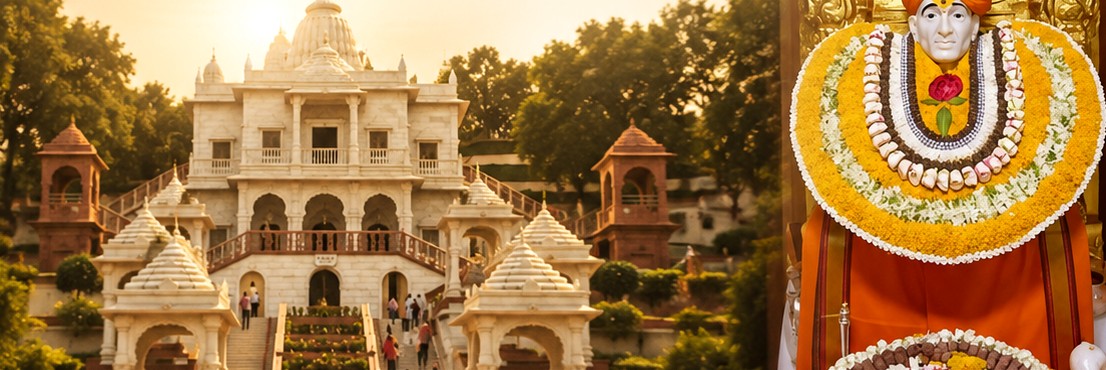
Four shrines, four sources of grace, one great Himalayan arc — the Chota Char Dham Yatra of Uttarakhand carries the pilgrim to Yamunotri, Gangotri, Kedarnath and Badrinath, the mountain abodes of the Yamuna, the Ganga, Shiva and Vishnu. Undertaken in that traditional order, the yatra forms a complete circle of devotion through some of the most sacred geography on earth. This planning guide for the 2026 season covers the four abodes, the route, registration, and the fitness and packing preparation the mountains demand.
The Four Abodes at a Glance
| Dham | Sacred To | Altitude (Approx.) | Access |
|---|---|---|---|
| Yamunotri | Source of the Yamuna; Goddess Yamuna | ~3,290 m | Trek of roughly 5–6 km from Janki Chatti |
| Gangotri | Origin of the Ganga; Ganga Mata | ~3,100 m | Motorable to the temple |
| Kedarnath | Shiva — the Jyotirlinga | ~3,580 m | Trek of roughly 14–16 km from Gaurikund |
| Badrinath | Vishnu as Badrinarayan | ~3,300 m | Motorable, with a short walk to the sanctum |
Each dham has its own character: Yamunotri is the intimate beginning, reached past hot springs and the Divya Shila; Gangotri, where the Bhagirathi emerges from the Gaumukh glacier above, is the river-shrine of them all; Kedarnath — whose significance and legend we cover in our Kedarnath pilgrimage guide — is the stern stone temple under the snows; and Badrinath, between the Nar and Narayana peaks, is the gracious culmination, with Tapt Kund’s hot springs at its doorstep.
The Traditional Route and Order
The accepted sequence — Yamunotri → Gangotri → Kedarnath → Badrinath — is not arbitrary. It opens with the two river-goddess shrines of the west, then crosses to Kedarnath’s Shiva in the Mandakini valley, and ends with Badrinath’s Vishnu in the Alaknanda valley, so that the yatra ascends in both altitude and intensity. The full circuit from Delhi covers roughly 1,500–1,700 km including the return, and is comfortably done in ten to twelve days; rushed versions compress it into eight or nine, at the cost of acclimatisation. Pilgrims short on time commonly complete a Do Dham — Kedarnath and Badrinath — as a separate promise to return. Two of the four abodes involve treks: the short Yamunotri walk and the long Kedarnath climb, whose route, registration and porterage we detail in the Kedarnath trek guide.
Season 2026 and Registration
The Char Dham season runs approximately from late April or May to October or November. The temples traditionally open around Akshaya Tritiya in spring (with Kedarnath and Badrinath following on dates announced separately each year) and close after Bhai Dooj in autumn, when the deities descend to their winter seats. For 2026, the opening dates will be declared by the temple committees and the Uttarakhand authorities closer to the season — treat every date you hear before the official announcement as provisional, and confirm before booking travel.
Registration is compulsory for the yatra. It can generally be completed online in advance or at designated centres, including Haridwar and Rishikesh, and biometric checkpoints operate en route. Rules, fees and procedures are revised periodically; carry an original government photo ID and keep the registration slip throughout the journey. Avoid the monsoon weeks of July–August if your schedule allows, as landslides and road closures are recurrent; September–October’s clear skies make it the connoisseur’s window.
Route Planning from Delhi
Most pilgrims begin at Haridwar, the gateway town where the yatra traditionally opens with a dip in the Ganga — its aartis, temples and practicalities are covered in our Haridwar pilgrim guide. An indicative leg-by-leg plan:
| Leg | Approximate Distance | Notes |
|---|---|---|
| Delhi → Haridwar | 220–230 km | Rail or road; rest overnight |
| Haridwar → Barkot | 170–180 km | Base for Yamunotri |
| Barkot → Janki Chatti + trek | ~45–50 km + 5–6 km walk | Yamunotri darshan; return to Barkot |
| Barkot → Gangotri (via Uttarkashi) | ~200 km | Overnight at Gangotri or Uttarkashi |
| Gangotri → Guptkashi | 220–240 km | Long driving day across the mountains |
| Guptkashi → Gaurikund + trek | 30–35 km + 14–16 km walk | Kedarnath darshan; overnight at Kedarnath or descend |
| Kedarnath → Badrinath (via Joshimath) | 210–230 km | Badrinath darshan, Tapt Kund |
| Badrinath → Rishikesh / Delhi | ~300 / ~520 km | Return journey |
All distances are approximate; road conditions, traffic regulation and darshan queues will shape each day more than the map will. Keep at least one buffer day for weather. Helicopter services to Kedarnath (and shuttle options on some stretches) exist for those who need them, with dynamic fares best confirmed at booking.
Fitness, Health and Packing
The Char Dham circuit travels between approximately 3,100 and 3,580 metres, and the yatra’s success owes more to your preparation than to your itinerary:
- Build stamina in advance: several weeks of brisk walking, stairs or cycling before the yatra pays for itself on the Kedarnath trail.
- Ascend gently: schedule overnight stops that gain altitude gradually, stay hydrated, and never push through altitude sickness symptoms — severe headache, vomiting or breathlessness at rest mean descend and seek medical help.
- Seniors and those with chronic conditions should obtain a physician’s clearance, carry prescriptions, and consider helicopter options for Kedarnath.
- Pack in layers: warm jackets, woolens, caps and gloves even in June; a rain shell regardless of forecast; broken-in walking shoes; sunscreen, ORS, personal medicines, a torch, power bank and documents in waterproof covers.
- Book rooms ahead for May–June; dharamshalas and GMVN-type guesthouses fill first, and rates should be confirmed at booking.
Summary
The Chota Char Dham Yatra — Yamunotri, Gangotri, Kedarnath and Badrinath, in that order — is the great Himalayan pilgrimage of India: four rivers of tradition flowing from one arc of mountains. For 2026, plan around the official season opening (approximately late April or early May, confirmed each year), register before travelling, allow ten to twelve unhurried days, avoid the monsoon where possible, and prepare body and baggage for altitude. Undertaken with patience, the circuit repays every kilometre — and like every true yatra, from Omkareshwar’s island parikrama to Kedarnath’s stone temple, it measures the pilgrim as much as the path.
Frequently Asked Questions
What is the best time for the Chota Char Dham Yatra?
The shrines are open approximately from late April or May to October or November each year. May–June and September–October are the most popular windows, as July–August brings monsoon landslide risk. Official opening and closing dates are announced each year, so confirm them before booking.
In what order should the Char Dham be visited?
The traditional order is Yamunotri first, then Gangotri, followed by Kedarnath and finally Badrinath. This sequence moves gradually deeper into the Himalayas and follows the convention used by most organised yatras.
Is registration compulsory for the Char Dham Yatra?
Yes, yatra registration is required for the Uttarakhand Char Dham circuit and can generally be completed online or at designated centres such as Haridwar and Rishikesh. Requirements and procedures change from year to year, so check the latest official instructions before you travel.