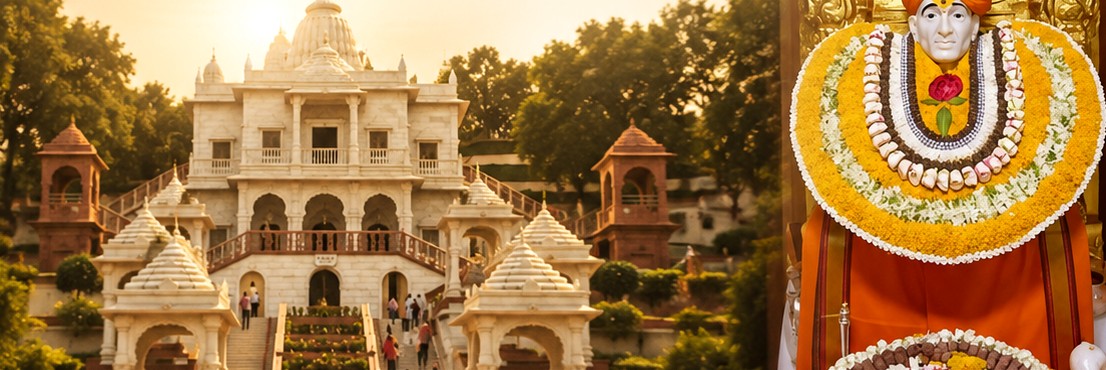
In the sugar-belt city of Kolhapur in western Maharashtra stands one of the most powerful seats of the Divine Mother in India: the Mahalaxmi temple, where the goddess is lovingly called Ambabai by her devotees. Counted among the Maha Shakti Peethas in Maharashtra’s devotional tradition, the temple draws millions each year — farmers seeking a good harvest, families bringing brides for the Mother’s blessings, and pilgrims weaving Kolhapur into a larger Devi circuit with Tuljapur and Saptashrungi. This guide covers the temple’s significance, its darshan and Kakad aarti timings, the twice-yearly wonder of Kiranotsav, how to reach Kolhapur, and how to pair the visit with Pandharpur for a complete Maharashtra yatra.
Ambabai of Kolhapur — a Maha Shakti Peetha
The Mahalaxmi temple enshrines a striking idol of the goddess in black stone, adorned and ornamented as the reigning queen of Kolhapur — for here she is not a visiting deity but the city’s sovereign, and the temple’s architecture and ritual both reflect a royal household. According to tradition, the shrine is counted among the Shakti Peethas, the sacred seats of the Goddess, and in Maharashtra it is reverently placed alongside Tuljapur’s Bhavani among the state’s greatest Devi shrines. The present temple structure is generally attributed to the Chalukya era of the 7th-8th centuries, with later renovations and expansions under the Yadavas and Maratha rulers — historians debate the details, so treat the dating as approximate, but the temple’s antiquity is not in question.
Devotees address her as Ambabai — Mother Amba — and Kolhapurkar households across Maharashtra and Karnataka maintain a lifelong bond with her. The Mahanavami and Navratri festivals see the temple at its most resplendent, and many families time visits to coincide with a daughter’s wedding, a child’s first visit, or the fulfillment of a mannat, a vow made to the Mother.
Darshan Timings and the Kakad Aarti
A day at the temple typically begins before sunrise with the Kakad aarti, the gentle early-morning waking ritual in which the goddess is roused with lamp, incense and song. The temple then remains open for darshan through the morning, closes for a midday interval, and reopens in the afternoon until the concluding night aarti. The schedule below is indicative only — timings vary with seasons, festivals and lunar dates, so always confirm current timings with the temple trust before you finalise travel plans.
| Ritual / Window | Indicative Time | Notes |
|---|---|---|
| Kakad aarti (morning waking) | Roughly 4:30–5:00 am | Arrive well before; small dedicated queue |
| Morning darshan | Early morning to midday | Calmest window; shorter queues |
| Midday interval | Early afternoon | Temple closed for the deity’s rest |
| Afternoon-evening darshan | Mid-afternoon to night aarti | Busier, especially on Fridays and full moons |
| Fridays, Navratri, Navami | Peak crowds | Expect multi-hour waits |
For the smoothest darshan, arrive for the Kakad aarti or very soon after; by mid-morning on Fridays and during festival weeks, the queue can take several hours. Free darshan lines operate alongside paid darshan options during heavy periods; amounts and availability change, so confirm at booking or at the temple counter.
Kiranotsav — When the Sun Greets the Goddess
Kolhapur’s most extraordinary temple event is Kiranotsav, the festival of the sun’s rays. By a precise alignment of the temple’s architecture, on certain days the first golden rays of the rising sun enter the sanctum and fall directly upon Ambabai’s idol — a moment devotees experience as Surya, the sun god, himself arriving to offer worship to the Mother. The phenomenon is traditionally said to occur twice a year, once around the end of January or early February and again in early November; treat these as approximate windows and confirm the exact dates with the temple trust for your year, as they depend on the sun’s position and can shift by a day or so.
On Kiranotsav mornings, the temple opens well before dawn and thousands gather for the few minutes when the rays touch the deity; priests traditionally reposition the idol’s mask and ornaments so the light falls upon her face and feet. If you plan to attend, reach Kolhapur the previous evening, sleep near the temple area, and be in the queue by the hours the trust announces. It is a rare example of faith and ancient architecture meeting in a single, time-bound darshan.
How to Reach Kolhapur
Kolhapur is approximately 230 km from Pune by road, a drive of roughly four and a half to five and a half hours via the NH166 corridor; from Mumbai the distance is approximately 380 to 400 km by road. The city is an established transport hub with multiple options.
| Mode | Details | Notes |
|---|---|---|
| By road | ~230 km from Pune; ~380–400 km from Mumbai | Frequent state and private buses; self-drive via NH166 |
| By train | Kolhapur railway station | Terminal station; good services from Mumbai, Pune, Miraj; confirm current timings |
| By air | Kolhapur airport | Limited flights, mainly to Mumbai and Bengaluru; verify current schedules |
Most pilgrims from the Pune side travel by bus or train via Miraj, changing there if a direct service is unavailable. Indicative bus fares from Pune fall roughly in the INR 400–800 range depending on the class of service, and trains from Mumbai toward Kolhapur are often overnight; confirm fares and berths at booking, as prices vary widely by season and class.
Pairing Kolhapur with Pandharpur
Western Maharashtra rewards the pilgrim who links its great shrines, and the classic pairing is Kolhapur with Pandharpur, the seat of Vitthal — approximately 175 to 185 km apart by road, a drive of roughly four hours depending on the route. Devotees traditionally speak of Ambabai and Vithoba as mother and son in spirit, and the two darshans sit naturally in one yatra. For onward planning, our how to reach Pandharpur guide covers rail and bus connections, while travellers starting from the Pune side will find route, fare and timing detail in Pune to Pandharpur travel options. If you wish to add a third Devi seat, Tuljapur — home of Bhavani, the deity Shivaji Maharaj revered — lies a similar distance to the north-east, and our Tuljapur Tulja Bhavani guide explains how the three temples form Maharashtra’s beloved Devi yatra triangle.
Summary
The Mahalaxmi Ambabai temple of Kolhapur is Devi worship at its most royal — an ancient shrine counted among the Maha Shakti Peethas, where the day begins with the hushed Kakad aarti and where, twice a year at Kiranotsav, the rising sun itself pays darshan to the Mother. Reach Kolhapur in under five hours from Pune, keep your schedule flexible for festival crowds, confirm timings and dates with the temple trust, and extend your yatra to Pandharpur and Tuljapur if time allows. And wherever your pilgrimage across India takes you, our Sansthan at Omkareshwar remains a welcoming base on the Narmada, with rooms, bhandara prasad and seva for every traveller.
Frequently Asked Questions
What is Kiranotsav at the Mahalaxmi temple in Kolhapur?
Kiranotsav refers to a remarkable phenomenon in which the first rays of the rising sun travel through the temple's structure and fall directly upon the deity's idol. It is traditionally said to occur twice a year, around late January or early February and again in early November, and the temple celebrates the occasion with special rituals. Treat the dates as approximate and confirm them with the temple trust for the current year.
What are the darshan timings of the Mahalaxmi temple in Kolhapur?
The temple typically opens in the early morning with the Kakad aarti, closes for a midday interval, and reopens into the evening until the night aarti. Timings shift with festivals and seasons, so confirm the current schedule with the temple trust before your visit. Early morning hours generally see the shortest queues.
How far is Kolhapur from Pune and Mumbai?
Kolhapur is approximately 230 km from Pune by road, a drive of roughly four and a half to five and a half hours. From Mumbai the distance is approximately 380 to 400 km. Kolhapur also has a railway station with good connections and a small airport with limited flights; confirm current schedules while planning.