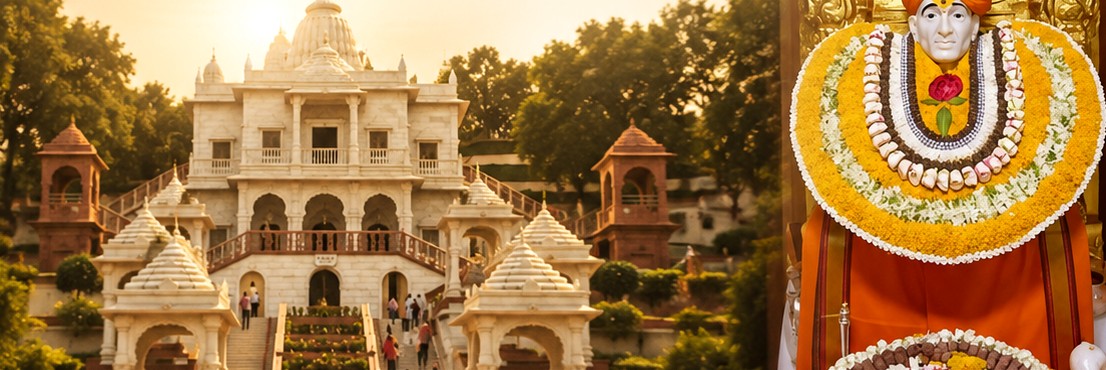
The Kal Bhairav temple in Ujjain belongs to a devotional world of its own. Standing beside the Shipra river, a short drive from the Mahakaleshwar Jyotirlinga, it enshrines the deity whom tradition honours as the guardian of the sacred city — Kal Bhairav, the fierce form of Shiva who watches over Avantika’s spiritual boundaries. Most pilgrims consider a visit here an essential companion to Mahakal darshan, and the temple’s distinctive customs make it one of the most memorable stops in Ujjain.
Kal Bhairav — Ujjain’s Kshetrapal
In the Hindu imagination, sacred cities have guardians, and according to tradition Kal Bhairav is the kshetrapal — the protector-deity — of Ujjain. Bhairav is understood as a fierce manifestation of Shiva, and devotees believe his presence at the city’s edge guards the sanctity of the Mahakaleshwar kshetra within. Many local families have worshipped at this shrine for generations, and it is common practice among pilgrims to take Kal Bhairav’s darshan along with — or immediately after — that of Mahakal, honouring the guardian along with the Lord of the temple itself.
Local tradition further speaks of a circle of Bhairava shrines guarding Ujjain in different directions, with Kal Bhairav preeminent among them — a sacred geography that devout pilgrims sometimes trace as a full day’s circuit. Whether you attempt the entire round or visit the principal shrine alone, the sense of a guarded, bounded holy city comes through vividly here.
Offering Customs at the Temple
The temple is well known for a distinctive local custom: alongside the garlands, coconuts, flowers and sweets offered at any Shiva shrine, devotees here traditionally offer liquor to Kal Bhairav. A small quantity is presented to the deity, and, per long-standing local practice, the remainder is given back to the devotee as prasad. The custom is unique to a small family of Bhairav shrines in the Malwa region and is treated by devotees as an expression of the deity’s fierce, all-accepting nature. The image itself is striking — believed by devotees to be self-manifested, adorned and vividly painted, and garlanded afresh through the day, while priests conduct the offerings with brisk ceremony amid a constant murmur of petitions from the packed hall.
It is entirely a matter of personal choice: those who prefer not to make this offering simply bring flowers, garlands or coconuts, which are equally accepted. Whatever the offering, the atmosphere inside — smoky lamps, clanging bells, brisk priests, and a packed hall of devotees — is intense, vivid and unforgettable. Approach it with an open, respectful curiosity, and let the local worshippers lead the way.
Timings and Getting There
The temple typically opens early in the morning and remains open into the evening, with a short afternoon break commonly observed. As with all Ujjain shrines, confirm timings with local sources or temple authorities, as schedules change — particularly on Sundays and festival days, when queues can stretch long. Devotees commonly visit in the late morning after an early Mahakal darshan, or in the evening when the lamps and crowds give the riverside shrine a different energy altogether.
| Quick fact | Detail (approximate) |
|---|---|
| Deity | Kal Bhairav, guardian (kshetrapal) of Ujjain per tradition |
| Location | Beside the Shipra river, Ujjain |
| Distance from Mahakaleshwar temple | Roughly 5–7 km, about a 15–25 minute drive |
| Typical opening | Early morning to evening, often with a midday break |
| Common offerings | Flowers, garlands, coconut; liquor per distinctive local custom |
Auto-rickshaws and taxis connect the temple easily with the Mahakaleshwar area, and it combines naturally with other riverside stops. Indicative auto fares within the city have generally been modest — agree on the fare before setting off.
Visiting Etiquette and Tips
- Dress modestly and keep footwear with the designated handlers outside.
- Expect crowds, especially on Sundays and Bhairav-related observances; keep belongings minimal.
- Photography is generally not welcome inside the sanctum — check locally.
- Be respectful of the offering custom; it is a matter of deep local faith, whether or not you personally participate.
- Combine it wisely: mornings here pair well with an early Mahakal darshan, while evenings can be matched with the aarti at Ram Ghat, which we cover in our Ram Ghat and Shipra river guide.
- Try the local breakfast: the lanes nearby are known for simple Malwa-style eateries, and a plate of poha-jalebi makes a classic Ujjain meal after darshan.
Kal Bhairav in Your Ujjain Itinerary
A satisfying Ujjain day often runs: pre-dawn or morning darshan at Mahakaleshwar, a walk through the Mahakal Lok corridor, then Kal Bhairav in the late morning, and Ram Ghat at sunset. The pairing of Mahakal and his city’s guardian gives the yatra a completeness that devotees cherish — the Lord of Time at the centre, the fierce sentinel at the boundary. To understand the sacred geography that makes Ujjain itself a kshetra worth guarding, read our history of the Mahakaleshwar Jyotirlinga.
Summary
The Kal Bhairav temple of Ujjain offers a raw, vivid expression of living folk Shaivism — the shrine of the city’s traditional guardian, roughly 5–7 km from Mahakaleshwar on the Shipra. Witness its distinctive offering customs respectfully, join the intense queues with patience, confirm timings locally, and pair the visit with Mahakal darshan and Ram Ghat for a complete Ujjain pilgrimage. For devotees, taking the guardian’s blessings is the traditional seal on a journey to the Lord of Time.
Frequently Asked Questions
Who is Kal Bhairav in Ujjain?
According to tradition, Kal Bhairav is the kshetrapal — guardian deity — of Ujjain, a fierce form of Shiva who protects the sacred city. Many devotees include his darshan alongside Mahakaleshwar when visiting Ujjain.
How far is Kal Bhairav temple from Mahakaleshwar?
The Kal Bhairav temple lies a short drive from the Mahakaleshwar temple, commonly estimated at roughly 5–7 km beside the Shipra river. Travel time is usually 15–25 minutes depending on traffic.
What is offered at the Kal Bhairav temple?
Alongside common offerings like flowers, garlands and coconuts, a distinctive local custom here is the offering of liquor, which is first offered to the deity and the remainder returned to the devotee as prasad. Those who prefer not to make this offering can simply offer flowers and prayers.