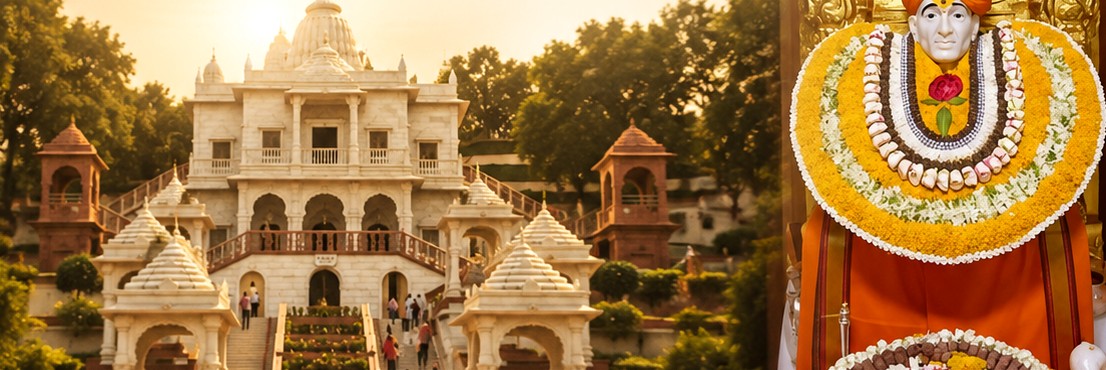
In the Nevasa taluka of Ahmednagar district, Maharashtra, lies a village that has fascinated travellers for generations: Shani Shingnapur, home of a Shani Shingnapur temple like almost no other in India. The shrine has no walls, no roof, no enclosing sanctum — only an open stone platform bearing the black svarupa of Shani Dev, the lord of Saturday, justice and karma. And the village around it became equally famous for a tradition of homes without doors. This guide explains the shrine, the doorless-village tradition, darshan and oil-offering customs, and everything practical you need for a smooth visit.
The Open-Platform Shrine of Shani Dev
The heart of Shingnapur is its devsthan — a raised, open platform in the centre of the village where the black stone svarupa of Shani Dev stands exposed to sun and rain alike. There is no temple building in the conventional sense: no spire, no dark sanctum, no doors. The deity, according to tradition, declared a preference for the open sky, and the platform has remained roofless for as long as memory records.
The svarupa itself is an unhewn black stone about five feet in height, traditionally adorned with a silver crown and mask bearing Shani’s visage, and fresh flower garlands. Because the platform is open, darshan is traditionally available 24 hours a day — an arrangement devotees point to as unique among major Hindu shrines. Rituals such as abhishek with oil, however, follow the day’s schedule, and particular sanctity attaches to Saturdays and to the day of Shani Amavasya, when enormous gatherings occur.
The Village Without Doors
The second wonder of Shingnapur is the village itself. According to tradition, generations of residents have built homes without doors — in many cases without even doorframes — placing their trust in Shani Dev to guard the village against thieves. The story goes that any attempt at theft in the protected village invites the deity’s justice, and that stolen goods must be returned to the shrine before the offender finds peace. Whether recounted literally or as parable, the tradition has held social force for well over a century, and while modern structures in the village do sometimes feature doors now, the older homes and the village’s identity remain famously doorless.
Even the village’s post office and police station have been noted for operating on this ethos of trust. Visitors should treat the tradition respectfully: it is a lived faith, not a photo opportunity, and the residents’ generosity in sharing it deserves courtesy in return.
Darshan and the Sacred Oil Offering
Two customs define the pilgrim experience at Shingnapur. The first is darshan of the open svarupa — a direct, unmediated sight of the stone under the open sky, available at any hour according to tradition, though daytime visits are the norm. The second is the oil offering: devotees bring mustard or sesame oil in tins and pots, and priests pour it over the svarupa in a continuous abhishek, so that Shani, whose element is iron and whose nature is stern, is bathed in cool oil.
The flowing oil is collected at the platform, and applying a mark of it is customary for many devotees. Offerings of black cloth, black sesame, iron nails and udid dal are also traditional to Shani worship. Those wishing to perform special poojas — such as the tailadhana (oil offering) or abhishek on behalf of family members — can arrange them at the shrine counters for indicative charges of approximately ₹100 to ₹500 depending on the seva; confirm current rates at the shrine office.
How to Reach Shani Shingnapur
Shingnapur lies approximately 70 km from Shirdi (about 1.5 to 2 hours by road), approximately 35 km from Rahata, and roughly 60 to 80 km from Ahmednagar town; from Aurangabad it is roughly 100 to 120 km. The most common route is via the Shirdi–Rahuri–Nevasa road, and buses and shared vehicles run from Shirdi and Ahmednagar, though services thin out in the evening. Most pilgrims reach the village as part of a Shirdi trip — our route guide on how to reach Shirdi covers the air, rail and road approaches to that hub, from which Shingnapur is a straightforward onward journey.
Nearest railheads are at Rahuri and Ahmednagar on the Daund–Manmad line, with Kopargaon (for Shirdi) also practical; all require a road leg of roughly 1 to 2.5 hours. The nearest commercial airport is Shirdi Airport, approximately 80 to 90 km away by road — figures are approximate, so verify with your transport operator.
Practical Tips for Your Visit
| Aspect | Guidance |
|---|---|
| Best day | Saturday for full ritual energy; weekdays for smaller crowds |
| Special dates | Shani Amavasya and Shani Trayodashi draw very large gatherings |
| Duration | Approximately 1 to 2 hours suffices for darshan and oil offering |
| Dress code | Modest clothing; traditional wear preferred for the platform |
| Offerings | Mustard/sesame oil, black cloth, black sesame (available at stalls) |
| Facilities | Parking, prasad stalls, small eateries and basic lodging nearby |
A few extra notes from experience: mornings are calmer than midday; avoid festival and amavasya dates unless you specifically want the crowds; keep footwear with you or in vehicle, as the platform area requires removal; and carry small change for offerings and seva receipts. Women’s access to the platform was historically restricted but has been permitted since 2016 following the celebrated decision to allow all devotees to offer oil on the platform — a change widely reported at the time; current practice can be confirmed with the shrine trust.
Combining Shingnapur with Shirdi
Because the two shrines sit barely 70 km apart, nearly every itinerary pairs them. The standard plan is darshan at the Shirdi Samadhi Mandir, an afternoon drive to Shingnapur, oil abhishek at the open platform, and return to Shirdi by night — comfortable in a single day. Our detailed companion guide on Shirdi to Shani Shingnapur travel lays out the distances, transport options, indicative fares and a hour-by-hour schedule for exactly this day trip.
Summary
Shani Shingnapur offers pilgrims something genuinely rare: a roofless, doorless open-platform shrine where Shani Dev receives oil offerings under the open sky, in a village that traditionally keeps its homes doorless in trust of his protection. Darshan is available around the clock according to tradition, Saturdays and Shani Amavasya are the great gathering days, and the shrine pairs naturally with Shirdi approximately 70 km away. Visit with the same preparation we recommend for every shrine on the pilgrim’s road — modest dress, light baggage, confirmed schedules — and Shingnapur will reward you with one of Maharashtra’s most distinctive darshan experiences.
Frequently Asked Questions
Why is Shani Shingnapur famous as a village without doors?
According to local tradition, the village of Shingnapur has no locked doors or even doorframes on many homes, because residents trust Shani Dev, the deity of the shrine, to protect the village from theft. The practice is a living expression of the community's faith in the deity's guardianship.
What is special about the Shani Shingnapur temple structure?
The shrine is an open platform without a roof or enclosing walls, on which a black stone svarupa of Shani Dev is placed and decorated. There is no conventional sanctum, and darshan is traditionally available around the clock, though rituals follow daily schedules.
What is the oil offering at Shani Shingnapur?
Devotees traditionally offer mustard or sesame oil to Shani Dev, pouring it over the stone svarupa so that the deity is bathed in oil. The oil that flows away is collected and distributed, and the offering is believed to please Shani, who in Hindu tradition governs justice, karma and discipline.