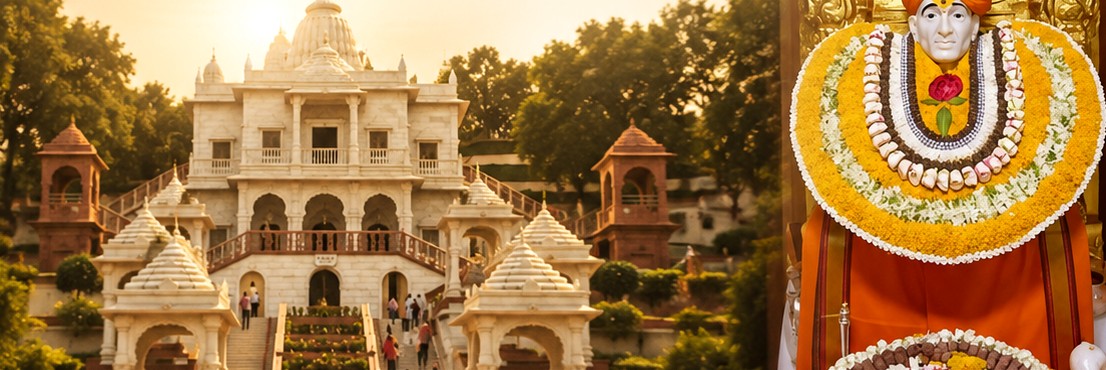
Omkareshwar for senior citizens is a deeply achievable pilgrimage — with a little planning. This island Jyotirlinga in Madhya Pradesh rewards exactly the kind of slow, unhurried darshan that older pilgrims naturally prefer: early mornings by the Narmada, short walks between shrines, time to sit while others rush. The challenges are real but manageable — ghat steps, a riverside topography and a parikrama path of approximately five to eight kilometres — and every one of them can be worked around. This guide lays out a paced itinerary, the easier walking options, the boat-versus-bridge decision, and the stay and medical details that give families confidence.
Why Omkareshwar Rewards a Slower Yatra
Unlike hill shrines reached by long climbs, Omkareshwar’s main temples sit close together: the Omkareshwar shrine on the island and the Mamleshwar (Amareshwar) temple on the south bank face each other across a narrow stretch of the Narmada. Between them run boats and a hanging footbridge, so the two most important darshans of the trip are separated by minutes, not hours. Much of the family trip to Omkareshwar advice applies doubly to elders: travel light, start early, rest often, and treat the town as a place to linger in rather than race through.
Older pilgrims often find the island’s flat central lanes, the shaded benches near the ghats and the constant presence of tea stalls make natural rest points. Seniors are traditionally given place in darshan lines — ask a temple attendant or security person politely, and in most cases elders will be escorted ahead, especially during busy hours.
A Gentle Day Plan for Elderly Pilgrims
The key is rhythm: one meaningful activity, then rest. A sample day:
| Time (approx.) | Activity | Senior-friendly notes |
|---|---|---|
| 06:30 – 08:00 | Omkareshwar darshan on the island | Early hours mean thinner crowds and cooler stone underfoot |
| 08:00 – 09:00 | Breakfast and rest | Poha-jalebi stalls and chai near the ghat; sit and linger |
| 09:30 – 11:00 | Boat ride and Mamleshwar darshan | Short crossing; the south bank temple is compact and level |
| 11:00 – 13:00 | Return by boat, lunch, and a proper nap | Midday heat and fatigue are the biggest enemies of a good evening |
| 16:00 – 17:00 | Ghat-side sit-down and Narmada aarti | Watch the evening aarti seated — no need to stand throughout |
| 17:30 onwards | Early dinner and rest | Eat early, sleep early, repeat the next day refreshed |
Exact aarti and darshan timings change with the season and the temple calendar, so check our darshan timings and aarti schedule guide before finalising your day, and confirm locally on arrival.
Crossing to the Island: Boat or Hanging Bridge?
This is the practical heart of a senior-friendly Omkareshwar plan. The boat crossing takes only a few minutes and drops you at the island ghat, but it involves stepping into and out of a floating vessel — wait for the boatman’s signal, board one person at a time, and let younger family members physically support the elder’s arm. The jetty steps can be wet, so footwear with grip matters even for a short crossing.
The hanging footbridge is stable and safe, but it involves a longer walk on an incline, and the gentle sway bothers a few people. A good compromise used by many families: take the boat to the island in the morning, and if energy allows, return over the bridge with plenty of rest stops — or simply take the boat both ways and save the legs for the temples.
Choosing Comfortable Walking Routes
The full island parikrama is a beautiful circuit, but it includes steps, unpaved sections and stretches close to the waterline — entirely doable for a fit 70-year-old with time, but not a duty. Honest alternatives that elders consistently enjoy:
- A short walk along the parikrama path from the main ghat to the nearest shrines, then back — a slice of the circuit without the commitment.
- Ghat-side time at the Sangam and other bathing steps described in our sacred ghats coverage, where seniors can sit through the aarti rather than stand.
- A slow, assisted stroll across the island’s central lane between the Omkareshwar temple and the old shrines near it, which is largely level.
- Darshan at Mamleshwar, whose compact courtyard suits a relaxed visit and rewards those who like architecture with a close look.
If a wheelchair is needed, manual wheelchairs can manage the island’s main lane and the Mamleshwar approach with an attendant’s help, though ghats and steps will require the elder to be assisted on foot. Carry a foldable walking stick with a seat — it is the single most appreciated gadget among senior pilgrims here.
Rooms, Medical Help and Attendant Tips
A restful base transforms the experience. Book a ground-floor room if possible, ask for a room near the entrance rather than up stairs, and confirm in advance whether the property has rails or grab bars in bathrooms. The Sansthan’s Bhakt Niwas accommodation guide covers room categories suitable for elderly guests and families; confirm availability and indicative tariffs at booking, especially for the October-to-March peak season.
On the medical side:
- Omkareshwar has a local hospital and pharmacies stocking common medicines, with broader facilities in Khandwa, approximately 60 km away.
- Carry all regular medication for the full trip plus a few extra days, along with a written prescription.
- Note blood group, allergies and a contact number on a card in the elder’s bag.
- Keep the Sansthan reception or your hotel desk informed about any condition that might need urgent help.
- One attentive attendant per senior is ideal; two people can share boarding, queuing and seating duties.
Summary
Omkareshwar can absolutely be a comfortable senior-citizens pilgrimage. Cross by boat, walk the short and level stretches, sit through the aartis rather than standing, rest through the midday, and keep the full parikrama as an optional blessing rather than a compulsory test. Book ground-floor rooms early for the winter season, carry medicines and documents, and lean on the patience that temple towns naturally extend to elders. According to tradition, the Narmada and Shiva of Om ask for presence, not speed — and older pilgrims understand that better than anyone.
Frequently Asked Questions
Can senior citizens complete the Omkareshwar parikrama?
The full parikrama of approximately 5–8 kilometres involves steps and uneven stone paths, which many seniors find challenging. A shorter segment combined with darshan at both Jyotirlinga temples is a fulfilling alternative, and elderly pilgrims should walk only as far as comfort allows.
Is the boat or the hanging bridge easier for elderly visitors at Omkareshwar?
The boat crossing is usually easier since it avoids the longer walk of the footbridge, though the jetty steps can be slick and need careful footing. Travelling companions should board first and assist, and boatmen are generally accustomed to helping elderly passengers.
Are medical facilities available in Omkareshwar for senior citizens?
The town has a hospital and several pharmacies for routine needs, with more comprehensive care available in Khandwa, approximately 60 km away. Seniors should carry their regular medicines plus a written prescription, and confirm emergency contacts at their accommodation.