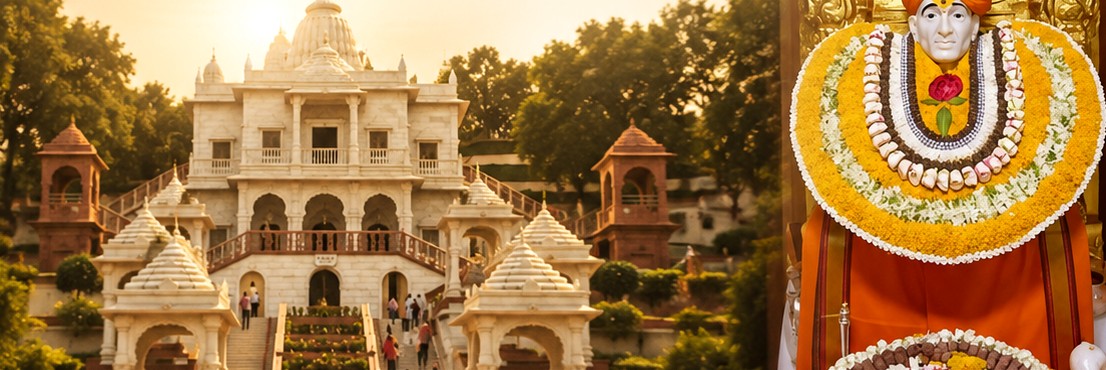
Omkareshwar in monsoon is the sacred island at its most atmospheric. Between approximately July and September, the south-west monsoon settles over the Nimar region of Madhya Pradesh, and the Narmada — which in other months glides calmly around the Om-shaped island — rises with impressive presence. Hills that look dry and scrubby by April turn a deep, washed green, mist drifts across the water at dawn, and the fragrance of wet earth mingles with incense near the temple steps. If you are still deciding which month suits your yatra best, our best time to visit Omkareshwar guide compares all the seasons; this article looks only at the rains and everything they change.
How the Monsoon Transforms the Om-Shaped Island
Omkareshwar stands on Mandhata island — also called Shivapuri according to tradition — in the middle of the Narmada in Khandwa district. In the rainy season the whole setting softens and deepens. The stone steps of the sacred ghats of Omkareshwar glisten under passing showers, the temple shikhara catches dramatic cloud light, and the parikrama path — usually warm underfoot — becomes cool and shaded. According to long-time residents, the river’s rise usually begins in earnest around late June or early July, peaks near August, and recedes slowly through September, though every year follows its own rhythm.
Photographers who know the island well often say the monsoon weeks bring the most dramatic skies of the entire year. Clouds pile over the Vindhya escarpment, rain curtains move across the water in visible sheets, and the interplay of grey, green and gold at dusk is unforgettable. Crowds are also noticeably thinner, which changes the whole texture of a visit: shorter queues at darshan, quieter ghats, and unhurried conversations with purohits and shopkeepers.
The Narmada Between July and September
The most important thing to understand about a monsoon visit is that the Narmada sets the timetable. When the river runs high, some ghat steps closest to the water become inaccessible, boat services may pause for hours or days, and the current between the island and the south bank strengthens noticeably. When the rain eases for a few days, the river calms and everything reopens quickly.
| Month (approx.) | Typical conditions | River and parikrama notes | Crowd levels |
|---|---|---|---|
| July | First good showers; greenery returns | River rising; some lower ghat steps wet | Low |
| August | Peak rainfall in most years | Strong current; boat services intermittent; slippery patches | Lowest |
| September | Showers thin out; clear spells return | River begins receding; paths dry gradually | Low to moderate |
Treat this table as a general pattern rather than a forecast. Rainfall varies significantly from year to year, and conditions on the island can change within a single day.
Walking the Parikrama Safely in the Rain
The island parikrama, a walking circuit of approximately five to eight kilometres depending on the route and detours, remains one of the defining experiences of Omkareshwar, and many pilgrims complete it in the rains without difficulty. That said, the detailed parikrama route guide should be read with monsoon eyes: stone steps and paved sections can be slick with moss, and the stretches closest to the waterline deserve special respect.
A few practical habits keep the walk safe:
- Start in the morning after an overnight lull in the rain, when paths have had a few hours to drain.
- Wear sandals or shoes with genuine grip; smooth leather soles and worn-out flip-flops are a poor match for wet stone.
- Carry a walking stick if your knees are unsure; small shops along the route often sell simple bamboo staffs.
- Keep your phone, cash and darshan essentials in a sealed pouch.
- If the rain turns heavy, wait it out at one of the small shrines or tea stalls along the path rather than hurrying over wet rock.
Elderly pilgrims and families with very young children may prefer to walk only a shortened segment and return, saving the full circuit for the drier months.
What Stays Open and What Pauses
Temple darshan itself continues through the monsoon. The Omkareshwar shrine on the island and the Mamleshwar (Amareshwar) temple on the south bank both receive pilgrims daily, and the resident purohits perform the regular schedule of abhishek and aarti. Exact aarti and darshan timings shift with the seasons and local conditions, so confirm with temple authorities as schedules change, particularly during heavy-rain weeks.
The hanging footbridge between the mainland and the island generally remains open, though it may be closed briefly during severe storms — check locally on the day. Boat ferries are the most weather-sensitive service: they usually keep running through ordinary showers, but operators pause crossings when the current is strong, resuming once the river settles. If your entire plan depends on a boat crossing, build in a buffer of a few hours.
Packing Rain Gear for a Pilgrimage
Monsoon packing for Omkareshwar is simple if you layer it sensibly:
- A compact umbrella plus a light poncho; the poncho keeps your hands free for railings and prasad bags.
- Quick-dry clothing rather than heavy cotton, which stays damp for hours in humid weather.
- Sturdy grip footwear and a spare pair of dry socks for inside the temple.
- A zip pouch or dry bag for phones, cash and medicines.
- A small towel and a plastic folder for printed tickets or booking confirmations.
- Practical extras many travellers forget: insect repellent and personal medication in waterproof wrapping.
The Quiet Blessings of an Off-Season Visit
There is a devotional argument for the monsoon too, not just a scenic one. With fewer visitors, the temple feels more like a place of stillness than a transit point. Purohits have more time, queues before the Jyotirlinga shrink, and the evening Narmada aarti — performed under drifting clouds — carries a hush that peak-season crowds rarely allow. Room availability is easier, rates at many dharamshalas and hotels soften from their winter highs (treat any quoted figure as indicative and confirm at booking), and seva such as annadaan can often be arranged with less advance notice.
Summary — Should You Visit Omkareshwar in Monsoon?
Visit in the monsoon if you value green landscapes, dramatic skies, thin crowds and a slower pace, and if you are comfortable adjusting plans around the weather. Prefer the winter months if a full parikrama with elderly family members or a tightly scheduled same-day trip is your priority. Either way, respect the river, walk carefully, carry rain gear, and confirm timings and boat operations locally. According to tradition, the Narmada is the presiding deity of this tirtha — the rains are simply her season of fullness.
Frequently Asked Questions
Is Omkareshwar worth visiting during the monsoon?
Yes, for many pilgrims the monsoon is the most beautiful season, as the Narmada swells and the island turns deep green. Crowds are thinner and the atmosphere is serene, though you should be prepared for rain and slippery walking surfaces.
Is the Omkareshwar parikrama safe in the rainy season?
The parikrama path remains open in most years, but several stretches can be slippery and some ghat steps may be submerged when the river rises. Walk slowly, wear grip footwear, avoid the route right after heavy downpours, and check current conditions locally before starting.
Do boat services run at Omkareshwar in the monsoon?
Boat services generally continue, but operators pause crossings when the river runs high or the current is strong. Ferry schedules between July and September can change day to day, so confirm with boat operators or your accommodation before planning a crossing.