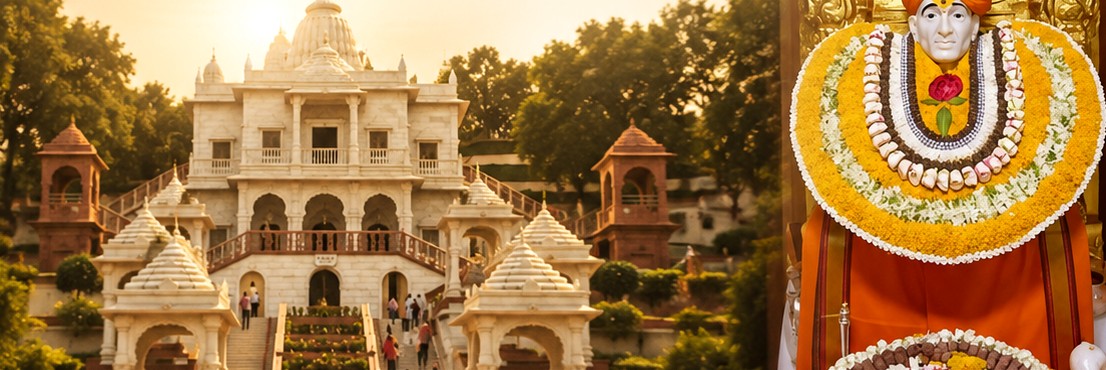
Few corners of India pack as much sacred geography into so little road as the Malwa region of Madhya Pradesh. From the city of Indore, a triangle of barely 100 km on each side holds Ujjain with the Mahakaleshwar Jyotirlinga, Omkareshwar with the island Jyotirlinga on the Narmada, and Maheshwar with Queen Ahilyabai’s timeless ghats — three tirthas that flow together into one natural MP tirtha circuit of three to four days. This guide lays out the day-wise plan, the drives between towns, the aartis worth building your schedule around, and the Mandu heritage extension, so that your yatra through the heart of India feels effortless and complete.
Why Ujjain–Omkareshwar–Maheshwar Works as One Yatra
The circuit begins from Indore, Madhya Pradesh’s commercial capital, chosen for its airport and major railway station rather than its own temples — it is the gateway, not the goal. From Indore, Ujjain lies roughly 55 to 60 km away by road (about an hour to an hour and a half’s drive), Omkareshwar approximately 77 to 90 km, and Maheshwar a similar distance to the south, with Maheshwar only about 65 km onward from Omkareshwar along the Narmada valley. In other words, no single drive on this circuit exceeds a couple of hours.
What elevates the triangle beyond convenience is its spiritual logic. Two of the twelve Jyotirlingas — Mahakaleshwar at Ujjain and Omkareshwar on the Narmada island — sit within a short drive of each other, a pairing whose significance is explored in our Ujjain to Omkareshwar two-Jyotirlingas guide. To them the circuit adds Maheshwar, where the Narmada is worshipped at ghats restored by Devi Ahilyabai Holkar in the 18th century, making the yatra a complete offering: Shiva twice, and the river that cradles one of his holiest seats.
Day-Wise Circuit Plan
| Day | Base | Morning | Afternoon | Evening |
|---|---|---|---|---|
| 1 | Ujjain | Arrive Indore, drive to Ujjain; Mahakaleshwar darshan | Kal Bhairav, Ram Ghat, Sandipani Ashram | Shipra aarti at Ram Ghat |
| 2 | Omkareshwar | Optional early bhasma aarti; drive to Omkareshwar; Jyotirlinga darshan | Island parikrama and boat ride on the Narmada | Narmada aarti; night at the Sansthan |
| 3 | Maheshwar | Drive to Maheshwar (~65 km); Ahilyeshwar and ghats | Ghats, weavers’ lanes, boat ride | Sunset on the Narmada ghats |
| 4 | Indore (via Mandu) | Drive Mandu-ward for palaces and Jahaz Mahal | Return to Indore by evening | Depart, or rest a night in Indore |
The plan above assumes arrival into Indore by mid-morning on day one; if you arrive in the evening, add the buffer day and start fresh next morning. Pilgrims short of time can compress days two and three, but we advise against it — the circuit’s gift is pace, not checklists.
Day 1: Ujjain and the Mahakaleshwar Bhasma Aarti
Ujjain, one of the seven Moksha-puris of tradition, revolves around Mahakaleshwar, the Jyotirlinga whose bhasma aarti at the crack of dawn is among the most extraordinary rituals in Indian temple life. The aarti requires advance arrangements — passes are issued through the temple administration, and demand far exceeds supply on Mondays and festival days; the process, dress code and timing strategy are explained in our Mahakaleshwar bhasma aarti guide. If the aarti pass eludes you, the regular morning darshan still carries the temple’s full power.
Give Ujjain the rest of the day it deserves: the Ram Ghat on the Shipra, where the evening aarti draws the town to the water; the fierce Kal Bhairav, guardian of Ujjain, where tradition offers a distinctive ritual of offering liquor to the deity — take it or simply observe; and the Sandipani ashram, where, according to tradition, Krishna, Balaram and Sudama studied. Confirm current darshan timings for each temple, as they shift through the year.
Days 2–3: Omkareshwar, the Narmada and the Sansthan
On day two, drive south to Omkareshwar — roughly two to two and a half hours from Ujjain, or around 77 to 90 km from Indore if you came directly. The moment of arrival is unforgettable: the Narmada splits around an island shaped, by tradition’s reading, like the syllable Om, and one of the twelve Jyotirlingas is enshrined at its crown. Take the darshan first, then walk or boat the island parikrama of approximately 7 to 9 km around the Om-shaped hill, resting at the small shrines along the way; many devotees also cross to the mainland for darshan at the ancient Mamleshwar.
Stay the night at Gajanan Maharaj Sansthan, our own bhakt niwas on the Narmada — clean, simple rooms, bhandara prasad from the community kitchen, and a seva-oriented atmosphere described in our bhakt niwas accommodation guide. The evening Narmada aarti within easy reach of your room is the day’s closing grace, and the morning at the temple before the day-trippers arrive is Omkareshwar at its most meditative.
On day three, follow the river: the drive of approximately 65 km to Maheshwar takes about one and a half to two hours along the Narmada valley, a route whose sights and stopovers are detailed in our Omkareshwar to Maheshwar travel guide. In Maheshwar, spend unhurried hours at the ghats Ahilyabai built — Ahilyeshwar temple, the queen’s cenotaph, the fort ramparts — and weave through the lanes where the famous Maheshwari sarees are still made on handlooms. Boats take pilgrims out on the Narmada at modest indicative fares; settle prices beforehand, and stay for the sunset, when the ghats glow.
The Mandu Heritage Extension
If the yatra has a fourth day, leave Maheshwar for Mandu — the fortress-city of the Malwa sultans, roughly 90 to 100 km from Indore by road, connected conveniently on the return leg — where the ship-like Jahaz Mahal, Hindola Mahal and the tomb of Hoshang Shah reward the detour with some of central India’s finest Afghan architecture. Rani Roopmati’s pavilion, gazing toward the Narmada plain, adds a poignant legend to the view. Mandu is heritage rather than tirtha, but pilgrims consistently describe it as the perfect closing note — beauty after devotion. Entry tickets are nominally priced; confirm current timings and rates on the state tourism site.
Best Season, Budget and Practical Notes
The circuit is at its best from October to March, when Malwa’s nights are cool and the light is golden; Maha Shivratri transforms both Jyotirlinga towns into festivals of faith, and the monsoon (July-September) turns the Narmada and Shipra dramatic, though roads to Maheshwar should be checked after heavy rain. For budgeting, expect a comfortable mid-range trip at roughly INR 2,500–4,000 per person per day covering stay, food, local transport and darshan offerings — an indicative range; costs flex with hotel choice and group size, so confirm bookings ahead. Drive stretches are short and roads generally good; hiring an Indore-based car for the whole circuit (indicatively INR 3,000–4,500 per day plus fuel and driver charges, confirm at booking) spares you repeated re-negotiations.
Summary
The Ujjain–Omkareshwar–Maheshwar circuit is India’s most accessible great pilgrimage: three days, one base region, two Jyotirlingas, one sacred river and a queen’s ghats — all within a triangle of short drives from Indore. Arrive in Indore, give Ujjain its full day with the bhasma aarti, let Omkareshwar hold you overnight so the Narmada aarti greets you at dusk, drift down to Maheshwar’s timeless ghats, and if the heart allows, close with Mandu’s poetry in stone. Book the bhasma aarti pass and your stays well in advance, travel October to March if you can, and let Gajanan Maharaj Sansthan be your home on the island — rooms, prasad and seva, held open for every pilgrim on this beautiful yatra.
Frequently Asked Questions
How many days are needed for the Ujjain, Omkareshwar and Maheshwar circuit?
A comfortable circuit takes approximately three to four days from Indore, including travel time between the towns. Two days is the rushed minimum, while four days lets you add Mandu and attend the aartis without hurrying. Add buffer time if you visit during festivals or the monsoon.
What is the best base city for the MP tirtha circuit?
Indore works best as the entry and exit hub, with its airport and railway station connecting all major cities, and roads radiating to Ujjain (roughly an hour to an hour and a half away), Omkareshwar (approximately 77 to 90 km) and Maheshwar. Many pilgrims stay one night in each town instead, which allows for the early-morning aartis. Book accommodations in advance during festival periods.
How far is Maheshwar from Omkareshwar?
Maheshwar is approximately 65 km from Omkareshwar by road, a drive of roughly one and a half to two hours depending on traffic and stops. Both towns sit on the Narmada, so many pilgrims travel directly between them along the river valley. Confirm current road conditions during the monsoon.