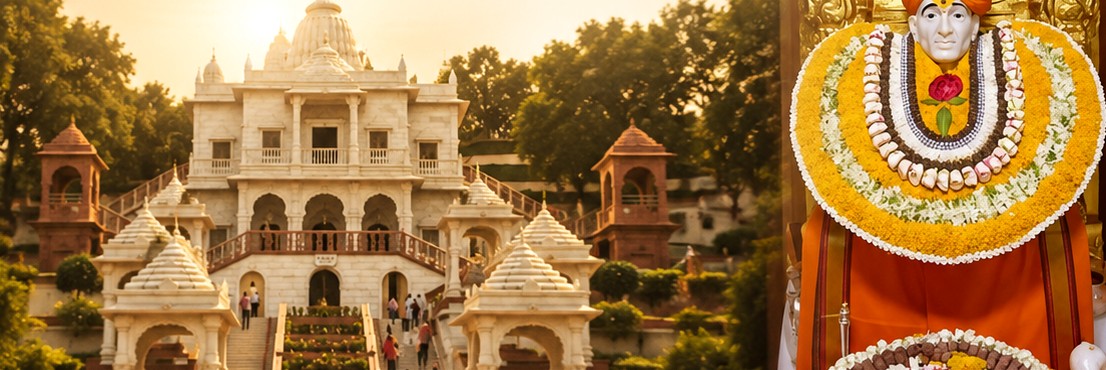
Travelling from Somnath to Dwarka is one of the great short pilgrimages of India: roughly 230–240 km of Saurashtra coast connecting the first of the twelve Jyotirlingas to Krishna’s capital by the sea. Done thoughtfully, the journey is not merely a transfer between temples but a sacred circuit in its own right, threaded with stories of Sudama’s friendship, Krishna’s wedding and the chanting that has not stopped for decades. This guide covers distance, road and rail options, worthwhile stopovers, and a 2–3 day itinerary shaped by how pilgrims actually travel.
Distance and Route Options at a Glance
| Mode | Approximate Distance / Time | Notes |
|---|---|---|
| Self-drive or taxi | About 230–240 km, 5–6 hours | Coastal road via Mangrol–Porbandar, or inland via Junagadh–Jamnagar |
| State or private bus | 6–8 hours typically | Often requires a change at Veraval, Junagadh or Jamnagar |
| Train | Usually a full day | Generally with a change at Rajkot or via Ahmedabad |
The coastal route through Mangrol and Porbandar is the more scenic choice, with long stretches beside the Arabian Sea; the inland route via Junagadh and onward toward Jamnagar is often the faster driving line. Road conditions are generally good, but allow extra time in monsoon months and start early so you reach Dwarka in daylight.
By Road: Planning the Drive
Most pilgrims hire a taxi for one or more days or drive their own vehicle. Indicative taxi costs for the Somnath–Dwarka leg run approximately INR 3,500–5,500 for a same-day transfer, and INR 5,000–8,000 for a day that includes Porbandar sightseeing — confirm at booking, since fares vary with vehicle type and season. Keep these practical points in mind:
- Fuel stations and food stops are available along the main routes, but options thin out between towns — top up at Veraval or Porbandar.
- If you plan the evening aarti at Dwarkadhish, leave Somnath by about 10:00–11:00 AM at the latest.
- Season matters: October to February offers pleasant driving weather; late mornings in summer can be hot even in a car with air-conditioning.
For pilgrims who like planning long pilgrim routes in a structured way — much as we mapped the Mumbai to Omkareshwar journey — the same logic applies here: decide your non-negotiable darshan times first and build the drive around them.
By Train: Veraval to Dwarka
Somnath’s nearest rail head is Veraval (approximately 7–8 km from the temple), a terminal station; Dwarka sits on the broad-gauge line toward Okha. A few direct services between this region and the Okha line have run from time to time, but for most dates the reliable plan is to travel via Rajkot — Veraval to Rajkot takes roughly 3.5–4.5 hours, and Rajkot to Dwarka a further 4–5 hours — or to route through Ahmedabad, which opens up many overnight options. Timetables change, so verify current connections when booking, and reserve seats in advance for festival periods.
Sacred Stopovers Along the Way
- Porbandar: The birthplace of Sudama, Krishna’s dear friend from their student days, and revered as such by pilgrims who remember the story of the poor brahmana’s visit to Dwarka. It is also the birthplace of Mahatma Gandhi; Kirti Mandir marks the site. The seafront makes a pleasant lunch halt.
- Madhavpur: A coastal village associated, according to local tradition, with the wedding of Krishna and Rukmini; the annual fair here draws devotees from across Saurashtra.
- Jamnagar: On the inland route, the Bala Hanuman temple has been reported to maintain continuous chanting of the name of Rama since 1964 — a recorded endurance of devotion that many pilgrims time their drive to experience.
A 2–3 Day Coastal Sacred Circuit
| Day | Plan |
|---|---|
| Day 1 — Somnath | Morning darshan and aarti at the Somnath Jyotirlinga; Triveni Sangam ghat at dusk; evening light and sound show. Overnight at Somnath. |
| Day 2 — To Dwarka via Porbandar | Depart by about 9:00 AM; Sudama’s Porbandar and Kirti Mandir; reach Dwarka by late afternoon; evening aarti at Dwarkadhish. |
| Day 3 — Around Dwarka | Mangla aarti at dawn; boat to Bet Dwarka; darshan at Nageshwar and Gopi Talav; Rukmini temple before departing. |
This rhythm — darshan at the Jyotirlinga first, then Krishna’s city — is the order most pilgrims follow. Before setting out, review the darshan details in our Somnath Jyotirlinga guide and our Dwarkadhish Temple guide so your arrival times match the aarti schedule.
Travel Tips for Pilgrims
- Bookends matter: confirm Somnath evening-show timings and Dwarka mangla aarti times a day ahead; both change seasonally.
- Stay choices: trust guesthouses at Somnath and dharamshalas near Dwarkadhish offer indicative tariffs of roughly INR 400–3,000 per night — confirm at booking.
- Weekdays are calmer: weekends and holiday periods crowd both temples and the Porbandar halt.
- Carry cash: smaller stalls and jetty services along the route may not accept digital payments reliably.
- Seniors and children: the two-night pace above is comfortable; a single-night whirlwind version is possible but tiring.
Summary
The Somnath to Dwarka run of approximately 230–240 km can be a rushed five-hour drive or a rich two-to-three-day coastal pilgrimage — we recommend the latter. Travel the coast through Porbandar, honour Sudama’s town, break the journey where tradition draws you, and reach Dwarka in time for the evening aarti. With routes, rail connections, stopovers and timings held approximately and confirmed locally, this little circuit delivers the essence of Saurashtra’s sacred geography: Shiva’s eternal shore giving way to Krishna’s city by the sea.
Frequently Asked Questions
What is the distance from Somnath to Dwarka?
The road distance from Somnath to Dwarka is approximately 230–240 km, depending on the route, and the drive typically takes about 5–6 hours with breaks. Coastal and inland route options both exist.
Is there a direct train from Somnath to Dwarka?
A few direct services between the Veraval region and the Dwarka/Okha line have operated at times, but most pilgrims travel with a change at Rajkot or via Ahmedabad. Check current timetables when booking, as services change.
What are the best stopovers between Somnath and Dwarka?
Porbandar, associated with Sudama and the birthplace of Mahatma Gandhi, is the most rewarding stop. Madhavpur, linked by tradition to Krishna and Rukmini, and Jamnagar with its Bala Hanuman temple are also popular.